The dirt did not look like dirt. It looked like sun-baked bone, gray and cracked, refusing even the weeds. When J. David Bamberger stood on that stretch of the Texas Hill Country in 1969, he was not looking at a blank canvas. He was looking at a crime scene.
Decades of relentless cattle grazing had beaten the topsoil into submission. Generations of rain had found no roots to grip, no sponges to soak into, turning every sudden downpour into a muddy flash flood that stripped the earth bare and carved deep, bleeding gullies into the limestone. The water table had dropped so low that seven separate wells drilled five hundred feet deep came up completely, dust-dry. The native springs had given up and died fifty years prior. Local ranchers shook their heads, warning him that the land was an absolute waste, a lost cause fit for nothing at all.
Bamberger just smiled. He had made a fortune helping build a national fast-food empire, but wealth had not cured his obsession with the soil. Growing up poor in depression-era rural Ohio in a house without running water or electricity leaves a mark on a person. It teaches you to look at things that are broken and wonder if they can be mended. He did not want an easy paradise. He wanted the worst piece of dirt he could find, just to see if he could coax it back from the grave.
The Anatomy of a Ruin
Consider what happens when a landscape is pushed past its breaking point.
Overgrazing does not merely shorten grass; it breaks the hydrological cycle. Without native vegetation to shield the ground, the sun bakes the earth into a crust. When the heavy Texas storms finally break, the water cannot infiltrate. It runs off the surface like rain hitting a tin roof, carrying away the last remaining nutrients and leaving behind dense thickets of thirsty Ashe juniper—local brush colloquially called cedar—that suck the remaining subsurface moisture straight out of the rock.
Bamberger did not hire magicians. He hired hydrologists, botanists, and soil experts. They mapped out a cold, methodical blueprint for resurrection.
The first order of business was physical therapy for the earth. Working closely with his initial crew, Bamberger brought in bulldozers, carefully clearing out the invasive cedar thickets along the slopes while avoiding erosion-prone zones. They built low stone barriers along the hillsides to trap loose sediment and slow down the aggressive rush of surface water. Then came the seed. Tons of native grass seed were sown across the scarred acreage—so much of it that local suppliers momentarily wondered if someone was trying to corner the market.
Waiting Out the Stone
Restoration is a painfully slow dialogue with time. Years bled into one another.
Nothing dramatic happened on day one, or year two, or even year five. The work was dusty, exhausting, and frequently lonely. But slowly, a microscopic shift occurred beneath the surface. The newly established native grasses grew deep, intricate root systems that acted like subterranean fingers, loosening the compacted limestone.
(To picture this, imagine an entire hillside converted from a slanted ceramic plate into an industrial-grade kitchen sponge.)
When the rains came next, they did not run away. They lingered. The water soaked into the ground, filtering down through the cracks and crevices to recharge the shallow aquifers below. Nature, given even a fraction of a chance, began to repair her own plumbing.
When the Rock Bleeds Water
The breakthrough arrived like a ghost story.
More than a decade into the experiment, long-dormant rock fissures began to sweat. Underground pressure, built up from years of steady aquifer recharge, pushed back against gravity.
A single drop appeared on a mossy outcrop where bone-dry stone had sat for half a century. Then another. Then a steady trickle.
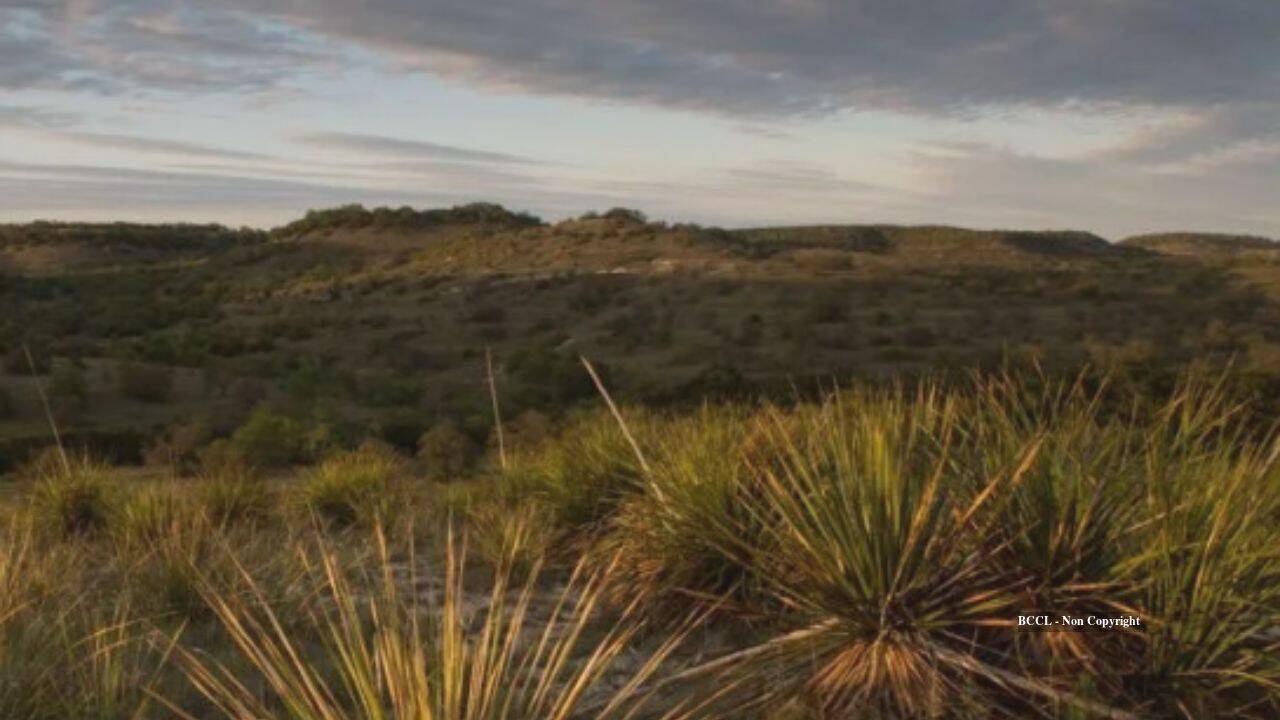
Today, that once-desolate 3,000-acre expanse—expanded over time into the 5,500-acre Selah, Bamberger Ranch Preserve—supports twenty-seven distinct stock tanks, ponds, and lakes fed by natural artesian springs. The primary spring produces an average of three gallons of crystal-clear water every single minute, easily supplying households, livestock, and the surrounding ecosystem. Miller Creek, long silent, flows perennially once more.
The wildlife noticed before the humans did. Early bird surveys recorded fewer than fifty species on the property back when the dirt was dead. Today, over two hundred and twenty bird species call the sanctuary home, alongside reintroduced endangered species like the golden-cheeked warbler, sprawling herds of migrating fauna, and nearly half a million Mexican free-tailed bats roosting in a purpose-built cave.
The dust bowl vanished, replaced by an undulating sea of green grass and whispering shade.
R.C. Bamberger passed away, but the hills he healed continue to breathe. Standing by the edge of a spring-fed stream today, watching dragonflies dart across the surface of water that technically should not exist, you realize something fundamental about the earth. It is remarkably resilient, provided we are patient enough to step out of its way and let it bleed back to life.