At 6:15 in the morning, the fog still clings to the eucalyptus trees along the edges of Oakland’s public schoolyards, cold enough to turn breath into ghost-smoke while Elena, a third-grade teacher, unlocks her classroom door. She carries two canvas bags heavy with colored pencils, dry-erase markers, and copy paper she paid for out of her own checking account, having already burned through her district’s meager supply stipend before Halloween. Three miles away, up in the winding, gated hills where the fog burns off first to reveal sweeping, uninterrupted views of the Pacific, a different kind of morning is unfolding inside a glass-and-limestone estate. Here, an algorithmic portfolio manager reviews overnight gains that added fourteen million dollars to a single client’s net worth while that client slept, yet the client’s taxable income for the year—on paper, at least—reads near zero.
Silence. That is the sound of modern wealth in California. It does not clink in a register, and it rarely shows up on a W-2.
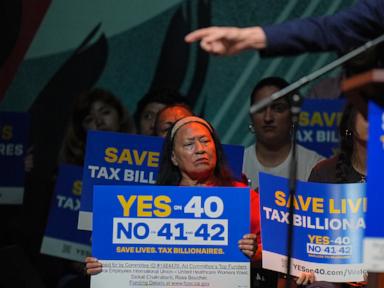
For decades, we have operated under a comforting, neatly packaged illusion about how fairness works in the American economy: you work, you earn a paycheck, and the government takes a percentage to pave the roads, staff the emergency rooms, and keep the lights on in Elena’s classroom. The bigger your paycheck, the bigger your slice of the civic bill. But somewhere along the coastline between Silicon Valley’s sprawling server farms and Beverly Hills’ manicured hedges, that social contract quietly snapped. California, home to more billionaires than anywhere else in the United States—roughly two hundred of them, holding a combined fortune exceeding two trillion dollars—is standing at the precipice of a radical, historic experiment. Lawmakers in Sacramento have repeatedly brought forward proposals, most notably Assembly Bill 259 and parallel constitutional amendments, that could make California the very first state in the nation to levy a direct annual tax not just on what the ultra-rich earn, but on what they own.
The Architecture of Untouchable Money
To understand why Sacramento is suddenly willing to rattle the cages of the state’s most powerful residents, you have to look closely at how a fortune actually breathes. When Elena gets paid, her salary is captured instantly by the state’s Franchise Tax Board, taxed at rates that climb steadily alongside every modest cost-of-living raise she receives. When a billionaire’s fortune grows, however, nothing is sold, no paycheck is issued, and no tax event occurs.
Consider a hypothetical tech founder—let’s call him Marcus—whose software company went public five years ago in San Francisco. Marcus owns three billion dollars’ worth of stock. Over the last twelve months, his shares appreciated by twenty percent, making him six hundred million dollars richer before he even finished his morning espresso. Under current American tax law, those gains are "unrealized." Think of them like a prize-winning thoroughbred locked inside a climate-controlled barn: everyone knows the horse is worth millions, banks will gladly lend Marcus fifty million dollars in cash using the horse as collateral so he can buy a vineyard in Napa or a Gulfstream jet, and yet, because he never leads the horse out to auction, the state treats him as though he hasn't made a dime.
This is the "Buy, Borrow, Die" strategy that wealth advisors whisper about in wood-paneled conference rooms from Palo Alto to Century City. By borrowing against appreciating assets at rock-bottom interest rates, billionaires fund lavish, frictionless lives without ever triggering income tax, and when they pass away, the tax liability on decades of appreciation largely evaporates under federal step-up-in-basis rules.
Meanwhile, California’s budget rides a violent roller coaster. Because the state relies heavily on capital gains taxes—which only kick in when stocks are actually sold—a booming market floods Sacramento with sudden surpluses, while a slight dip on Wall Street leaves the state scrambling to cover multi-billion-dollar deficits. When the tide goes out, it is never the private vineyards or the Gulfstream jets that get dry-docked; it is Medi-Cal reimbursements, state university grants, and the roof over Elena’s third-grade classroom.
I remember standing outside a community health clinic in Fresno two summers ago, watching a line of elderly farmworkers wait in 104-degree heat because budget shortfalls had forced the county to cut evening clinic hours. The air smelled of baked asphalt and diesel exhaust, thick and unforgiving. Inside, a nurse practitioner showed me a clipboard of referrals she couldn't fulfill, her voice raspy from exhaustion as she explained how a ten-percent dip in Silicon Valley stock sales six months earlier had trickled all the way down to whether a diabetic grandfather in the Central Valley could get his insulin adjusted before dark. That is the invisible geometry of California’s tax code: abstract spreadsheets in Menlo Park dictating the physical survival of families two hundred miles inland.
How the Proposed Wealth Tax Would Actually Work
Strip away the cable-news shouting matches, and the mechanics of California’s proposed wealth tax are surprisingly straightforward, though fiercely contested. Under the frameworks debated by the state legislature—specifically the variations of the wealth tax proposals championed by Assemblymember Alex Lee and a coalition of labor unions and progressive economists—the tax would not touch millionaires, upper-middle-class doctors, or families sitting on expensive Bay Area real estate they bought in the 1980s.
Instead, the legislation draws a bright, towering line in the sand: households with a worldwide net worth exceeding one billion dollars—and in some iterations, a graduated tier starting at fifty million dollars—would pay an annual tax of 1% to 1.5% on their total net worth above that threshold.
To put that into human scale, imagine a bucket holding one thousand gallons of water. Under the proposed one-percent billionaire tier, the state asks for ten gallons once a year, leaving nine hundred and ninety gallons behind—while the water inside the bucket typically swells by another eighty or a hundred gallons annually through compound market returns anyway. Even for someone worth two billion dollars, a 1.5% tax on the portion above one billion amounts to fifteen million dollars a year.
Crucially, the proposals are designed to capture the exact assets that currently slip through the fingers of tax collectors: publicly traded stocks, private business equity, massive art collections, yachts, hedge fund stakes, and commercial real estate holdings, minus any legitimate debts. To prevent the ultra-wealthy from simply packing their bags the night before the tax takes effect, lawmakers even drafted "exit tax" provisions—requiring former residents who leave the state to continue paying a diminishing fraction of the tax over a multi-year tail period, reflecting the wealth they built while utilizing California’s universities, venture networks, and public infrastructure.
The Great Exodus Myth and the Fear of Capital Flight
Every time the words "wealth tax" echo through the marble halls of the State Capitol in Sacramento, a predictable counter-chorus rises from the boardrooms of Sand Hill Road and the editorial pages of financial newspapers. The warning is always the same: They will leave.
Opponents argue, with genuine conviction and formidable lobbying muscle, that billionaires are not anchored to the soil like redwood trees. Their wealth is digital, mobile, and fiercely defended by armies of tax attorneys. If California slaps a 1.5% annual levy on net worth, the critics warn, the founders of the next Google or Nvidia will simply relocate to Austin, Miami, or Seattle—taking their philanthropic foundations, their angel investments, and the ordinary income taxes they do pay right along with them. Worse still, critics point to the practical nightmare of valuation. How do you accurately price a privately held artificial intelligence startup that hasn't turned a profit, or a rare Basquiat painting hanging in a Malibu living room, every single year without creating a bureaucratic quagmire of audits and lawsuits?
These are not trivial objections. Even economists sympathetic to taxing extreme inequality admit that valuing illiquid private assets is messy, expensive, and prone to endless legal warfare. When European nations like France, Sweden, and Germany experimented with wealth taxes in the late twentieth century, several eventually repealed them, largely because poorly designed exemptions allowed the richest citizens to shelter their money while raising less revenue than projected.
Yet history and empirical data tell a far more complicated story than the threat of a mass billionaire exodus. Sociologists Cristobal Young and Charles Varner, who spent years studying millions of tax records across the United States to see what happens when states raise taxes on the rich, found that millionaire migration is remarkably low. High earners are deeply embedded in what researchers call "place-based social capital." A biotech CEO in San Diego cannot simply move her laboratory, her Stanford-educated researchers, her venture capital partners, and her children’s schools to Nevada overnight just to shave a percentage point off an asset ledger.
We saw a preview of this dynamic in 2012, when California voters passed Proposition 30, temporarily hiking income tax rates on the state’s highest earners to rescue public schools from devastating cuts. Critics predicted an immediate economic collapse and a stampede of wealthy residents fleeing across the Nevada border. Instead, California’s economy surged, outpacing the national average in job growth for years afterward, and the state’s billionaire population actually grew. People do not build empires in California because the taxes are low; they build them here because the weather, the coastline, the research universities, and the dense ecosystems of talent cannot be replicated in a tax-free desert suburb.
A Question of What We Owe Each Other
Still, there is an undeniable constitutional and political gauntlet standing between a bill in Sacramento and a check clearing the state treasury. Because California’s Proposition 13, passed in 1978, strictly caps property taxes, any broad tax on personal property—which includes stocks and bonds—requires amending the state constitution. That means lawmakers cannot simply pass a bill on a Friday afternoon; they must either secure a two-thirds supermajority in both legislative chambers or gather hundreds of thousands of signatures to put the question directly before California voters on a statewide ballot. And if it passes, it will almost certainly trigger an immediate, high-stakes legal showdown before the California Supreme Court—and potentially the United States Supreme Court—over whether a state has the authority to tax intangible wealth held across global markets.
It is easy to get lost in the legal jargon, the actuarial tables, and the dueling economic white papers. Honestly, the sheer complexity of modern finance is designed to make ordinary people tune out, to make us feel as though these decisions belong exclusively to specialists in tailored suits.
But strip away the statutes, and you are left with a question that a third-grader in Elena’s classroom could understand. What happens to a community when the distance between the top floor and the ground floor grows so vast that the people on the roof no longer share the same weather as everyone else?
In California today, the top one percent of households controls more wealth than the bottom ninety percent combined. While teachers buy their own classroom supplies and nurses ration evening clinic hours in the valley heat, two hundred residents sit atop two trillion dollars in largely untaxed, compounding assets—a reservoir of private power larger than the entire annual economic output of Canada or Italy.
California has always been the place where America tests its future first, for better or worse. It is where the modern environmental movement was born, where the digital revolution took shape in suburban garages, and where the tensions of extreme inequality have sharpened to a razor’s edge. Whether Sacramento ultimately succeeds in unlocking those invisible vaults or gets stalled in the courts, the fight itself has already shattered a decades-old taboo. It has forced a reckoning with the simple, stubborn truth that a society cannot survive forever on the wages of those who sweep the floors while leaving the fortunes of those who own the building untouched.
Back in Oakland, the morning bell rings at 8:00 AM sharp, and thirty eight-year-olds tumble through Elena’s doorway, tracking damp leaves onto the linoleum and reaching eagerly for the fresh boxes of colored pencils stacked neatly on her desk. Outside the window, the fog has finally lifted, revealing the bright, glittering towers across the bay—close enough to touch, yet worlds away.