In April 2015, a six-year-old girl in Saskatoon, Saskatchewan, complained that her leg hurt.
Parents know this script by heart. Kids trip on playgrounds, pull muscles chasing dogs, and wake up with growing pains that vanish by breakfast. You rub the calf, hand over an ice pack, and wait for Tuesday. When the ache lingers, you book an appointment at a walk-in clinic, sit under humming fluorescent lights, and listen to a physician reassure you that nothing is broken.
Naomi Lendvay’s family walked through that exact routine. Multiple doctor visits yielded no answers. Nothing showed up on the first passes, and the quiet machinery of primary care kept suggesting everything was fine. Yet a parent’s gut rarely negotiates with incomplete test results. Something inside Naomi’s body was moving fast, hidden deep in the soft tissue where a routine glance could never reach.
When the truth finally surfaced, the floor vanished beneath the Lendvay household.
Naomi had Stage 4 alveolar rhabdomyosarcoma. It is an aggressive soft-tissue cancer that strikes children and young adults, burying itself in skeletal muscle before spreading silently through the body. By the time doctors cornered the diagnosis, the disease had already gained too much ground.
The medical team delivered the sentence no parent ever prepares to hear: Naomi had twelve months left to live.
The Math of Twelve Months
Stop and measure a year through the eyes of a first-grader.
Twelve months is one birthday cake. It is one Halloween costume, one Saskatchewan winter watching snow pile against the living room window, and one summer that arrives too late. Standard chemotherapy and radiation protocols were no longer framed around a cure; the clinical goal had narrowed to buying time, stretching weeks into months so a little girl could experience as much childhood as humanly possible before the clock ran out.
Pediatric oncology operates under a brutal arithmetic that most adults never see until crisis forces them into a hospital ward. Childhood cancers are not simply miniature versions of adult tumors. Adult cancers often stem from decades of cellular wear, environmental exposure, or lifestyle factors, while pediatric malignancies arise from developmental errors in rapidly growing tissue. Because children make up a fraction of overall cancer diagnoses, pharmaceutical research has historically poured vastly more capital into adult therapies, leaving pediatric oncologists to borrow, adapt, or ration experimental compounds in last-ditch trials.
Doctors placed Naomi on temsirolimus, a targeted testing drug designed to block a specific protein pathway—mTOR—that helps cancer cells divide and survive. Think of a rogue factory running assembly lines twenty-four hours a day; temsirolimus was meant to cut power to the conveyor belts just enough to slow production down. Nobody in the room promised a miracle. The drug was supposed to protect her twelve-month window, not rewrite her prognosis.
Then the scans came back.
The tumors were not merely stalling. They were dying.
A Medical Anomaly With a Stubborn Streak
Even years later, oncologists reviewing Naomi’s charts cannot fully explain why her body responded the way it did. Among children diagnosed with her exact severity of metastatic alveolar rhabdomyosarcoma, survival rates sit near zero. She became an outlier—a living case study whose genetics researchers still swab and examine, searching for the biological lock that temsirolimus somehow managed to turn.
By June 2017, Naomi was declared cancer-free.
Survival alone would have been enough to fill a lifetime. Most people who walk away from a terminal diagnosis spend decades quietly savoring ordinary mornings, grateful simply to breathe without an IV pole trailing behind them. Naomi, however, had already decided during treatment that gratitude was too passive.
When supporters first rallied around her hospital bed, they printed banners and shirts reading Team Naomi Get Well Soon. Six-year-old Naomi looked at the slogan and rejected it outright.
"Mom, I don't want to get well soon," she told her mother, Vanessa. "I want to get well now."
That refusal became the backbone of the Team Naomi Get Well Now Foundation. What started as a kid’s impatience with waiting turned into an organized, relentless push for pediatric cancer research. Alongside her family, Naomi launched golf tournaments, published cookbooks, and—after an eight-year-old Naomi famously told her oncologist she felt like saying "F-bomb cancer"—sold thousands of pairs of custom socks across Saskatchewan. Professional lacrosse players from the Saskatchewan Rush wore her socks onto the turf and stuck her foundation’s decals onto their helmets. Local firefighters shaved their heads. Hockey arenas dedicated entire nights to her mission.
To date, those efforts have raised more than $350,000 for childhood cancer research.
The Invisible Crisis Inside Pediatric Clinics
Numbers like $350,000 look clean on a ceremonial check, yet the real stakes live in exam rooms where parents sit gripping folded clipboards, wondering if they are overreacting.
Consider a hypothetical scenario based on patterns pediatric advocates hear every week. Imagine a mother in a mid-sized prairie town whose eight-year-old son wakes up drenched in sweat, limping slightly, complaining of deep fatigue that sleep cannot fix. She brings him to a clinic. The doctor sees a healthy-looking kid, blames a viral bug or sports strain, and sends them home. Two weeks later, the pain deepens. Without a reference point, without knowing that rare soft-tissue cancers masquerade as ordinary childhood aches, that mother might accept a second dismissal, losing precious weeks while microscopic cells multiply.
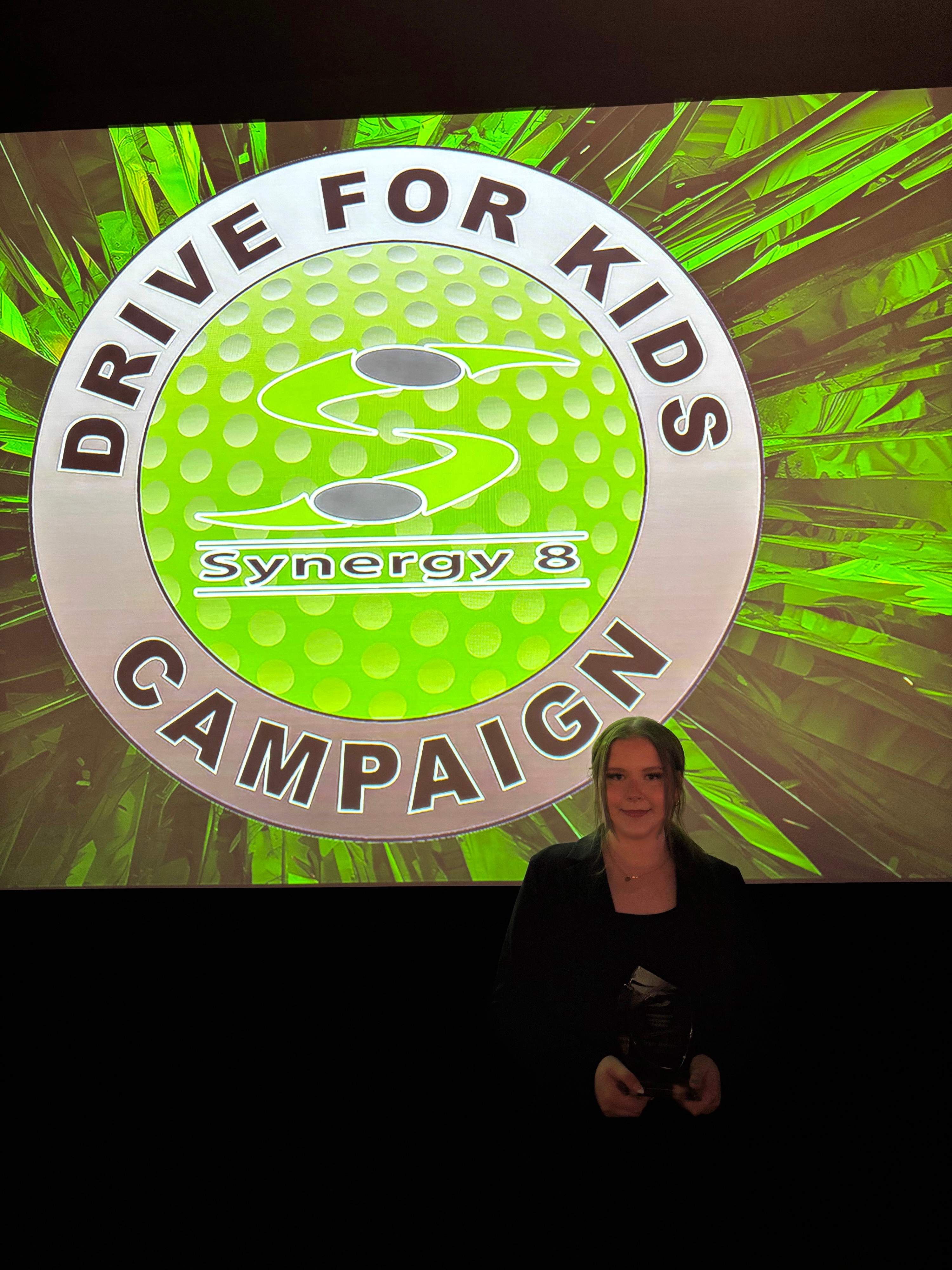
This is not an abstract fear. Following a recent appearance at the Synergy 8 Community Builders Drive for Kids Golf Tournament and Banquet in Saskatoon, a mother approached Naomi to share that exact ordeal. Her child had grown severely ill, yet physicians brushed past her concerns, discounting her maternal instinct. That mother told Naomi she would never have pushed back as fiercely against medical dismissal if she had not heard Naomi’s story first.
"When they went to the doctor, they were dismissive and not really taking in the mother's intuition," Naomi recalled. "She said she wouldn't have fought as hard if she hadn't have heard our story."
Awareness sounds like a soft word until it acts as a crowbar inside a doctor's office. When families realize children get aggressive cancers too—and that early symptoms frequently mimic harmless growing pains—they stop apologizing for asking for imaging, blood panels, or second opinions.
From Hospital Bed to Dental Chair
Walk through the halls of St. Joseph High School in Saskatoon in 2026, and you would never guess the senior heading toward graduation once had an expiration date penciled into her medical file.
In June 2026, Naomi Lendvay received a national Terry Fox Humanitarian Award, one of Canada’s highest honors for young people who turn personal adversity into sustained public service. The symbolism runs deep. Terry Fox ran across Canada on an artificial leg because he refused to accept the silence surrounding cancer research; nearly half a century later, a teenager who nearly lost her life to a leg tumor accepted an award bearing his name.
Her next step carries the same quiet defiance. Graduating from high school, Naomi set her sights on studying dentistry at the University of Saskatchewan.
At first glance, dentistry might seem worlds apart from pediatric oncology. Look closer, and the connection makes visceral sense. Chemotherapy and high-dose radiation leave lasting marks on developing bodies, particularly in the mouth—damaging tooth enamel, stunting root development, and altering salivary glands in childhood survivors for decades after remission. A clinician who has sat in the patient chair, felt the metallic taste of infusion lines, and endured years of follow-up scans brings a fluency to healthcare that no textbook can manufacture.
Why Urgency Belongs to the Healthy
We tend to treat catastrophic illness as a distant weather system—something tragic that strikes other neighborhoods while our own skies stay clear. That distance makes us comfortable with slow timelines. We tolerate underfunded pediatric trials, accept multi-month waits for diagnostic referrals, and tell sick kids to get well soon because "soon" feels polite and manageable.
Naomi Lendvay broke that habit at six years old because she didn't have the luxury of patience.
She still gives genetic swabs to researchers trying to decode why an experimental drug saved her life when the odds said it shouldn't. She still steps up to banquet microphones in Saskatchewan to remind rooms full of adults that research dollars are not charity—they are ammunition for kids fighting diseases designed for bodies ten times their size.
Somewhere in a clinic waiting room right now, a parent is staring at a clock on the wall, trying to decide whether to trust a reassuring shrug or demand another look. Across Saskatoon, a young woman packing her bags for university carries the proof of what happens when someone refuses to wait.