Astronomers are used to the dark. They spend their lives staring into emptiness, chasing objects that do not want to be found. But on January 10, 2024, a small network of observers across Japan pointed their instruments toward a specific patch of ink beyond the orbit of Neptune, waiting for a star to die.
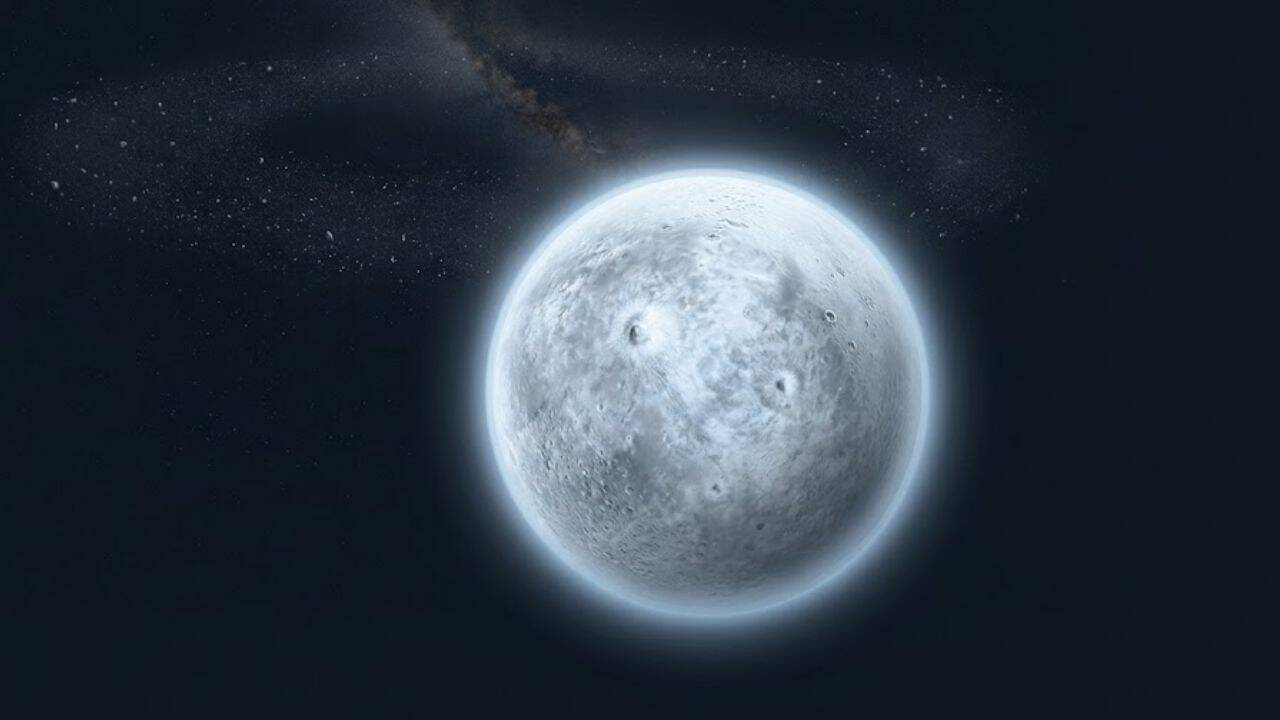
They were tracking a cosmic afterthought. Officially named (612533) 2002 XV93, the object is a "plutino"—an icy rock locked in a gravitational dance with Neptune, swinging through the frozen outer edges of our solar system. It is tiny. At just 500 kilometers wide, it could fit comfortably inside the length of the Grand Canyon. It is forty degrees above absolute zero. It is billions of miles away, entirely isolated, and by all existing laws of planetary science, it should be dead. Recently making news in this space: Apple and the Gatekeeper Reality in Europe.
The plan that night was simple. The astronomers wanted to catch the exact moment 2002 XV93 crossed directly in front of a distant background star. This event, known as a stellar occultation, is the astronomical equivalent of watching a moth fly in front of a streetlamp miles away. If the rock was just a naked, frozen lump of stone and water-ice, the star’s light would instantly wink out. Binary code. On, then off.
But the star did not wink. More details into this topic are explored by MIT Technology Review.
Instead, the light softened. It bled away gradually over a agonizing second and a half, then eased back into view.
Dr. Ko Arimatsu and his team at the Ishigakijima Astronomical Observatory stared at the data. The smooth, sloping curve of the light meant only one thing. The starlight was bending. It was filtering through a shroud.
Against every mathematical model we possess, this frozen pebble has an atmosphere.
The Gravity of Little Things
To understand why this discovery sent a collective shudder through the astrophysical community, you have to understand the brutal physics of the deep solar system.
An atmosphere is an expensive luxury for a celestial body. To keep one, a world needs a massive iron core and a powerful gravitational grip to pin gas molecules to its surface. Earth does this easily. Pluto, much smaller but still substantial, manages a fragile, ghost-thin exosphere of nitrogen and methane when its elliptical orbit carries it close enough to the sun to melt its surface frost.
But 2002 XV93 has about one-fifth the diameter of Pluto. Its gravity is a joke. Gas molecules at forty degrees above absolute zero still move with enough thermal energy to break free from a rock that small. According to conventional models, any volatile gas clinging to its surface should have leaked into the vacuum of space billions of years ago.
Yet, there it was. The data indicated a surface pressure between 100 and 200 nanobars. To put that in perspective, it is roughly five to ten million times thinner than the air you are breathing right now. It is a whisper of an atmosphere.
But a whisper in a silent room sounds like a gunshot.
The existence of this gas envelope challenges the very framework of how we categorize worlds. We believed that global atmospheres were the exclusive right of the giants, the dwarf planets, and the massive moons. We assumed the Kuiper Belt was populated entirely by static, frozen fossils—sterile ice cubes preserved in the deep freeze of time.
We were wrong. The universe does not care about our categories.
A Clock Ticking in the Dark
The discovery immediately forced Arimatsu’s team into a corner. Physics dictates that 2002 XV93 cannot hold this gas for long. Calculations show the atmosphere is bleeding out into the void so quickly that it should entirely vanish in less than a thousand years.
A thousand years is a blink. In the 4.6-billion-year history of our solar system, a thousand years is a single frame in a feature-length film. The odds of humanity developing telescopes, building a network in Japan, and looking at this exact, obscure rock at the precise millenium it possessed an atmosphere are astronomically low.
Unless, of course, it isn't a coincidence.
Consider the first possibility: the atmosphere is temporary. Imagine a stray comet, a massive ball of frozen nitrogen and carbon monoxide, hurtling through the dark. It collides with 2002 XV93. The kinetic energy of the impact vaporizes the ice, violently releasing a plume of trapped gas that swaddles the minor planet in a brief, fleeting morning mist. If this is what happened, we are witnessing the dying echoes of a cosmic car crash.
But there is a second, far more unsettling option.
What if the atmosphere isn't a temporary scar? What if it is being constantly replenished from within?
This points to cryovolcanism—ice volcanoes. It means that deep beneath the crust of this tiny, neglected rock, some unknown source of heat is keeping the interior alive. It means radioactive decay or tidal forces are churning a hidden slush, forcing gases like methane or carbon monoxide to erupt through the frozen crust, breathing life into a world that should be a corpse.
We don't know which answer is right. The James Webb Space Telescope had previously scanned 2002 XV93 and found no obvious signs of frozen volatile gases on its surface that could naturally melt into vapor. The surface looks bare. The gas is coming from somewhere else.
The Unlearning
There is a distinct vulnerability in admitting that a 300-mile-wide rock billions of miles away can make our finest minds look like amateurs. Space exploration is often marketed as a series of definitive conquests, a steady march of flags and certainties. But true science is found in the moments where the data makes you feel foolish.
If a body as insignificant as 2002 XV93 can hold its breath against the vacuum of space, then the thousands of other minor planets drifting in the Kuiper Belt are not the dormant ice blocks we thought they were. They may be dynamic. They may be venting, shifting, and interacting with the void in ways we never thought to measure.
The team in Japan is already preparing for the next alignment. They will watch the rock pass in front of another star, and then another.
Consider what happens next: if the atmosphere has thinned when they look again, we will know we caught the ghost of an ancient impact. But if the pressure remains steady, if the shroud holds firm against the thieving vacuum of the outer solar system, we will have to accept a spectacular new reality.
Deep in the dark, where the sun is nothing more than a bright, cold pinprick, the smallest worlds are still breathing.

_(cropped).jpg/440px-Rob_O'Neill_(40543587961)_(cropped).jpg)