The air in Sihanoukville used to taste like salt and frying fat. Now, it tastes like dust and corrugated iron.
I remember the neon hum of the coastal city before the storm broke, back when the shoreline was a chaotic sprawl of concrete skeletons funded by money that arrived in suitcases and disappeared into shell companies. Cranes clawed at the sky, promising a glittering maritime hub. Instead, they built fortresses. Behind tinted glass and razor wire, thousands of young men and women from across Asia sat in rows, staring into glowing screens. They thought they were customer service agents. They were data miners. They were human currency.
Then came the purge.
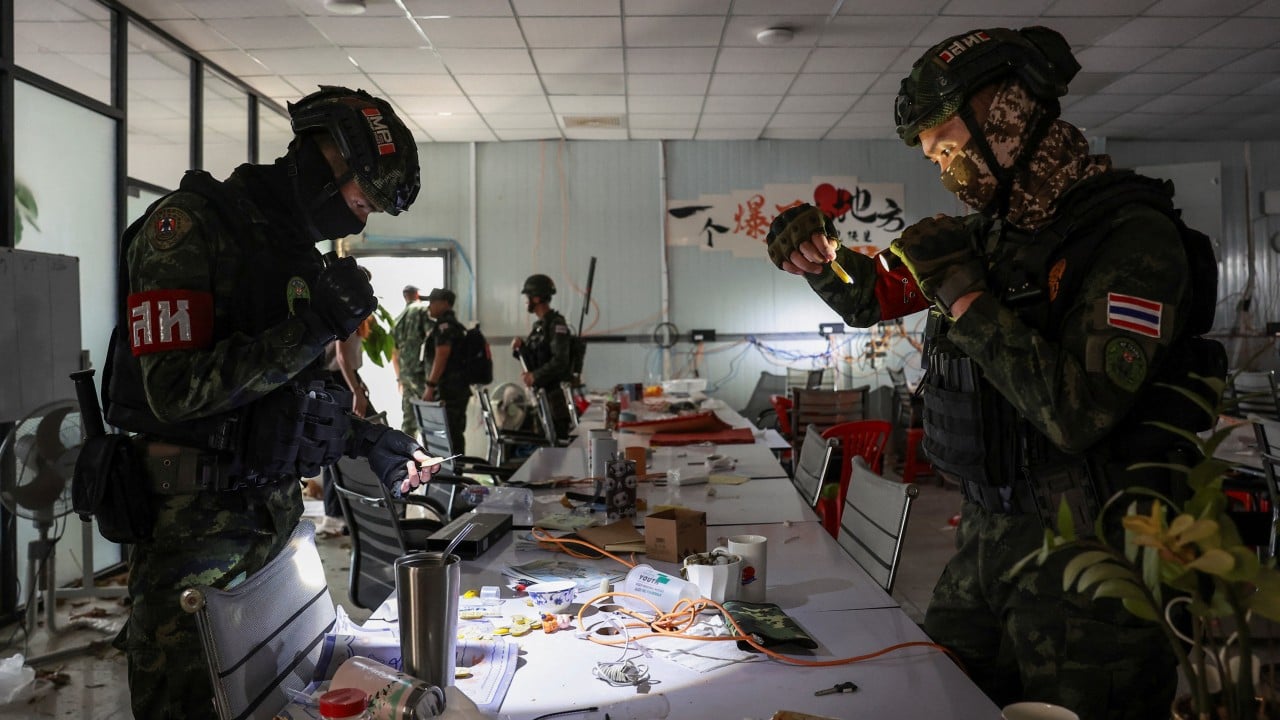
When international pressure finally cracked the facade, the Cambodian government moved. Raids shattered the compounds. Sirens bounced off the unfinished towers. Journalists took photographs of dazed teenagers clutching cheap plastic bags as they were herded onto buses. Governments patted themselves on the back. The syndicates, they declared, had been dismantled. The cyber slavery compounds were empty.
They were not empty. They had merely packed their bags.
To understand what happened next, you have to look away from the coastal highway and stare into the thick, coffee-colored currents of the Mekong River. Water does not care about borders. Neither do men who deal in stolen futures.
Consider a hypothetical compound manager named Chen. He is not a cartoon villain. He wears worn New Balance sneakers, drinks lukewarm canned coffee, and tracks his daily revenue on a cracked tablet. When the bulldozers rolled toward his compound in Cambodia, Chen did not panic. He checked his logistics. He looked at the porous borders stretching north toward Laos and east into the lawless pockets of Myanmar. He looked at the satellite internet dishes that could be packed into the back of a Ford Ranger in twenty minutes.
Chen simply shifted his coordinates.
The criminal syndicates behind the industrial-scale scam operations that bled billions of dollars from global victims have not vanished. They have mutated. Like water finding a crack in a dam, they bled across national lines, retreating deeper into territories where state authority is fragile or non-existent. The Shwe Kokko project in Myanmar, the Golden Triangle special economic zones, and remote stretches of the Laotian border became the new destination points.
Why did they move so seamlessly? Because the architecture of modern cyber fraud is entirely modular. You do not need a fixed address to steal a life savings. You need a keyboard, a script, a VPN, and a desperate human being chained to a desk to type the messages.
We talk about these operations in abstract numbers. Billions lost. Thousands trafficked. Red notices issued. Interpol statements. But numbers are a defensive mechanism of the human brain. They allow us to process tragedy without having to look it in the eye.
Let us look it in the eye instead.
Imagine Lin. She is twenty-three, living in a cramped apartment in Manila, scrolling through social media hoping for an escape from an economy that offers her nothing. An old school acquaintance posts about a data entry job abroad. Generous salary. Free housing. Paid flights. It sounds too good to be true, but desperation makes skeptics out of saints and believers out of realists. Lin packs a single suitcase. She boards a plane.
By the time her passport is confiscated at a guarded compound gate somewhere along the misty banks of the Mekong, the illusion dissolves. The friendly acquaintance is gone. In his place are armed guards and a quota. If she does not trick a retired teacher in Ohio into buying worthless cryptocurrency within forty-eight hours, the beatings begin.
This is the invisible machinery of the regrouped syndicates. When Cambodia turned up the heat, the machinery was disassembled, loaded onto flatbed trucks, and reassembled under a different warlord's protection two hundred miles away. The faces of the enslaved workers changed as new batches were lured across borders, but the core engine remained intact.
The international community missed the fundamental truth of transnational organized crime. Law enforcement treats these syndicates like fixed businesses that can be shut down by seizing assets and arresting low-level managers. The syndicates actually operate like fluid guerrilla networks. They are decentralized. They use encrypted messaging apps, decentralized finance protocols, and corruption grease that flows effortlessly through the cracks of regional governance.
When one node goes dark, three more flicker to life in the jungle.
The geography of this underground empire has shifted toward the periphery. In the borderlands of Myanmar, ongoing civil conflict creates a chaotic smokescreen where the central government cannot reach even if it wanted to. Here, scam compounds operate in broad daylight, protected by local militias who take a cut of every stolen dollar. The guards carry assault rifles instead of stun guns. The walls are higher. The river is wider.
Yet, the victims are still sitting in the same kind of plastic chairs, staring at the same translated scripts, weeping silently into the same cheap keyboards.
We are living through a quiet transformation of global crime. The old mafia ran drugs or smuggled contraband, physical things that could be intercepted by customs officers with dogs and X-ray machines. The new mafia trades in digital trust. They exploit our loneliness, our financial anxieties, and our desperate desire for connection. They weaponize the internet against itself.
And the hardest truth to swallow is this: the purge in Cambodia did not destroy the beast. It only taught it how to hide in the brush.
The sun is setting over the Mekong now. The water turns the color of molten copper. Somewhere out there, hidden behind a nondescript concrete wall topped with rusted barbed wire, a phone is ringing. A young man is taking a deep breath, smoothing his voice, and dialing a number that will ruin a stranger's life on the other side of the planet. The river keeps flowing, indifferent to the cargo it passes, carrying the shadows forward into the dark.



