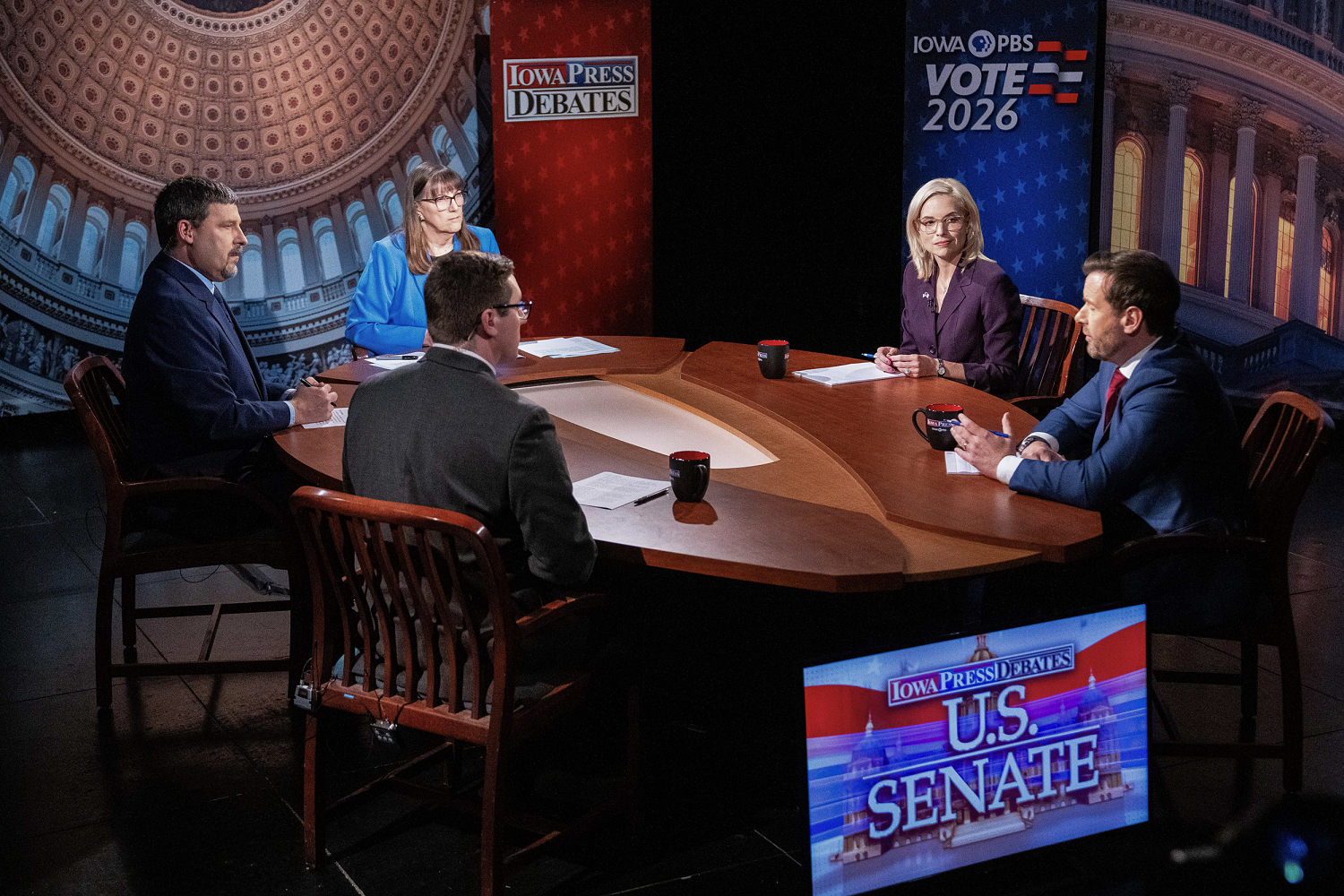
The auditorium smelled of floor wax and cold coffee. Outside, the Iowa wind was doing what it always does in late autumn—scouring the fields, stripping the last clinging husks from the stalks, and pushing the temperature down toward a slate-gray freeze. Inside, the stage was arranged with mathematical precision. Three mahogany podiums stood shoulder to shoulder under the glare of network lighting, each equipped with a glass of water, a microphone flag, and an invisible, heavy expectation.
The candidates walked out on cue. They smoothed their ties, adjusted their lapel microphones, and smiled for the cameras with the practiced ease of men who have spent their lives shaking hands in county fair tents. They looked ready. They looked eager.
And then there was the fourth space.
It was empty. No glass of water. No notes. No breathing human being standing behind the wooden facade. Yet, every single person in that room—from the seasoned political reporters tapping furiously on their laptops to the undecided farmers sitting in the third row with their coats zipped against the draft—knew exactly whose weight was bearing down on that vacant spot.
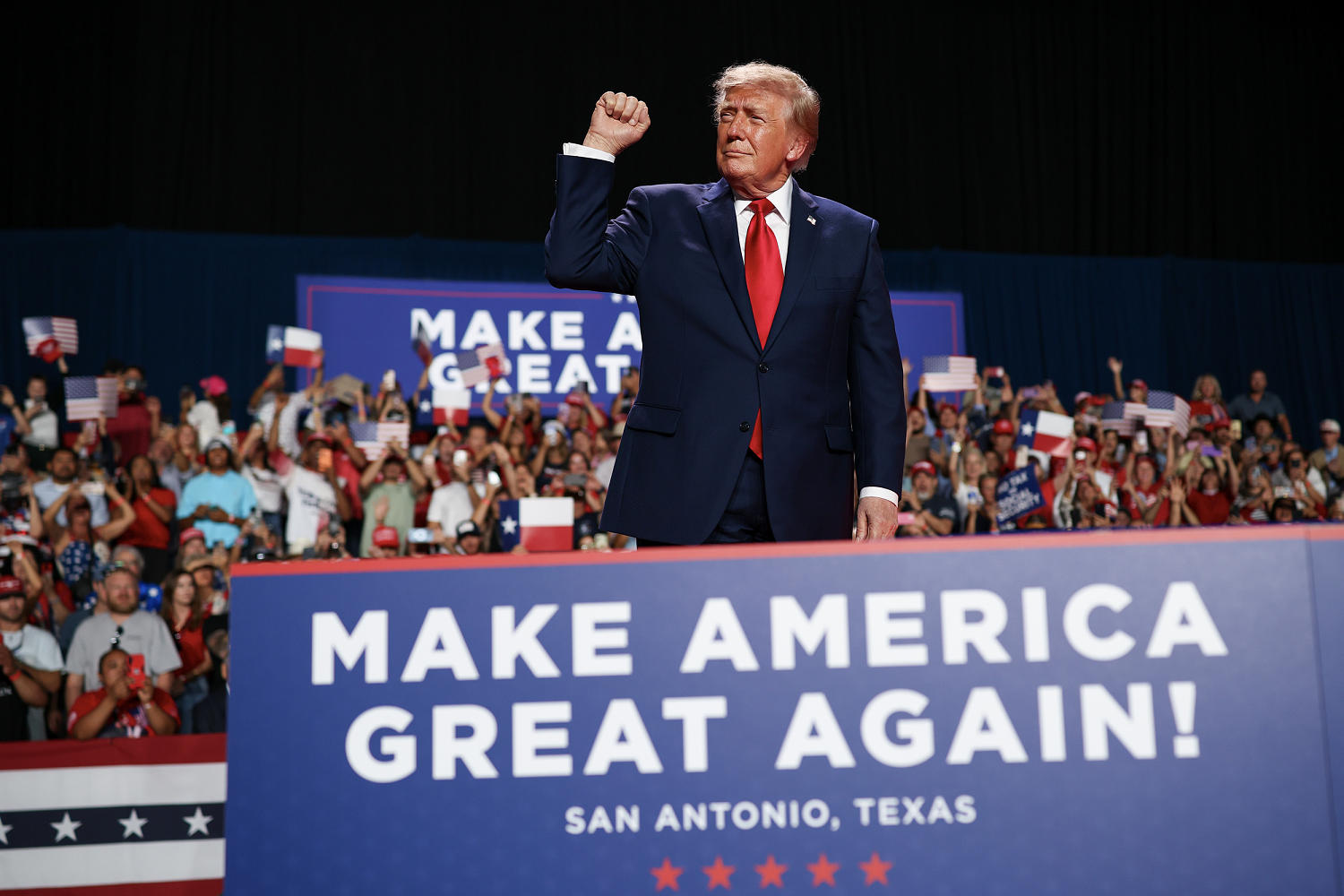
Donald Trump wasn't there. He was hundreds of miles away, perhaps looking at a screen, perhaps rallying another stadium of thousands who hung on his every syllable, or perhaps simply ignoring the ritual entirely. But absence has a volume of its own. It shouts.
We have watched politics devolve into a theater of physical presence for centuries. We measure power by the shoe leather worn out in diners, the number of hands squeezed at state fairs, the miles logged across county lines. Iowa has long been the crucible of this tradition. It is a state that demands intimacy. It asks its would-be leaders to stand in church basements and VFW halls, to answer for their votes while someone’s grandmother asks about Social Security over a paper plate of Jell-O.
That was the old compact. Show up. Look us in the eye. Earn it.
But power, real gravity-bending power, does not always follow the rules written for ordinary mortals. Sometimes, a candidate becomes so large a fixture in the national psychic landscape that their very non-participation dictates the terms of the debate.
Consider what happened under those hot lights. The moderators opened their binders. The questions were sharp, meticulously researched, designed to draw blood, to force comparisons, to create those sharp, viral soundbites that define a primary cycle. The candidates at the podiums launched their salvos. They argued tax policy. They jousted over foreign intervention. They sparred over past legislative votes with the desperate urgency of men trying to carve out oxygen in a room where all the air has already been claimed by an absentee.
Every answer was measured against a ghost.
If a candidate attacked the frontrunner too fiercely, they risked alienating the legion of voters who still viewed that frontrunner as a political savior. If they pulled their punches, they looked weak, incapable of taking on the ultimate prize. It was an impossible geometry. They were trapped in a debate arena where they were theoretically fighting one another, but practically auditioning for the approval of a man who couldn't be bothered to show up.
That is the strange alchemy of modern celebrity politics. It defies geography.
I remember standing in a livestock auction barn in central Iowa eight years ago. The air was thick with the scent of sawdust, manure, and cheap coffee. A candidate stood on a truck bed, shouting through a megaphone that barely worked, trying to convince forty people wrapped in Carhartt jackets that he understood their struggles. It was grinding, honest, heartbreaking work. You could smell the desperation in the handshake. You could see the calluses on the hands of the people listening.
That world is vanishing.
When a frontrunner can skip a high-stakes debate in the very state that holds the entire calendar in the palm of its hand—and see his standing either hold firm or rise—the rules of gravity have shifted. We are no longer dealing with retail politics. We are dealing with an atmospheric condition.
Trump’s strategy from afar was not an accident; it was a masterclass in the art of gravitational pull. By refusing to step onto the stage, he denied his opponents the one thing they desperately needed: a foil, a target, a flesh-and-blood body to hit. You cannot punch a fogbank. You cannot land a knockout blow on an empty podium.
Instead, the men and women who did show up were left to fight among themselves over the scraps of attention left behind. They tore into each other’s voting records with surgical precision, hoping to bleed enough support from one another to emerge as the sole challenger to the throne. But while they were brawling in the mud of policy details, the absentee candidate remained untainted by the fray. He didn't have to defend a stumble. He didn't have to explain a defensive pivot. He existed purely as an idea, a brand, an untouchable symbol of resistance against a system the voters in that room deeply distrusted.
The irony hung thick in the auditorium. The debate was ostensibly about the future of the conservative movement, about who possessed the vision to lead the party out of the wilderness and back into the halls of ultimate authority. Yet, every minute spent discussing the absent leader was a minute surrendered. Every time a candidate took the bait and addressed the empty podium, they reinforced the central premise of the entire campaign: that there is only one sun in this solar system, and everyone else is merely a planet caught in its orbit.
We like to think that democracy is a mechanical process. We believe that if you put the right facts on the table, host the right forum, and ask the tough questions, the electorate will sort through the debris and make a rational, measured choice. We want to believe in the integrity of the arena.
But politics is rarely rational. It is tribal, emotional, and deeply psychological.
The voters sitting in those folding chairs weren't looking for a policy wonk with a three-point plan for rural economic development. They were looking for strength. They were looking for someone who could project power so absolutely that even miles away, behind a screen or a golf cart steering wheel, he commanded the room more effectively than the people standing directly under the spotlight.
By the time the red light on the final camera blinked off and the house lights came up, the exhaustion was palpable. The candidates packed their notes, shook hands with forced joviality, and walked off into the wings. Their teams swarmed them, whispering spin into their ears, checking Twitter metrics, searching for a spark that would prove their night hadn't been wasted.
Outside, the Iowa wind hadn't let up. It howled across the darkened cornfields, rattling the skeleton of the harvest.
The podiums were rolled away. The microphones were unplugged. But the empty space remained, heavy with the realization that the old rules no longer apply, and the ghost has completely rewritten the game.