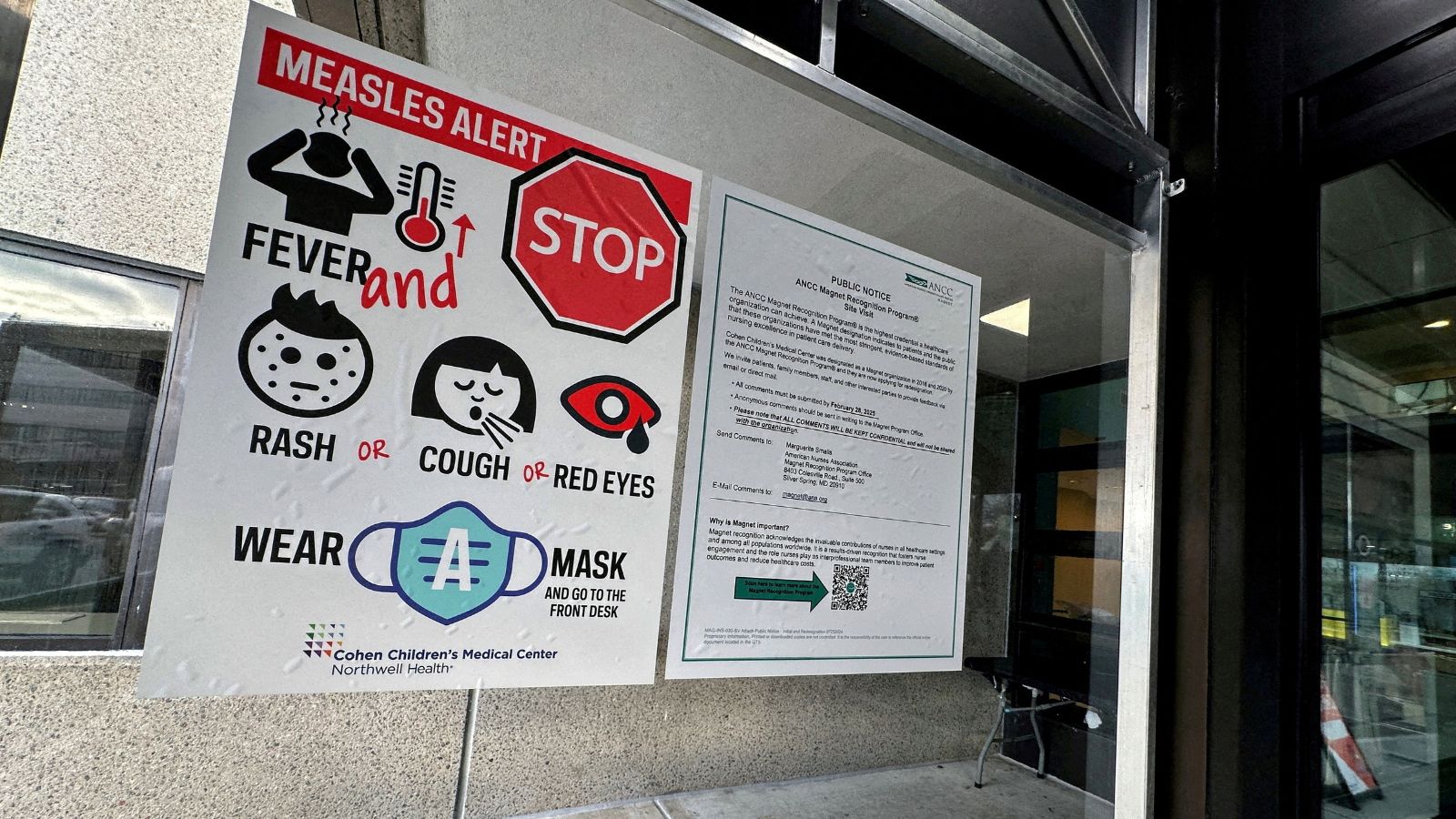
Two hours.
That is how long an invisible cloud of measles virus hangs suspended in the air of an empty pediatric waiting room after an infected child has already coughed, paid at the front desk, and walked out into the parking lot.
Consider a hypothetical scenario—one playing out in variations across hundreds of American clinics right now. Picture a mother named Elena carrying her four-month-old son, Leo, through those same sliding glass doors ninety minutes later. Leo is there for a routine weight check. He is too young for his first measles, mumps, and rubella shot, which doctors administer at twelve months. Elena signs the clipboard, sits in a plastic chair near the fish tank, and rocks her baby while he sleeps against her collarbone. She does not know that the air she is breathing still holds microscopic droplets left behind by a seven-year-old boy whose parents declined routine immunizations. She does not hear an alarm. She smells floor wax and lavender hand sanitizer.
Twelve days later, Leo develops a fever that spikes past 104 degrees, a barking cough, and a flat red rash that begins at his hairline and marches down his torso like a slow-moving stain.
For a quarter of a century, scenarios like Elena’s belonged to history textbooks and dusty public health archives. In 2000, the United States officially declared measles eliminated—meaning the virus no longer circulated continuously within American borders. Generations of young parents grew up without ever seeing a child blinded by corneal scarring from measles, or hearing the labored breathing of measles-induced pneumonia, or watching a pediatrician helplessly explain to a weeping family that there is no antiviral cure once the infection takes hold.
We forgot what the monster looked like because the cage held for so long. Now, the door is standing wide open.
According to federal public health tracking and reporting from major medical centers, US measles cases have surged past 7,700, accompanied by 13 confirmed deaths. Those numbers are not abstract data points on a government spreadsheet; they represent thousands of hospital beds, devastated families, and a profound unraveling of the collective shield that once protected the most vulnerable among us. This resurgence coincides directly with falling childhood vaccination rates across the country and a seismic shift in federal health leadership under Health and Human Services Secretary Robert F. Kennedy Jr., whose long-standing skepticism of vaccines has moved from the fringes of internet message boards into the highest corridors of American medical policy.
The Mathematics of an Unforgiving Virus
To understand why 7,700 cases is not merely a seasonal blip—why epidemiologists speak about this virus with a specific kind of dread—you have to understand the sheer biological ferocity of Morbillivirus.
If infectious diseases were fire, seasonal influenza would be a campfire on a damp evening; one sick person typically passes it to one or two others. Measles is a gasoline spill in a dry forest. Its basic reproduction number—what scientists call R0—sits between 12 and 18. Put a single infected person in a room of one hundred unvaccinated people, and ninety of them will walk out carrying the virus.
Think of community immunity not as an individual raincoat, but as a firebreak cleared around a town. Because measles spreads with terrifying efficiency, public health experts calculate that at least 95 percent of a community must be vaccinated to stop transmission chains before they ignite into outbreaks. When immunization rates hover at 96 or 97 percent, stray sparks from international travelers hit vaccinated bodies and die out immediately. The firebreak holds. Babies like our hypothetical Leo, children undergoing chemotherapy, and adults with compromised immune systems remain safe inside the perimeter.
Drop that coverage down to 91 percent, or 88 percent, and the math turns lethal overnight.
Across dozens of American counties over the past several years, kindergarten MMR vaccination rates have slipped steadily below that 95 percent threshold. In some pockets—isolated school districts, tight-knit religious communities, and affluent suburbs where wellness culture merged seamlessly with medical suspicion—rates have plunged into the 70s and 80s. Those gaps are dry brush waiting for a match. Once measles finds a cluster of unprotected children, it tears through classrooms, church basements, youth sports tournaments, and grocery store aisles with relentless speed.
And the virus carries a cruel biological trick that few people outside immunology laboratories ever hear about: immune amnesia.
When measles infects the human body, it does not just cause a week of misery. It actively hunts down and destroys memory B and T cells—the specialized immune cells that remember every pathogen you have ever fought off or been vaccinated against. Surviving measles can wipe out between 11 and 73 percent of a child’s existing antibody repertoire. In plain terms, a child who recovers from measles often emerges with the immune system of a newborn, suddenly vulnerable all over again to pneumonia, ear infections, strep throat, and common viruses their body had already learned to defeat years earlier. The danger does not end when the rash fades.
How Doubt Became Policy
I remember sitting in a crowded county health board hearing three winters ago, watching a young father stand at the microphone with trembling hands. He wasn’t angry. He wasn’t shouting slogans. He held a binder stuffed with printed articles and asked, with genuine fear in his voice, how he was supposed to know who was telling him the truth about what went into his toddler’s bloodstream.
That vulnerability—a parent’s fierce, terrifying instinct to protect their child from harm—is the exact human nerve that anti-vaccine rhetoric has learned to press with surgical precision.
During the COVID-19 pandemic, public trust in federal health agencies fractured under the weight of shifting guidance, school closures, and bitter political polarization. Millions of Americans felt talked down to by officials who demanded compliance without acknowledging uncertainty. Into that vacuum stepped voices offering simple villains and absolute certainty. When Robert F. Kennedy Jr. ascended to lead the Department of Health and Human Services, decades of questioning the safety and necessity of routine childhood immunizations suddenly gained the imprimatur of the federal government.
The shift in tone from Washington was immediate and unmistakable. Public messaging around routine childhood vaccination softened from urgent consensus to hesitant neutrality. Federal advisory panels were reshaped. Long-settled scientific conclusions regarding the MMR vaccine—a two-dose regimen studied in tens of millions of children over more than fifty years—were framed as open debates requiring personal consumer choice rather than civic responsibility.
Words carry weight when they come from a podium bearing the federal seal. A hesitant parent scrolling through their phone at midnight does not need a government agency to ban a vaccine in order to skip an appointment; they only need permission to doubt. When federal health leadership signals that skipping the MMR shot is a reasonable lifestyle preference, pediatricians across the country find themselves spending half of every well-child visit arguing against talking points validated by the nation’s top health official.
Dr. Marcus Vance, a composite character drawn from the accounts of dozens of frontline pediatricians practicing in outbreak states, describes the exhaustion of watching preventable suffering return to his exam rooms. For twenty years, he never saw a single case of measles. Last spring, he diagnosed eleven in six weeks. He watched a nine-year-old girl develop measles encephalitis—swelling of the brain—that left her struggling to form sentences she had spoken effortlessly a month earlier. Her parents sat beside her hospital bed, stunned into silence, realizing too late that the risks they had feared from a needle were microscopic compared to the reality of the disease itself.
The Invisible Cost of "Mild"
One of the most persistent myths fueling the current crisis is the idea that measles is simply a harmless childhood rite of passage—a few days of spots, some chicken soup, and a week off school. Television sitcoms from the 1960s reinforced this memory, turning red dots on a kid’s cheeks into a punchline.
The clinical reality is brutally different.
Even in a wealthy nation with modern hospitals and intensive care units, measles kills roughly one to three out of every thousand infected children. When cases cross 7,700, simple arithmetic guarantees funerals. Thirteen families in the United States have already buried someone because of an outbreak that modern medicine knows how to prevent with 97 percent effectiveness.
Beyond the 13 deaths lie the survivors whose lives are permanently altered. Roughly one in five unvaccinated people in the US who catch measles ends up hospitalized. One in twenty develops pneumonia, the most common cause of measles-related death in young children. One in a thousand develops acute encephalitis, which frequently leaves survivors deaf or intellectually disabled.
And then there is the ghost that waits years in the dark: subacute sclerosing panencephalitis, or SSPE.
SSPE is a rare, progressive, and universally fatal neurological disorder caused by persistent measles virus lingering quietly inside brain tissue after a child appears to have made a full recovery. Five, seven, or ten years after the rash disappears, the child begins to stumble, lose their memory, suffer involuntary muscle spasms, and slowly slip into a vegetative state before dying. There is no treatment. There is no reversal. Every single case of SSPE begins with a wild measles infection—often contracted in infancy before a child was even eligible for their first shot.
Rebuilding the Firebreak
When an outbreak hits a community, the romanticized language of individual autonomy collides violently with biological reality. Public health departments are forced to trace every movement of every infected patient across restaurants, daycares, airports, and emergency rooms. Unvaccinated children exposed at school must be quarantined at home for twenty-one days—three full weeks of lost education and missed work for parents—because there is no way to know who is incubating the virus until they are already contagious.
Notice how contagiousness works with measles: an infected person spreads the virus for four full days before the telltale red rash ever appears on their skin. By the time a parent realizes their child has measles and keeps them home from soccer practice or Sunday service, the virus has already been circulating through the room for nearly a week.
Stopping this surge does not require a miracle drug or a technological breakthrough. We already possess one of the safest, most effective medical tools ever engineered. Two doses of the MMR vaccine provide 97 percent protection against measles, and that immunity lasts a lifetime for almost everyone who receives it. The vaccine does not contain live wild virus capable of causing an outbreak, it does not overwhelm an infant’s immune system, and decades of rigorous global research involving millions of children have thoroughly disproved any link to autism.
What we need now is not another clinical trial. We need a restoration of honesty, humility, and courage—from policymakers, from local leaders, and from neighbors willing to talk plainly with one another.
Restoring the 95 percent firebreak means empowering pediatricians and community nurses—the people parents actually trust when their child has a fever at two in the morning—with clear, unambiguous backing rather than mixed signals from Washington. It means eliminating non-medical exemptions that allow communities to opt out of basic public safety without consequence, while meeting hesitant parents with patience, transparency, and real human stories rather than ridicule.
Because public health is ultimately an invisible covenant between strangers. You vaccinate your child not only to keep them out of an intensive care unit, but so that a four-month-old baby sleeping against his mother’s chest in a clinic waiting room can breathe safely ninety minutes after you leave.
Think back to Elena and Leo in that plastic chair by the fish tank. In a country where vaccination rates stay above 95 percent, that waiting room is just a waiting room. The air is just air. Elena checks her phone, adjusts Leo’s blanket, pays her copay, and carries her healthy son out into the afternoon sun, completely unaware of the disaster that never happened.