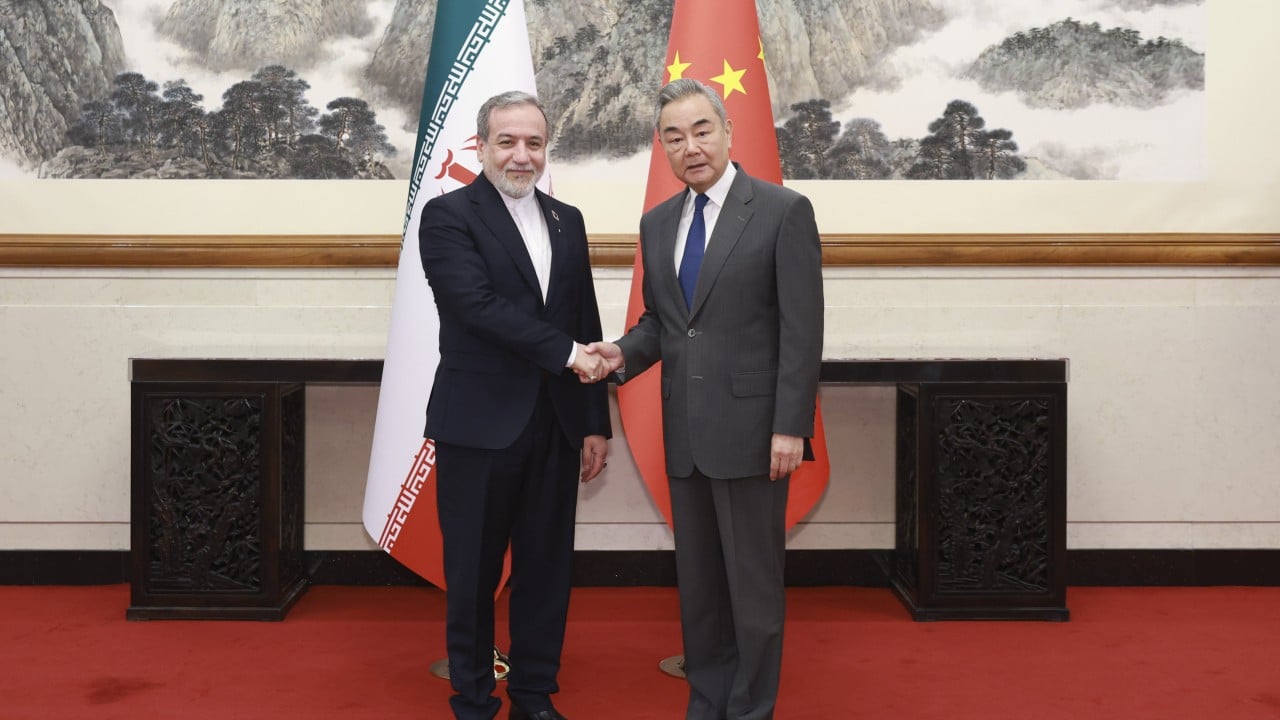
Structural Incentives In Asymmetric State Alignment
When major powers engage with secondary regional actors, their public postures frequently obscure a rigid hierarchy of national interests. The diplomatic engagement between Beijing and Tehran regarding regional maritime security illustrates a fundamental tension in great power foreign policy: the desire to maintain strategic economic partnerships while immunizing domestic growth from foreign economic shocks.
To deconstruct this dynamic, one must examine the cost function governing external state intervention. External powers operating extensive maritime supply chains prioritize commodity flow predictability over ideological solidarity. When regional proxies engage in actions that elevate maritime transit costs—such as targeting commercial shipping lanes in the Red Sea and surrounding waterways—they impose a negative externality on external stakeholders who depend on those same logistical corridors for energy imports and manufactured goods export.
Statecraft under these conditions relies on compartmentalized signaling. Publicly, diplomatic communiques emphasize mutual respect, sovereign integrity, and opposition to external hegemony. Privately, the operational dialogue focuses on risk mitigation parameters. Beijing's messaging to Tehran functions as a classic boundary-setting exercise. It acknowledges the utility of the bilateral relationship while establishing a hard ceiling on the acceptable level of regional disruption.
The Logistics Calculus Of Maritime Chokepoints
The strategic significance of the Bab el-Mandeb strait and the broader maritime periphery of the Arabian Peninsula lies in its function as a critical global economic bottleneck. Disruptions in this geography do not merely affect local belligerents; they ripple directly through international freight rates, marine insurance premiums, and hydrocarbon transit timelines.
[Regional Proxy Actions]
       │
       ▼
[Maritime Transit Disruption]
       │
       ▼
[Escalated Insurance & Fuel Costs]
       │
       ▼
[Macroeconomic Drag on External Powers (e.g., China)]
When transit routes are forced to bypass the Suez Canal and circumnavigate the African continent via the Cape of Good Hope, the logistical impact can be measured across three distinct variables:
- Transit Time Extension: Journeys between Asian manufacturing hubs and European consumer markets experience an increase of 10 to 14 days per leg, effectively reducing global container ship velocity.
- Capacity Contraction: Longer transit times absorb vessel capacity, driving up spot freight rates and straining global supply chain inventory management.
- Energy Price Volatility: Uncertainty regarding crude oil and liquefied natural gas shipments introduces a risk premium into global energy markets, disproportionately impacting net-importing economies.
For an economic powerhouse like China, which relies heavily on uninterrupted raw material imports and export access to European markets, these variables represent a direct tax on industrial productivity. Consequently, diplomatic engagement with regional actors that sponsor or maintain influence over these proxy networks is not driven by normative concerns over maritime law enforcement, but by cold, quantitative risk management.
The Limits Of Leverage In Patron-Proxy Networks
A common analytical error in foreign policy assessment is assuming that major state patrons exercise absolute control over their regional networks. In international relations theory, this is known as the asymmetry of dependency. While Tehran provides financial, logistical, or ideological support to various regional groups—including the Houthis in Yemen—the operational autonomy of these actors often creates distinct friction points.
Proxies frequently operate with localized incentives that diverge from the strategic calculus of their primary benefactors. While a major state patron may seek a balanced posture that avoids direct military confrontation with a global coalition, a regional proxy may prioritize localized political survival, domestic signaling, or ideological objectives regardless of the macroeconomic fallout.
This structural reality limits the efficacy of external warnings. When Beijing communicates restraint to Tehran, the transmission belt of that message must pass through multiple layers of decentralized command structures. Tehran itself faces a trade-off: attempting to compel a proxy to fully alter its tactical posture risks fracturing the "Axis of Resistance" network, whereas allowing unchecked escalation invites broader military retaliation from Western coalitions that could destabilize the patron's own regional standing and economic lifelines.
Strategic Forecast And Regional Trajectory
The interaction between global economic dependencies and regional asymmetric conflict creates a permanent state of managed friction. Major economies will continue to employ diplomatic leverage, economic inducements, and implicit warnings to prevent localized conflicts from metastasizing into systemic economic crises.
The tactical horizon suggests that regional actors will calibrate their maritime interdiction campaigns just below the threshold that would trigger a decisive, unified great power intervention against them. Simultaneously, external powers will continue to decouple their rhetorical solidarity from operational liability, offering diplomatic cover in multilateral forums while quietly pressing for tactical containment behind closed doors. The stability of these trade corridors rests not on a sudden resolution of long-standing ideological conflicts, but on the continuous, calculated enforcement of operational red lines by states with the most to lose from global logistical fragmentation.