When airspace over the Middle East slams shut, the ripples do not just disturb flight schedules; they fracture the most lucrative migratory corridor on the planet. For the millions of Indian expatriates living in the Gulf Cooperation Council (GCC) states, a sudden closure of the sky is not a mere logistical hiccup. It is a terrifying severance of the umbilical cord connecting their livelihood to their home. While mainstream reports focus on the immediate anxiety of passengers stranded in terminals, the deeper crisis lies in the fragile architecture of global aviation that treats human beings as collateral in regional power plays.
The India-Gulf route is the backbone of international transit. It handles tens of millions of passengers annually, ranging from blue-collar laborers on three-year contracts to high-net-worth tech consultants. When tensions escalate—whether through missile exchanges or diplomatic standoffs—this corridor becomes a tactical pawn. The result is a chaotic scramble where airlines, hampered by soaring fuel costs and rigid insurance premiums, often leave passengers to navigate a bureaucratic nightmare of rebooking and "force majeure" clauses.
The Economics of a Closed Sky
Aviation operates on razor-thin margins and precise timing. When a primary flight path is deactivated, the alternative is rarely simple. To bypass a conflict zone, a flight from New Delhi to Dubai might need to take a massive southern detour over the Arabian Sea or a northern loop through Central Asian corridors.
This is not just about time. It is about mass.
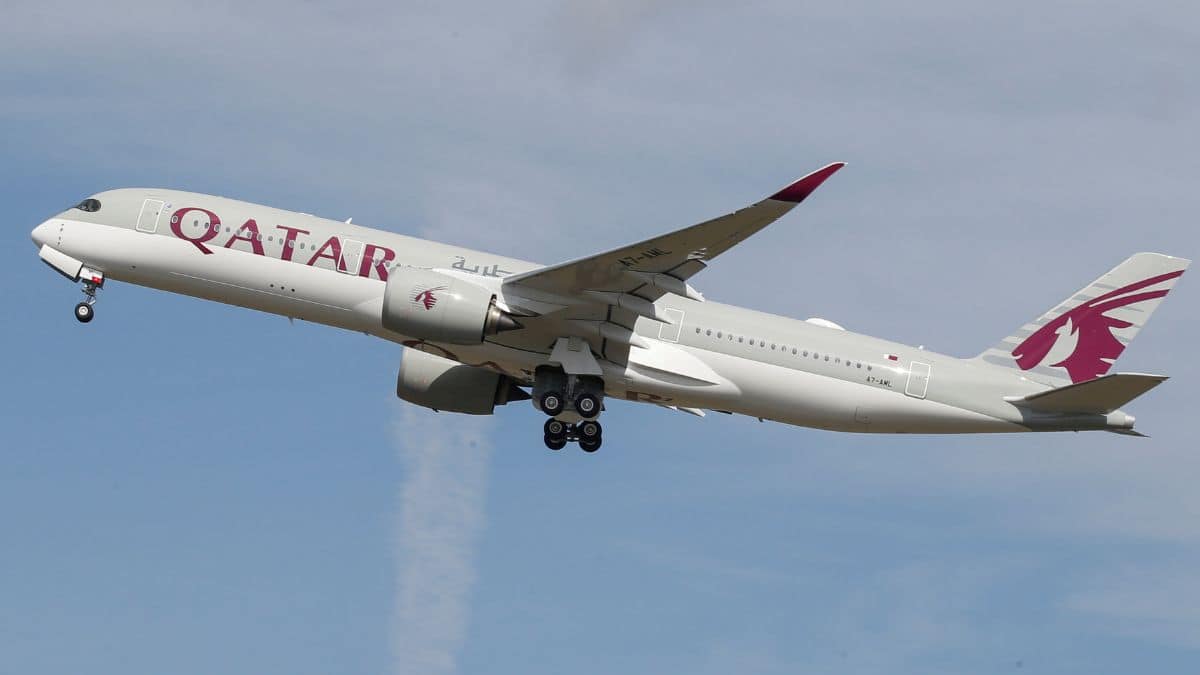
For every extra hour an aircraft spends in the air, it consumes thousands of kilograms of additional fuel. This creates a cascading failure in the airline's operational logic. If an Airbus A350 has to carry five extra tons of fuel to navigate around a closed airspace, it must shed five tons of "payload" to stay within its maximum takeoff weight. In the brutal language of airline accounting, that means cargo is dumped or, more likely, seats are left empty. Passengers who have already paid for their tickets find themselves bumped from flights that are technically "full" but cannot legally take off with a full cabin due to the fuel-weight penalty.
The Invisible Toll on the Labor Force
While business travelers might grumble about missing a board meeting, the impact on the Indian labor diaspora is visceral. A significant portion of these travelers operate on "Exit-Entry" visas or fixed-term leave periods. A forty-eight-hour delay isn't just an inconvenience; it can be a legal catastrophe.
Many workers from Kerala, Rajasthan, and Uttar Pradesh save for years to afford their annual trip home. Their return dates are often non-negotiable. If a flight is canceled due to airspace volatility, these workers face the very real threat of overstaying their leave, which can lead to the termination of their employment contracts in countries like Saudi Arabia or Kuwait. The airlines rarely account for this legal precarity, offering a voucher for a future flight when what the passenger actually needs is a diplomatic intervention.
Why Technical Resilience is a Myth
We are told that modern aviation is more connected and resilient than ever. The reality is that the industry is more bottlenecked than it was twenty years ago. The consolidation of major hubs—Dubai, Doha, and Abu Dhabi—has created a "single point of failure" system. If the narrow corridors leading into the Persian Gulf are compromised, there is no "Plan B" that can handle the sheer volume of traffic.
Current air traffic management systems are designed for efficiency during peacetime, not for the sudden absorption of diverted fleets. When one sector closes, the adjacent sectors become dangerously congested. Air traffic controllers in Mumbai or Muscat suddenly find themselves managing three times their usual volume. To maintain safety, they must increase the separation between aircraft, which further slows down the flow.
The sky, despite its appearance of infinite space, is a series of highly regulated highways. When the main highway is blocked, the backroads simply cannot support the weight of the traffic.
The Insurance Gamble
Behind every pilot’s decision to reroute is a team of lawyers and insurance underwriters. War-risk insurance is a volatile market. The moment a missile is launched or a drone enters a civilian corridor, insurance premiums for that specific geographic coordinate skyrocket.
For some low-cost carriers, the cost of the insurance premium for a single flight through a "gray zone" can exceed the total revenue generated from ticket sales. This is why we see some airlines continue to fly while others ground their fleets immediately. It is rarely a difference in safety philosophy; it is a difference in their insurance coverage and their appetite for financial ruin.
The Information Blackout
One of the most harrowing aspects for passengers during these disruptions is the vacuum of information. Airlines are notoriously tight-lipped during airspace crises. They fear that admitting a flight is canceled due to "security concerns" will trigger a mass panic or, worse, reveal their lack of a contingency plan.
Instead, passengers are often met with vague "operational reasons" or "technical delays." This lack of transparency prevents families from making informed decisions. Should they wait at the airport? Should they book an expensive multi-city route through South East Asia? By the time the truth of an airspace closure is confirmed by official channels, the alternative routes are already sold out or priced at five times their original value.
The Fragility of the Hub-and-Spoke Model
The "Hub-and-Spoke" model—where passengers from smaller cities are funneled into a massive central airport before being redistributed—is the primary culprit for the scale of these disruptions. When a hub like Dubai or Doha faces airspace restrictions, the entire global network of that airline stutters.
A passenger flying from Chennai to London via a Gulf hub is just as affected as someone flying directly to the Gulf. This centralization makes the global economy vulnerable to regional skirmishes. We are seeing a slow but necessary shift toward "Point-to-Point" long-range travel, enabled by aircraft like the Boeing 787 and the Airbus A321XLR. These planes can bypass the major hubs entirely, flying from secondary Indian cities directly to Europe or the US. However, for the India-Gulf corridor, the hub model remains king because of the sheer density of the population moving between these two specific points.
A Systemic Failure of Protection
International aviation law, governed largely by the Montreal Convention, is surprisingly weak when it comes to "extraordinary circumstances." Airspace closures almost always fall under this category. This means airlines are generally not required to compensate passengers for the delay itself—only to provide basic care like meals or a hotel room, and even that is often disputed in the chaos of a mass grounding.
There is a glaring need for a specialized "Migrant Passenger Charter" that recognizes the unique risks faced by the India-Gulf workforce. This would involve:
- Mandatory Legal Liaison: Airlines should be required to provide documentation for employers and immigration authorities explaining the delay was beyond the passenger's control.
- Price Caps During Crises: Prohibiting the predatory "surge pricing" that occurs on the few remaining open routes during a crisis.
- Inter-Airline Cooperation: Forcing competing carriers to honor each other's tickets without additional fees when a specific corridor is closed.
The Geopolitical Reality
The skies over the Middle East are not just transit routes; they are sovereign territory. As long as airspace remains a tool of national defense and political posturing, civilian travel will remain a secondary priority. The "worried families" mentioned in superficial reports are the human faces of a massive, cold-blooded calculation involving fuel weights, insurance premiums, and territorial integrity.
The India-Gulf corridor is the most vibrant example of human mobility in the modern era, yet it rests on the most unstable ground. Every time a flight is turned back or diverted, it exposes the lie that we live in a "borderless" world. The borders are there; they are just thirty thousand feet in the air, invisible until they are suddenly, violently closed.
Dependence on these specific transit paths is a strategic vulnerability for the Indian economy. Remittances from the Gulf account for a massive portion of India's foreign exchange reserves. A prolonged closure of this airspace wouldn't just strand passengers; it would trigger a domestic economic crisis.
Future-proofing this travel doesn't just require better planes or bigger airports. It requires a fundamental rethinking of how we protect the people who build the infrastructure of our globalized world. Until then, millions will continue to fly with one eye on the departure board and the other on the geopolitical headlines, knowing that their connection to home is only as strong as the next day's ceasefire.
Safety is often cited as the primary reason for these closures, but safety is also a matter of financial liability. If an airline cannot guarantee that its hull is protected by a multi-million dollar policy, the plane stays on the tarmac regardless of how many thousands of people are waiting in the terminal. The aviation industry is a machine built for the "best-case scenario," and we are increasingly living in a world of worst-case realities.
The next time a flight is grounded, do not look at the weather. Look at the map. Look at the price of oil. Look at the fine print on the back of the ticket that tells you the airline is not responsible for the politics of the land below. That is where the real story lives.
The sky is no longer a neutral space.