Mainstream coverage of military movements across demarcation lines in Gaza tends to rely on a predictable formula. A tank crosses a boundary, civilians displace, and headlines frame the event as a sudden, binary collapse of a ceasefire. That framing sells clicks, yet it fundamentally misunderstands how buffer zones, tactical verification, and modern asymmetric ceasefires actually operate.
When reports focus exclusively on the physical crossing of a "yellow line" or temporary perimeter, they treat a dynamic military buffer as if it were a static international border. According to military analysts and diplomatic observers who track ceasefire architecture, demarcation lines in active conflict zones are rarely clean, permanent walls. Instead, they function as shifting zones of friction where rules of engagement, intelligence verification, and territorial leverage collide in real time. Also making waves recently: What Most People Get Wrong About the Southern California Storm Following San Francisco's Record Rain.
The Myth of the Static Ceasefire Line
In conventional journalism, a ceasefire line is portrayed as an absolute switch—either the truce is holding, or it is broken. In practice, operational pauses in dense urban environments like Gaza involve overlapping zones of control, humanitarian corridors, and security perimeters that are constantly tested by all parties involved.
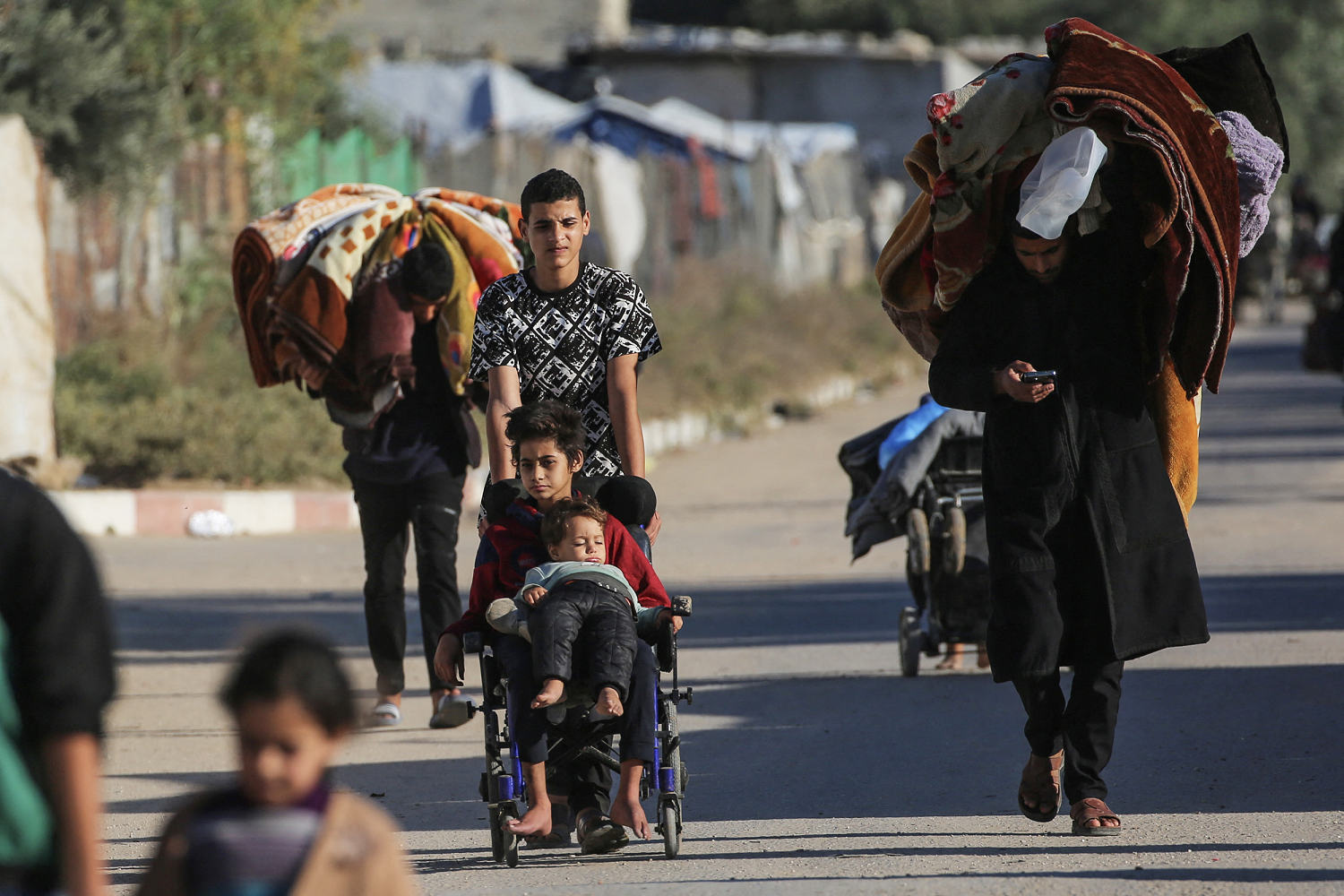
International humanitarian organizations and Palestinian civil defense spokespeople frequently emphasize the immediate human toll when armored units advance near displacement camps or residential edges. For families already displaced multiple times, the movement of heavy armor across a designated boundary triggers immediate panic and secondary flight, regardless of whether commanders classify the maneuver as a routine security sweep or a major offensive. From the perspective of civilian protection groups, any unannounced incursion into populated buffer areas undermines trust in diplomatic guarantees and endangers non-combatants who rely on clear geographic markers to stay out of harm's way. Additional insights on this are explored by BBC News.
Conversely, Israeli military officials and security analysts frame these movements through the lens of tactical enforcement and force protection. From the Israel Defense Forces (IDF) perspective, buffer zones—whether marked on operational maps or informally referred to by color-coded designations—exist to prevent militants from regrouping, planting improvised explosive devices, or establishing observation posts near troop positions. Military doctrine in this view holds that failing to police the margins of a perimeter turns a ceasefire line into a staging ground for future attacks.
Why Media Narratives Flatten Operational Reality
The core flaw in standard breaking-news reporting is the assumption that both sides interpret a demarcation line the same way. They do not.
- Diplomatic Ambiguity: Mediators from the United States, Egypt, and Qatar often rely on constructive ambiguity to get warring parties to sign onto temporary pauses. Exact coordinates, permissible patrol depths, and definitions of "hostile activity" are frequently left vague to prevent talks from stalling before they begin.
- Tactical Asymmetry: A conventional military relies on clear lines of sight, armored perimeters, and buffer depth to secure its forces. Irregular fighters rely on proximity, subterranean networks, and blending into civilian areas to neutralize technological advantages. What one side calls a defensive perimeter adjustment, the other side views as an offensive land grab.
- Information Warfare: Both Israeli spokespeople and Hamas-affiliated media have strategic incentives to shape how a boundary crossing is perceived. Highlighting civilian flight draws international diplomatic pressure on Israel to halt operations, while emphasizing security threats justifies continued military freedom of action to domestic audiences.
What Observers Actually Ask About Ceasefire Violations
When readers search for why tanks cross ceasefire lines or whether a truce has officially collapsed, they are often asking a question premised on traditional state-to-state warfare, such as the 1953 Korean Armistice Agreement.
Does crossing a demarcation line automatically end a ceasefire?
No. In modern asymmetric conflicts, low-level skirmishes, artillery exchanges, and localized armored incursions happen routinely during pauses without either side formally declaring the agreement dead. Parties often tolerate localized friction while broader negotiations over hostages, prisoner releases, or aid delivery continue behind closed doors.
Why aren't buffer zones enforced by neutral peacekeepers?
Unlike conflicts where United Nations forces patrol a demilitarized zone, neither Israel nor Hamas has agreed to an armed international peacekeeping force with a mandate to enforce compliance on the ground in Gaza. Without a neutral third party physically occupying the space between forces, enforcement defaults to the combatants themselves—guaranteeing friction whenever patrols overlap.
How do civilians know where safe zones end?
In reality, they often do not. Evacuation orders, leaflets, and digital maps issued by the military frequently shift faster than telecommunications infrastructure can reliably transmit them to displaced populations. When a boundary exists primarily on a military command screen rather than as a physical barrier on the ground, civilians are left guessing where the line actually lies.
The Structural Flaw in Temporary Perimeters
Looking closely at the mechanics of buffer zones reveals an uncomfortable truth that partisans on both sides prefer to ignore: temporary lines drawn during active wars almost always harden into long-term security realities, yet they rarely solve the underlying political dispute.
Experts in conflict resolution point out that military perimeters can suppress immediate tactical threats, such as direct-fire ambushes or tunnel exits near border communities. However, establishing and policing those zones requires continuous armored patrols, clearing operations, and surveillance—actions that inevitably generate displacement and international friction.
At the same time, treating every tactical movement along a perimeter as the definitive end of diplomacy blinds observers to how negotiations actually progress. Diplomatic breakthroughs in the region have repeatedly occurred even as localized clashes continued along contested margins.
Understanding what happens when armored columns cross a line in Gaza requires looking past the immediate headline. The movement itself is rarely the whole story; it is a symptom of an unfinished negotiation over who controls the space between war and peace.