The generator outside the tailoring shop on Broad Street coughed twice, sputtered, and died.
Silence.
In Lagos, silence is never peaceful; it is an alarm bell. When the hum of diesel engines stops, you hear the heat pressing against the corrugated iron roofs, the distant blare of a yellow danfo bus horn, and the low, anxious murmur of men leaning over a cracked smartphone screen. For Chinedu, a fifty-two-year-old master tailor whose fingers are permanently calloused from heavy brass shears, the sudden quiet meant two things. First, he had just lost another hour of sewing before dusk. Second, the battery on his radio was running low, right as the news from Abuja began to crackle through the static.
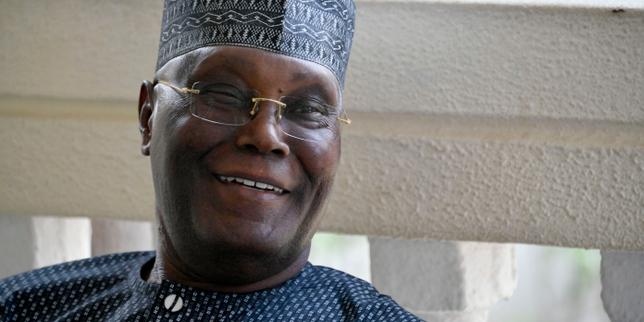
A judge had spoken. A gavel had fallen. And just like that, the name of Atiku Abubakar—a man who had spent three decades chasing the Nigerian presidency, a titan of the opposition, a fixture on the political horizon—was suddenly in jeopardy on the ballot.
Disqualified. Annulled. Erased by ink and legal precedent before a single citizen could press an inked thumb onto a piece of paper.
To understand why Chinedu stared at that phone screen with a mixture of exhaustion and cold dread, you have to forget everything you think you know about courtroom drama. Standard news reports treat these moments like sterile chess moves. They recite statutory clauses, list party acronyms, and quote legal briefs as if democracy were an abstract equation solved in air-conditioned chambers. They tell you what happened. They rarely tell you what it feels like when the ground shifts beneath two hundred million people.
The Architecture of a Legal Earthquake
Let us step back from the heat of Lagos and walk into the marble corridors of the Nigerian judiciary, where words carry the weight of artillery. When a court moves to annul the candidacy of a major opposition figure like Atiku Abubakar—a former Vice President who has contested the highest office six times, carrying the banner of the Peoples Democratic Party—it does not happen in a vacuum.
Think of a national election not as a single race, but as a massive, suspended suspension bridge. On one side stands the incumbent apparatus, anchored by the sheer gravity of state power. On the other stands the opposition, held aloft by cables of public frustration, coalition agreements, and the fragile belief that the rules apply equally to everyone. The judiciary is supposed to be the bedrock beneath the pillars.
When a court invalidates a primary election or disqualifies a frontrunner on technical or constitutional grounds—whether the dispute centers on internal party compliance, eligibility criteria, or the labyrinthine provisions of the Electoral Act—it feels less like routine maintenance and more like someone taking a torch to the main suspension cables while traffic is still crossing.
Wait. Let us be honest about the confusion here.
Even for those of us who have spent years watching West African politics unfold from dusty press galleries and crowded living rooms, the legal maneuvers surrounding Nigerian elections can feel deliberately impenetrable. One week, a Federal High Court issues an order; the next, an appellate bench stays the execution; weeks later, the Supreme Court steps in to rewrite the trajectory of an entire campaign. It is dizzying. You find yourself asking a simple, terrifying question: If a candidate can be undone by a procedural flaw months after a primary, who is actually choosing the president?
A Hypothetical Walk Through the Polling Booth
To see the invisible stakes, consider a hypothetical scenario—one that mirrors the reality playing out in millions of households from Kano to Port Harcourt.
Imagine a young woman named Amina, a twenty-six-year-old pharmacist in Kaduna. She is not a political zealot. She does not wave party flags at rallies or memorize manifestos. Amina cares about the price of imported insulin, the reliability of the national grid, and whether her younger brother will graduate from university without another eight-month academic strike. For months, she has weighed her options, scrutinizing the economic blueprints of the ruling party against the promises of Atiku Abubakar, whose campaign leans heavily on privatization, restructuring, and experience at the helm of Nigeria’s economic management team in the early 2000s.
Amina stands in line at 6:00 AM on election day in our hypothetical scene. She has brought a small plastic stool and a bottle of warm water. She has decided that her vote is a verdict—a concrete, physical expression of her consent to be governed.
Now, strip away that choice before she even reaches the ballot box.
When a court annuls a major candidacy, Amina’s frustration is not merely partisan. Even if she never intended to vote for Atiku, the sudden removal of the primary challenger alters the entire gravitational pull of the race. Without a viable counterweight, the contest loses its tension. The incumbent no longer has to argue as fiercely for their record; the voter no longer holds the ultimate leverage of saying, If you fail us, we will hand the keys to your rival.
History shows us what happens when political competition narrows through judicial intervention rather than popular mandate. Across emerging democracies, from the turbulent transition years of Nigeria’s own Second and Third Republics to contemporary electoral battles across the continent, the courtroom has increasingly become the true campaign trail. Politicians spend almost as much time assembling Senior Advocates of Nigeria—the elite inner bar of the legal profession—as they do rallying voters in town squares.
The Weight of History and the Shadow of 1993
You cannot talk about an annulment in Nigerian politics without feeling the ghost of June 12, 1993, enter the room.
Anyone who lived through those humid, electric weeks remembers the smell of burning tires on the Third Mainland Bridge and the disbelief hanging over market stalls when the military regime voided an election widely regarded as the freest in the nation’s history. That trauma never fully healed; it settled into the national bloodstream like a low-grade fever. Every time the word annulment appears in a headline next to a presidential contender’s name, an older generation flinches.
Of course, a judicial ruling within a constitutional framework is fundamentally different from a military decree. That distinction matters, and truth demands we hold onto it tightly. Courts exist precisely to enforce the rule of law—to ensure that political parties do not trample their own constitutions, that candidates meet every statutory requirement, and that ambition does not outrun legality. If a party violates the Electoral Act during its primaries, or if a candidate fails a constitutional test, allowing them onto the ballot simply because they are famous would rot the system from the inside out.
Yet, here lies the agonizing paradox that keeps constitutional scholars awake at night.
When the law is applied with surgical rigidity to disqualify a major contender, it can uphold the letter of democracy while accidentally suffocating its spirit. Look at the numbers. Nigeria is Africa’s most populous nation, home to over ninety million registered voters—a demographic colossus where more than half the electorate is under thirty-five. In recent election cycles, voter turnout has hovered near historic lows, dipping below thirty percent in the 2023 presidential contest. Why do seventy million registered citizens stay home?
Not out of laziness. Out of suspicion.
They stay home because they suspect the outcome is negotiated behind closed doors long before the ballot boxes are unsealed. When headlines announce that a judge has struck down the candidacy of a figure as prominent as Atiku Abubakar—a man who garnered nearly seven million votes in his previous bid—that suspicion hardens into cynicism. The quiet whisper in the barbershops and motor parks becomes a chorus: Why queue in the sun if a stroke of a pen in Abuja can erase our choice?
Inside the Echo Chamber of Power
Let us look closely at the man at the center of this storm, stripped of the campaign posters and the rehearsed speeches.
Atiku Abubakar is a study in relentless political survival. Born in Jada, in what is now Adamawa State, he rose from a customs officer to a wealthy businessman, and eventually to the vice presidency under Olusegun Obasanjo between 1999 and 2007. Over the decades, he has switched parties, survived bitter public feuds with former allies, weathered relentless scrutiny over his business dealings, and returned, cycle after cycle, to stand before the electorate.
To his supporters, he is the seasoned unifier—a bridge between northern conservatism and southern commercial pragmatism, a leader who understands how the machinery of the Nigerian state actually works. To his detractors, he is the ultimate symbol of an entrenched political class that refuses to yield the stage to a younger generation.
Both things can be true at once. Politics is rarely a morality play between saints and villains; it is a collision of competing interests, flawed humans, and institutional rules.
When a court invalidates his candidacy, the shockwaves hit far beyond his personal ambition. Consider the sprawling ecosystem built around a major presidential campaign. Thousands of grassroots coordinators in dusty local government areas, printers churning out millions of flyers in Onitsha, youth mobilizers organizing town halls in Jos, women’s cooperatives pooling micro-funds to host community rallies—all of that human energy suddenly slams into a concrete wall.
And what of the ruling party? Far from celebrating an easy path, astute strategists inside the corridors of power know that an uncontested or weakened victory carries a poisoned chalice. A president who wins because his strongest opponent was sidelined by a technicality enters office carrying a deficit of legitimacy. Every difficult economic reform—every fuel subsidy removal, every currency float, every tax hike—becomes ten times harder to sell to a public that doubts the fairness of the contest that produced the leader.
The Thin Line Between Rule of Law and Rule by Lawyers
So how do we read a moment like this without drowning in despair or partisan rage?
We start by looking clearly at the mechanism itself. Democracy is not just an election day; it is an argument about how power should be constrained. In mature democracies, the courts rarely decide who gets to run; voters do, using the ballot box to punish parties that nominate flawed candidates. In younger, fiercely contested systems like Nigeria’s, the judiciary is constantly pulled into the political arena because political actors themselves refuse to play by internal rules.
Think about that for a second.
Courts do not wake up in the morning and randomly decide to annul candidacies. Almost every high-profile disqualification begins with a lawsuit filed by a rival—often someone inside the candidate’s own party who felt cheated during the primaries, or an opposing faction hunting for a fatal flaw in nomination paperwork. Politicians weaponize the courts because they do not trust internal party democracy, and then, when the blade cuts against them, they accuse the judiciary of subverting the will of the people.
It is a closed loop of self-inflicted wounds.
Consider what happens next when an annulment ruling drops into the bloodstream of a tense nation. Immediately, the appeals begin. Legal teams scramble through the night, drafting motions for stays of execution, preparing notices of appeal to higher benches, combing through decades of case law for a lifeline. Markets hesitate. Foreign investors watching sovereign bond yields pause their allocations, waiting to see if political uncertainty will spill onto the streets. Social media erupts into an inferno of tribal accusations, doctored court documents, and breathless rumors.
Meanwhile, on Broad Street in Lagos, the fuel finally arrives in a five-liter yellow jerrycan.
Chinedu pours the petrol into the generator’s tank, twists the cap tight, and pulls the starter cord. Once. Twice. On the third pull, the engine roars back to life, drowning out the chatter on the street and bringing the overhead fluorescent bulb flickering back to full brightness.
He picks up his heavy brass shears, lines them up against a bolt of deep blue guinea brocade, and begins to cut. Around him, the radio commentator is still dissecting the fine print of the judge’s ruling, debating constitutional subsections and appellate timelines. Chinedu listens with one ear, his eyes fixed on the chalk line drawn across the fabric.
He knows the lawyers will argue in Abuja until their voices give out. He knows the politicians will trade accusations on television screens from dawn until midnight. Yet he also knows a simpler, harder truth that no gavel can ever quite erase: a nation is not held together by the cleverness of its legal briefs, nor by the decrees of its courts, but by the stubborn, unyielding refusal of ordinary people to stop building their lives while the powerful argue over who gets to rule them.