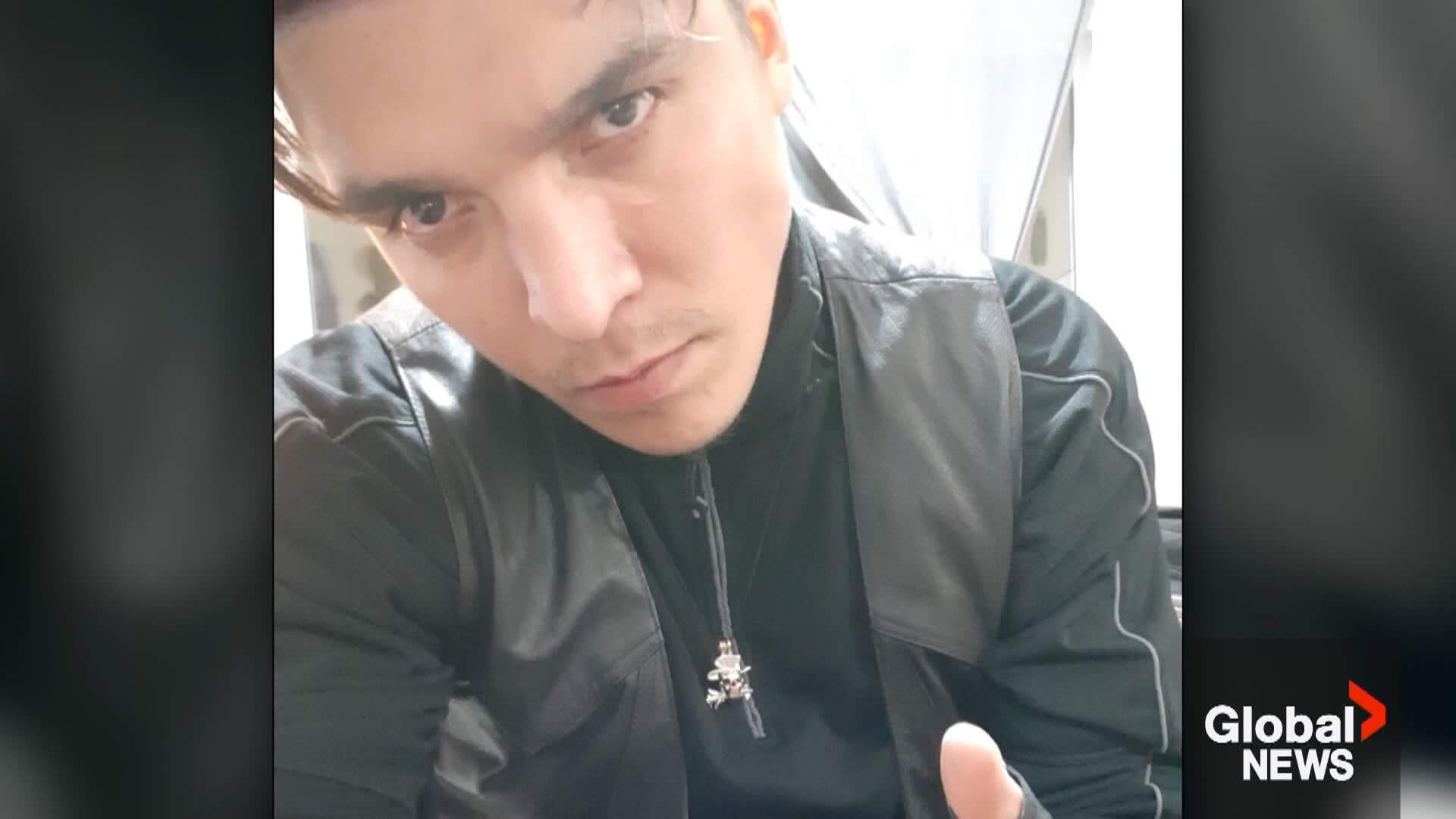
The courtrooms of Alberta are designed for order. They are clean, bright spaces where chaotic lives are reduced to organized binders, exhibits, and testimonies. But when Justin Bone took the stand, the sheer, messy breakdown of a system that failed everyone involved spilled out into the open room.
He stood before the judge with his dark hair shaved into a narrow mohawk, his wrists and ankles bound in steel cuffs. He is forty years old. He faces two charges of second-degree murder for the brutal, unprovoked deaths of sixty-one-year-old Ban Phuc Hoang and sixty-four-year-old Hung Trang. They were two men simply going about their workdays in Edmonton’s Chinatown on May 18, 2022, before their lives were violently cut short.
When a tragedy like this strikes, society naturally demands a narrative arc. We want a clear villain. We want a motive. Most of all, we want an explanation that allows us to sleep at night, believing that the world is inherently safe and that monsters are easily identifiable.
Instead, the trial offered a terrifying descent into a fog of drug-induced psychosis and systemic buck-passing. When asked about the fatal beatings that shattered a community, Bone’s defense was not a declaration of innocence, nor a declaration of malice.
It was a blank space.
He testified that he has absolutely no memory of the attacks. He remembers waking up at a police station, facing detectives, and trying to piece together how a weekend of severe hallucinations ended in a double homicide.
A Trail of Red Markers and Paranoia
To understand how two elderly men died doing honest work, you have to look at the days leading up to the arrests. The timeline Bone described on the witness stand reads like a frantic, disjointed descent.
Imagine walking through a city where every face is a threat, where your brain convinces you that you are being hunted. That was Bone’s reality, fueled by severe homelessness and an relentless cycle of substance abuse. In the days before the killings, he had stayed up all night with a drug dealer, smoking methamphetamine for twelve straight hours.
The drug does not just alter reality; it tears it apart.
Bone spoke of wandering, of smoking more meth with an artist who handed him a red marker. In his mind, that marker transformed into a symbol of an ex-girlfriend who claimed she could see the future. Later, a stranger on a bus offered him what was supposed to be marijuana. He smoked it, grew deeply suspicious that it was laced, and then the lights went out.
"From that point on," Bone told the court, "I started hallucinating."
He claims the next distinct memory he possesses is sitting in an interrogation room.
But while the mind can erase its own horrors, the physical world keeps track. The prosecution presented photographs of Bone’s clothing and shoes, heavily stained with presumptive blood. They brought forward a construction worker who described Bone screaming and throwing a beer bottle at him moments before his arrest. They read notes from a nurse who treated him after he was detained, recording that Bone admitted his foot hurt from "stomping on other people over the past two days."
When police video from the interrogation was played in court, showing Bone answering questions in a calm but nonsensical manner, Bone stood up from the defense table and shouted that the footage was fake.
The tragedy here is dual. It is the loss of Hoang and Trang, whose families are left with an unhealable void. And it is the reality that this disaster was entirely preventable.
The Policy of Dropping Off the Problem
Consider the bureaucratic machinery that put Bone in Chinatown in the first place.
Before the attacks, Bone had been released from custody under strict bail conditions. He was supposed to be living with a court-approved surety in Alberta Beach, a small community outside the city. He was explicitly, legally banned from entering Edmonton city limits unless it was for scheduled addiction treatment.
But human lives do not always fit into court orders. The living arrangement fractured. The homeowner became terrified that Bone was going to hurt him or damage his property, and demanded he leave.
The RCMP was called.
According to Bone's testimony, he warned the Mounties that he could not go to Edmonton. He claims he told them, "If you guys were to take me to Edmonton, you’d be putting me in breach... You could take me back to jail, because that’s what you’re supposed to do."
They didn't listen.
An RCMP officer later testified in the trial, admitting that he and his supervisor drove Bone directly into Edmonton and dropped him off, knowingly violating the court order. Their reasoning? Bone had no money, and Edmonton was the closest place with social shelters. They didn't arrest him for breaching his bail because leaving the Alberta Beach home hadn't been his choice.
So, they drove him to the city lines. They opened the door. They let him out.
They effectively passed a ticking time bomb from a rural jurisdiction into an urban center because it was the easiest logistical solution available to them at the time. It is a practice commonly referred to as "dumping"—a quiet, systemic habit of shifting vulnerable, dangerous, or high-needs individuals into city centers where they become someone else’s responsibility.
The Friction of Truth
This is where the case grows deeply uncomfortable for a public seeking easy answers. Bone has refused to cooperate with a second mental fitness assessment to determine if he is Not Criminally Responsible (NCR). He apologized to the judge, claiming the first assessment was built on "hearsay and lies," opting instead to let the trial proceed on standard criminal terms.
The legal system will eventually render a verdict. It will decide if Bone’s self-induced state of drug psychosis legally absolves him of intent, or if he will spend the next quarter-century behind bars.
But a prison sentence cannot fix the institutional blind spots that led to May 18, 2022.
Every day, police officers, social workers, and court officials make micro-decisions based on convenience rather than safety. They look at a broken individual and decide to move them down the road, past the county line, or into a neighborhood that lacks the political capital to push back. Edmonton’s Chinatown bore the ultimate cost of that collective aversion to dealing with the hard problems.
No one wins here. Two families are devastated. A neighborhood is left feeling profoundly unsafe. A man sits in cuffs, unable or unwilling to fully grasp the enormity of the blood on his shoes.
We can look at Justin Bone and see a monster, or we can look at the empty highway between Alberta Beach and Edmonton and see the precise moment we decided to look away.