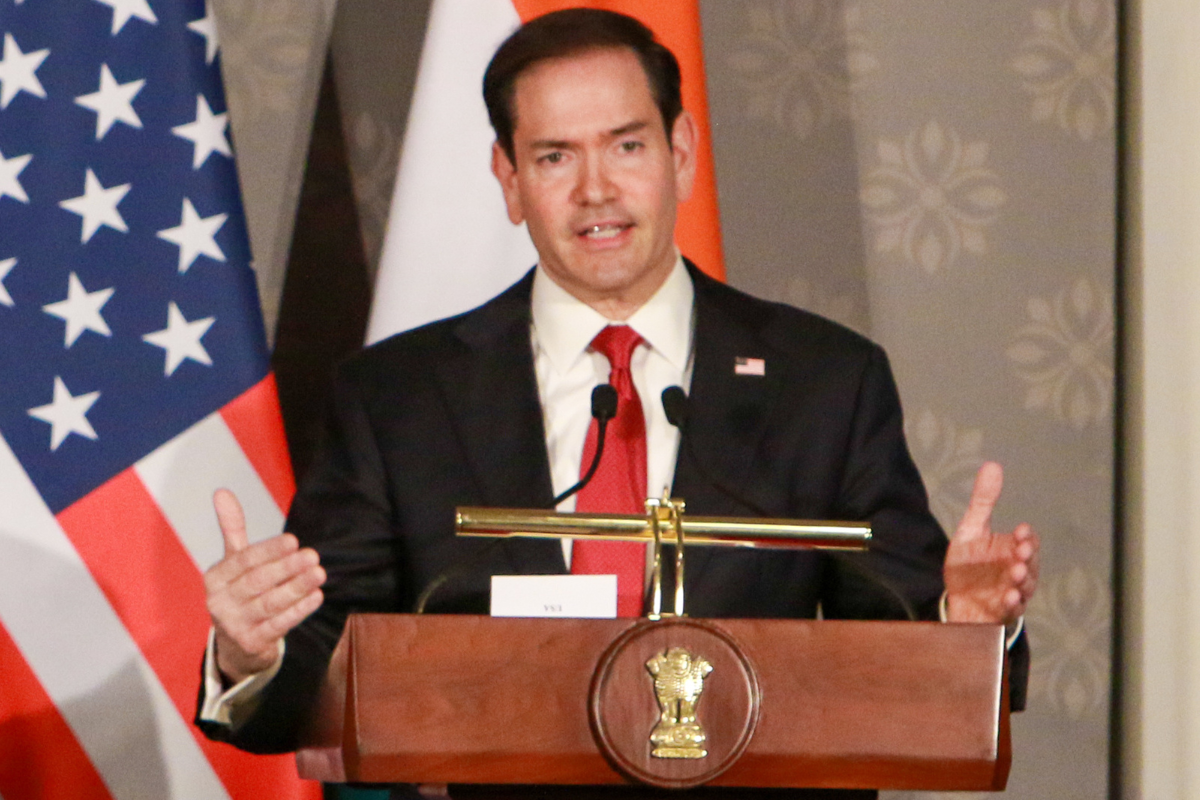
The confrontation in the Persian Gulf has reached a critical bottleneck. When the American Secretary of State stood in Bahrain to declare that international waterways are not the private property of any single nation, the statement was aimed squarely at Iran's escalating maritime assertiveness. The primary crisis centers on the Strait of Hormuz, a chokepoint handling a fifth of the world's petroleum, where state-backed seizures and drone deployments threaten to choke global trade. This dispute is not merely about diplomatic posturing; it is a fundamental collision between traditional international law and a calculated strategy of asymmetrical maritime warfare.
The geopolitical calculus in the Middle East is shifting away from proxy conflicts on land toward direct friction on the water. For decades, the global economy relied on an unwritten guarantee that major shipping lanes would remain open regardless of regional friction. That guarantee is fracturing.
The Chokepoint Strategy Behind the Rhetoric
To understand why a speech in Bahrain matters, one must look at the geography of the Strait of Hormuz. The channel is remarkably narrow. Shipping lanes are only two miles wide in each direction, separated by a two-mile buffer zone. This narrowness means that any localized disruption ripples through global energy markets within minutes.
Iran’s approach to these waters is rooted in a philosophy of defensive depth and leverage. By harassing commercial vessels and deploying fast-attack craft, Tehran signals that it can inflict severe economic pain on the West without ever declaring formal warfare. The strategy relies on ambiguity. A mine attached to a tanker hull or a sudden regulatory detention by maritime guards allows for plausible deniability while driving up maritime insurance premiums.
This is a war of attrition waged through shipping costs. When insurance underwriters reclassify the Persian Gulf as a high-risk zone, the financial burden falls on global consumers. The American declaration in Bahrain was an attempt to re-establish a deterrence framework that has lost its teeth over years of unpunished low-level provocations.
The Fiction of Total Maritime Control
The United States and its allies frequently invoke the United Nations Convention on the Law of the Sea to defend the right of transit passage. There is a legal catch that diplomats rarely discuss openly. Iran has signed but never ratified this specific treaty. Tehran operates under an older legal framework, arguing that it has the right to restrict transit to nations that pose a direct security threat to its territory.
This legal gray area creates a dangerous environment for commercial shipping.
- The Transit Dilemma: Foreign warships and commercial vessels rely on the right of innocent passage, which requires that their transit be continuous and expeditious.
- The Enforcement Gap: Western coalitions can escort tankers, but they cannot police every square mile of the gulf simultaneously.
- The Asymmetrical Edge: Cheap, mass-produced naval assets like sea mines and suicide drones can neutralize the technological advantages of multi-billion-dollar destroyers.
Western strategy has long relied on massive carrier strike groups to project power. But a massive warship is an awkward tool for stopping a swarm of fast-attack boats or preventing clandestine sabotage. The naval presence acts as a political statement, yet it fails to solve the daily operational vulnerabilities faced by merchant sailors.
How Energy Dependency Distorts Regional Diplomacy
The rhetoric around free navigation often masks the shifting priorities of regional players. Gulf Arab states find themselves caught in a difficult position. While they rely on Western military power to protect their export routes, they are increasingly skeptical of Washington’s long-term commitment to the region. This skepticism has driven states like Saudi Arabia and the UAE to seek their own diplomatic understandings with Iran, bypassing Western security architecture entirely.
This shift undermines the unified front that the United States attempts to project from bases in Bahrain. When regional capitals decide that diplomatic appeasement is safer than military alignment with the West, the deterrence model collapses. The true vulnerability of the international waterway lies in this political fragmentation, not just in the physical threat of missiles.
The global energy market has also changed, altering the stakes of this maritime standoff. The United States is now a major crude exporter, reducing its direct reliance on Persian Gulf oil. The primary economic victims of a shutdown in Hormuz would be Asian economies, particularly China, India, and Japan. This reality complicates the enforcement of freedom of navigation. Washington is essentially footmg the bill for a security umbrella that protects the supply lines of its primary economic rivals.
The Logistics of a Modern Maritime Blockade
A total blockade of the Strait of Hormuz is unlikely because it would harm Iran’s own economic survival. A partial, unpredictable blockade is much more effective and harder to counter. By selectively targeting vessels based on their flag or ownership ties, a state can disrupt specific trade relationships without triggering a global military response.
Consider the mechanics of a modern maritime intervention.
[Threat Detection] -> [Naval Escort Response] -> [Diplomatic Escalation]
       |                                                 |
       v                                                 v
[Commercial Delay] -> [Insurance Premium Spike] -> [Global Price Increase]
The diagram illustrates how a minor security incident quickly escalates into a systemic economic shock. The goal of maritime harassment is not to sink ships, but to create systemic friction that makes shipping unsustainably expensive.
The response from the international community has been fractured. Joint task forces patrol the waters, but their rules of engagement are restrictive. Sailors are left guessing whether an approaching speedboat intends to film a propaganda video or launch an armed boarding party. This ambiguity favors the aggressor every time.
Moving Beyond Shallow Deterrence
The declaration that international waters belong to no single country sounds resolute, but it lacks a mechanisms for long-term enforcement. Relying on sporadic naval deployments and strongly worded speeches from regional capitals will not restore stability to the Persian Gulf.
True maritime security requires a fundamental restructuring of how international trade routes are policed. If the nations that rely most heavily on the Strait of Hormuz continue to outsource their security to the United States, the vulnerability will persist. A sustainable solution requires an international maritime coalition where Asian and European buyers bear the direct operational and military costs of protecting their own supply lines. Until the burden of deterrence is shared proportionally by those who benefit from it, the world's most critical energy artery will remain vulnerable to geopolitical blackmail.