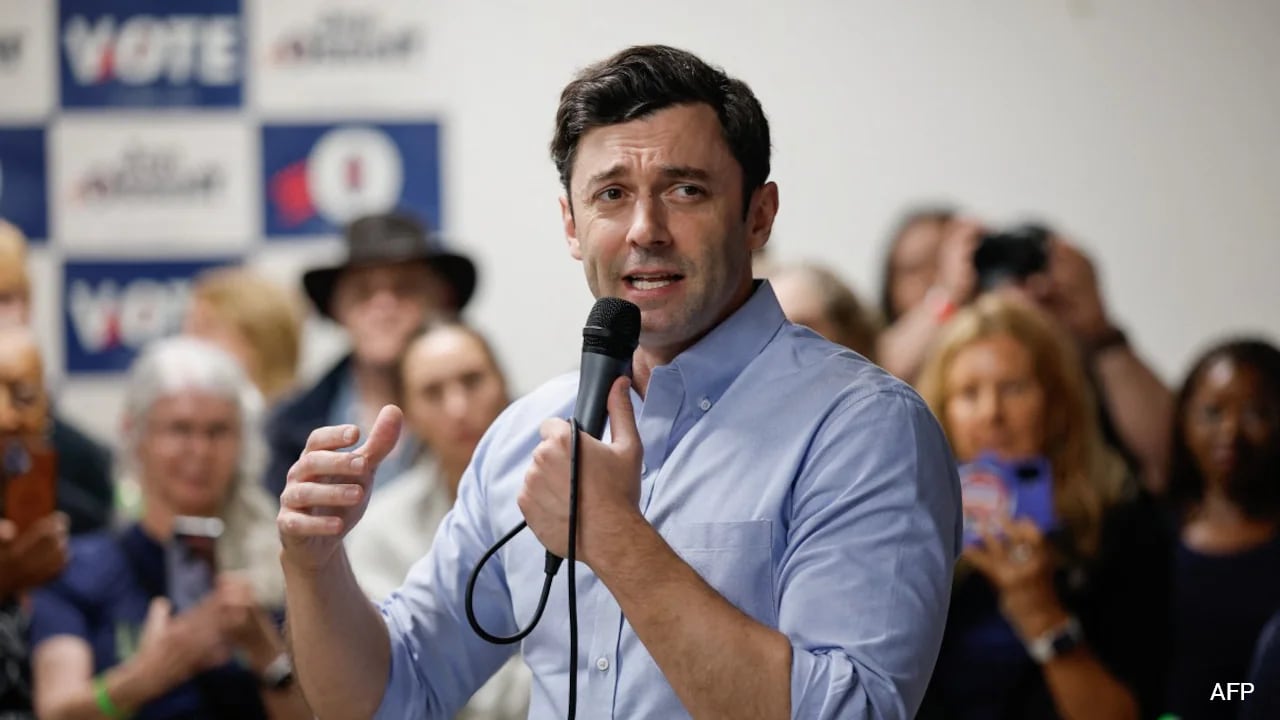
At 2:14 in the morning, the fluorescent lights of a suburban gymnasium smell like floor wax and cold coffee.
That is the scent I remember most from every midterm election night I have ever covered. You stand near the folding tables while county clerks feed paper ballots through humming optical scanners, watching a digital map slowly bleed from one primary color to another. By dawn, the pundits on television have already reduced millions of exhausted, hopeful human choices into a tidy mathematical equation. They talk about seat counts, committee gavels, and legislative majorities as if Washington were a chessboard and the rest of us were merely spectators watching grandmasters trade pawns. For a different look, read: this related article.
Then a single word appears on a smartphone screen, glowing in the pale light of morning, and the chessboard turns to concrete.
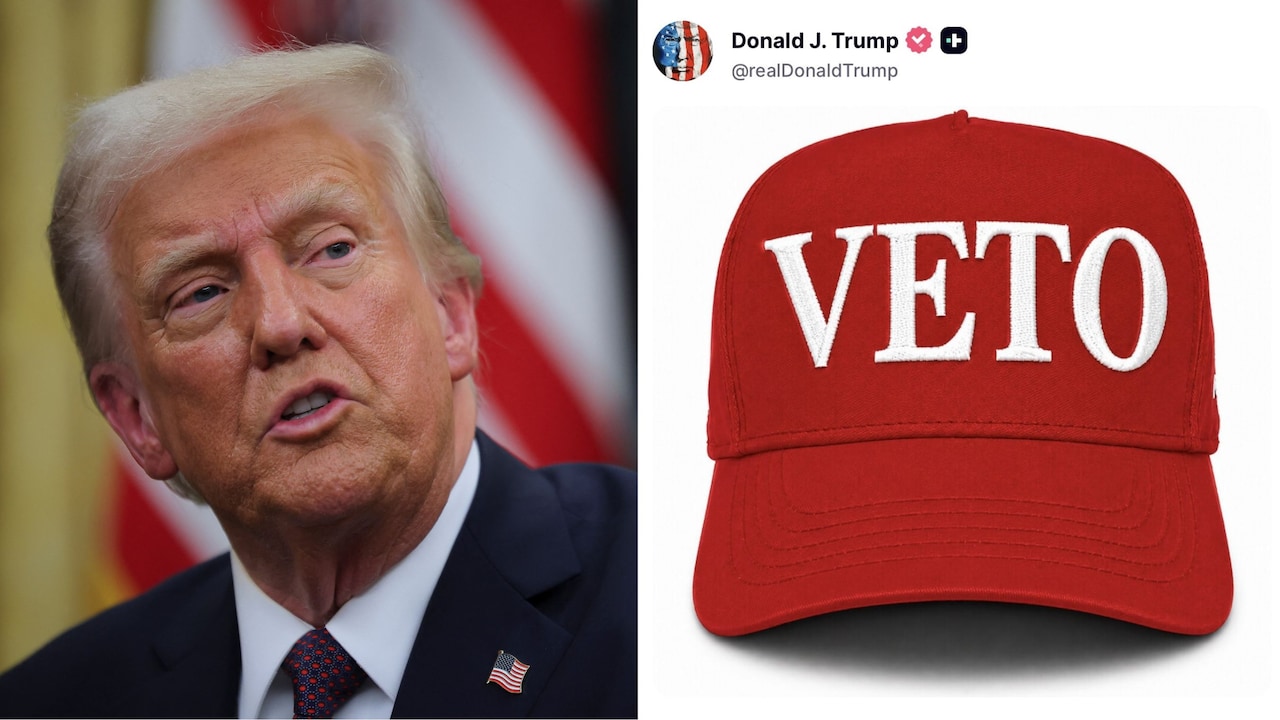
Veto. Similar coverage regarding this has been published by BBC News.
Four letters. No explanation. No preamble. Just a stark declaration posted online by President Donald Trump in the immediate wake of an electoral earthquake that saw Democrats reclaim the Senate and shatter Republican dominance in the House of Representatives.
If you only read the standard political dispatches, you might mistake this moment for a routine Washington power shift. You see the headlines noting that Democrats won the Senate and ended the GOP hold on the House, followed by the President’s blunt one-word warning. It looks like business as usual in a divided capital.
Look closer at the space between those two facts, however, and you will feel the ground shifting beneath ordinary American lives. Because when a wave election crashes directly into an immovable executive wall, the people who get soaked are rarely the ones holding the microphones in Washington.
The Anatomy of a Stalemate
To understand what just happened to the American government, forget political science for a moment and picture a house with two front doors and a single deadbolt.
For the past two years, unified Republican control meant one party held the keys to the White House, the Senate, and the House of Representatives. Legislation moved along a single track. Policy priorities, judicial confirmations, and budget frameworks flowed from one side of the political spectrum without needing permission from the other.
Voters just walked up to that house and changed the locks on both doors. By flipping the Senate and breaking Republican dominance in the House, the electorate handed Democrats the power to draft bills, launch congressional investigations, and control which judges or cabinet nominees ever receive a confirmation vote.
Yet the deadbolt remains firmly in Donald Trump’s hand.
Under Article I, Section 7 of the United States Constitution, every bill passed by both the House and the Senate must be presented to the President before it becomes law. If the President objects, he returns it unsigned. Overriding that veto requires a two-thirds supermajority in both chambers—a mathematical hurdle so steep in modern polarized politics that it might as well be carved into sheer granite.
When Trump posted that single word—"Veto"—he was not offering a casual reaction to the midterm results. He was firing a warning flare across the Potomac. He was telling the incoming Democratic majorities, before they have even taken their oaths of office in January, that any ambitious legislative agenda arriving on the Resolute Desk is dead on arrival.
What Gridlock Looks Like at the Kitchen Table
It is easy to treat divided government as a spectator sport when your own paycheck does not depend on a federal appropriation bill. In newsrooms and academic panels, political scientists often argue that gridlock is a feature, not a bug, designed by the Founders to prevent hasty laws.
Tell that to Elena.
Elena is a composite character, a hypothetical composite drawn from dozens of small-business owners and municipal planners I have interviewed across the Midwest over the past decade. She runs a mid-sized regional logistics and cold-storage company outside Columbus, Ohio. Three months ago, Elena began mapping out an expansion—new refrigerated bays, twelve new full-time drivers, and an upgraded solar microgrid—banking on federal infrastructure tax credits and freight-corridor grants currently winding their way through congressional reauthorization.
On election night, Elena stayed up until 1:00 AM watching the Senate map flip and the House margin evaporate. By 8:00 AM, over her second cup of black coffee, she read about the President’s four-letter social media post.
Before noon, Elena called her commercial loan officer and put the expansion on indefinite hold.
Why? Because Elena understands how Washington works when the legislative branch and the executive branch are locked in a staring contest. A Democratic House and Senate will pass bills reflecting Democratic priorities—climate incentives, labor protections, healthcare subsidies, or consumer regulations. Trump will veto them. Conversely, the White House will demand border enforcement funding, deregulation packages, or extensions of conservative tax policies that a Democratic Congress will refuse to bring to the floor.
Caught in the crossfire are the unglamorous, essential mechanisms that keep the country running: routine farm bills, highway funding extensions, small-business loan guarantees, and annual government spending packages. When neither side can pass its signature priorities, compromise becomes a dirty word, and every must-pass budget deadline turns into a game of chicken where the threat of a government shutdown becomes the primary negotiating tool.
For Elena, politics is not an ideological debate. It is the sudden disappearance of certainty. You do not pour concrete or hire twelve families when the rules governing your industry might change—or freeze completely—every ninety days.
The Shift From Lawmaking to Investigation
When the front door of legislation slams shut, Washington instinctively climbs through the window of oversight.
History gives us a reliable blueprint for what happens next. Think back to 2011, when Republicans took the House during Barack Obama’s first term, or 2019, when Democrats reclaimed the House during Trump’s first presidency, or 1995, when Newt Gingrich’s newly minted GOP majority squared off against Bill Clinton. In every single instance, the loss of unified control transformed Congress from a lawmaking body into an investigative engine.
With Democrats securing the Senate alongside their House gains, the shift will be even more pronounced than in a typical split-Congress midterm.
Winning the House gives Democrats subpoena power—the legal authority to compel documents, emails, and sworn testimony from administration officials, corporate executives, and outside advisors. Winning the Senate adds something equally potent: the gavel of the Senate Judiciary Committee and the power of confirmation.
For the next two years, every executive branch appointment—from federal district judges to cabinet secretaries and ambassadors—must pass through a Democratic Senate majority. A president accustomed to shaping the federal judiciary at breakneck speed suddenly faces a vetting bottleneck where nominees who lack broad consensus simply stall in committee.
Meanwhile, House and Senate committees will turn their spotlights onto executive actions, agency spending, and administration policies. We will watch televised hearings stretch into the evening hours. We will see sharp exchanges between committee chairs and administration witnesses. We will read breathless headlines about subpoenas issued and executive privilege asserted.
It will generate immense heat. It will produce almost zero legislative light.
The Invisible Weapon of the Executive Pen
I have watched enough presidents navigate hostile congresses to know that a veto threat is rarely an admission of defeat. More often, it is a pivot toward unilateral power.
When a president knows Congress will not pass his bills, he reaches for the tools that do not require a vote on Capitol Hill. Executive orders. Regulatory rewrites. Administrative enforcement priorities. Foreign policy directives. Tariff authorities.
This is the quiet paradox of divided government that rarely makes the evening news: the weaker a president becomes on Capitol Hill, the more aggressively he tends to use the unilateral levers of the executive branch.
Consider what happens next in this dynamic. Trump issues an executive order reshaping an environmental rule or altering trade tariffs. Democratic committee chairs haul agency heads before Congress to grill them over the decision. The Democratic House and Senate pass a resolution under the Congressional Review Act to overturn the rule. The bill arrives at the White House.
Trump picks up his pen—or his phone—and writes the same word again. Veto.
Then the battle moves out of the Capitol entirely and marches up the marble steps of the federal courthouses. State attorneys general, advocacy groups, and industry coalitions file lawsuits challenging the legality of the executive action, leaving federal judges to decide questions that elected lawmakers were too deadlocked to resolve themselves.
Living Inside the Noise
If you feel a quiet wave of exhaustion reading this, you are not alone. I feel it too.
After years of covering political cycles, the hardest thing to admit is how disorienting this rhythmic whiplash becomes for the people watching from home. Every two years, voters are told that this election is the final battle for the soul of the nation, the decisive turning point that will finally fix healthcare, tame inflation, secure the border, or protect fundamental rights. People knock on doors in the rain. They stand in line for hours outside elementary schools and community centers. They cast their ballots believing they are hiring leaders to solve problems.
And then, the morning after the votes are counted, the winners and losers immediately draw their battle lines for a two-year siege.
It is entirely rational to look at a Democratic Congress squaring off against a veto-wielding Republican president and wonder if anything can actually get done. The honest answer—stripped of partisan spin—is that big, sweeping ideological laws are effectively off the table until the next presidential election. Neither side has the votes to impose its worldview on the other.
Yet writing off the next two years as entirely hopeless misses a subtle truth about how Washington behaves when backed into a corner.
Where the Cracks Let Light In
Even in the deepest freezes of American political history, survival instincts eventually force strange bedfellows into the same room.
In 1996, after two bitter government shutdowns and months of mutual hostility, Bill Clinton and a Republican Congress passed landmark welfare reform and health insurance portability laws because both sides feared facing voters empty-handed. In 2020, amid deep partisan animosity, a Democratic House, a Republican Senate, and Donald Trump himself negotiated and signed massive economic relief packages within days because the alternative was economic collapse.
Politicians love ideological purity right up until the moment an election approaches and they have nothing to put on a campaign flyer back home.
Narrow, targeted compromises still find oxygen in divided government, precisely because neither party can claim sole credit—or bear sole blame. Prescription drug pricing transparency, veterans’ healthcare adjustments, targeted rural broadband funding, mental health parity, and certain national security authorizations often slip through the cracks between the partisan fortresses. They do not make dramatic cable news segments, and nobody posts triumphant one-word declarations about them at dawn, yet they quietly improve daily life for millions of people.
The Weight of a Single Word
Still, there is no pretending that the road ahead will be smooth, predictable, or calm.
By capturing the Senate and breaking Republican control of the House, voters delivered a clear message that they wanted a check on unchecked executive power. They wanted friction in the machine. They wanted a second driver in the front seat with a foot hovering over the brake pedal.
With a single four-letter post, Donald Trump reminded the country that he still controls the accelerator—and that he is entirely willing to park the vehicle in the middle of the intersection rather than let someone else steer it down a road he opposes.
Somewhere in Ohio, Elena’s architectural blueprints for those new cold-storage bays are rolled up inside a cardboard tube in the corner of her office, weighted down by a stack of unpaid invoices and delayed loan applications. Across the country, millions of other quiet plans—hiring decisions, infrastructure upgrades, local budgets, and family calculations—are sitting in that exact same holding pattern, waiting to see whether Washington’s new balance of power produces negotiated restraint or total paralysis.
The ballots have been counted, the speeches have been delivered, and the digital maps have finally stopped flashing. All that remains is the sound of two immovable forces preparing to meet, and the long, quiet wait to see what breaks first.