The phone call always comes when the room is coldest.
It is usually around three in the morning, that strange hour when the world feels hollowed out and fragile. For a wife in Bogotá or a mother in the steep, red-brick hillside neighborhoods of Medellín, the ring of a landline or the frantic buzz of a mobile screen is not a notification. It is a siren. It means the distance between a kitchen table and a concrete box thousands of miles away has just collapsed into a single, terrifying voice.
They thought they were contractors. They thought they were protecting property, securing compounds, playing a familiar, dangerous game for which they had been trained during decades of wearing the uniform of the Colombian state. Then the president of Haiti was assassinated in the dead of night, the bullets tore through the dark, and these men—trained to follow orders, accustomed to the rigid hierarchies of military life—found themselves hauled across international borders, stripped of their native language, and dropped into the machinery of American federal justice.
Now, their own government has decided to step into the courtroom.
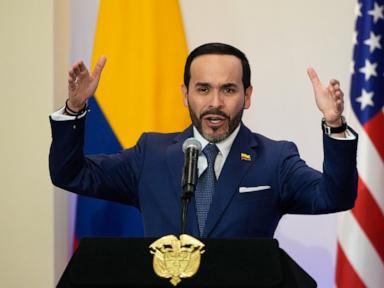
President Gustavo Petro’s recent offer of diplomatic and legal support to the Colombian veterans extradited to the United States over the assassination of Jovenel Moïse is more than a diplomatic maneuver. It is a collision between sovereignty, remorse, and the grim reality of what happens when a country exports its most abundant commodity: men with guns.
Consider the journey of a Colombian soldier. You enlist young. You learn to survive in jungles where the state’s presence is measured only in helicopter gunships and rations. You spend twenty years enduring ambushes, dodging homemade landmines, and navigating an endless civil conflict. And then, you retire. You are forty-five years old. Your knees ache when the humidity drops. Your pension barely covers the rent, let alone the school fees for your youngest child.
Along comes a private security firm. The promises are slick, whispered in air-conditioned offices in Miami or through encrypted messaging apps. The pay is in dollars—hard currency that can transform a struggling family's life in South America. They tell you it is protection work. They tell you high-ranking officials want you. They use words like logistics, security, detail.
You do not ask too many questions. In the military, asking questions gets you punished. Following orders keeps you alive.
So you pack a duffel bag, kiss your wife goodbye, and board a flight to Port-au-Prince. You land on an island that feels like a pressure cooker, governed by a fractured political class and violence that hums just beneath the surface like an electric current. You are handed a rifle. You are told to guard a compound. And then, the night shatters.
When the dust settled on July 7, 2021, President Moïse was dead. Haitian police began rounding up suspects. Among them were former members of the Colombian military. Handcuffed, bewildered, and speaking a language they did not understand, they were paraded before cameras. Months later, under arrangements that blurred the lines between extradition and abduction, they were flown to Miami.
Federal courts in the United States do not care about the geopolitical complexities of the Caribbean or the economic desperation of the Andes. They care about jurisdiction, conspiracy, and statutes. To the American judicial system, these men are defendants in a transnational murder plot.
To Colombia, however, they are something far more complicated: citizens caught in the gears of a globalized shadow economy.
When President Petro voiced support for these veterans, he touched a raw nerve in the national consciousness. For decades, Colombia has been the United States’ closest military partner in South America, a laboratory for counter-insurgency and the war on drugs. Thousands of Colombian soldiers have trained at American bases, adopting U.S. doctrines and combat styles. They were forged in a bilateral furnace. Yet, when those same soldiers become liabilities on the international stage, Washington expects Bogotá to look away, to shrug and let foreign courts handle the fallout.
Petro’s intervention breaks that silence. It forces a reckoning with an uncomfortable truth: Colombia has institutionalized the exportation of mercenaries.
It is a silent industry. You will not find it listed on the stock exchange, but it spans from the emerald mines of South America to the oil fields of the Middle East, from private security details in Haiti to training camps in the United Arab Emirates. When young democracies spend fifty years at war, they do not just produce peace treaties. They produce an entire generation of combat-ready men whose only marketable skill is violence. When the war at home ends, or when the pension is too small to survive, these men become migrant workers of the battlefield.
They are the shock absorbers of global instability. When a dictator needs protection, when a mining corporation needs a private army, when a chaotic Caribbean state teeters on the brink of collapse, they send for the Colombians. Everyone knows they are disciplined. Everyone knows they are cheap compared to American or British contractors. And everyone knows that if things go wrong, they are entirely expendable.
The families back home know none of this geopolitics. They only know the cost of phone calls from Florida prisons. They know the agony of trying to translate legal indictments written in English, trying to understand why a husband who left to earn grocery money is now facing life behind bars without parole.
Legal experts argue fiercely over the merits of Petro's move. Critics call it grandstanding, an attempt by a left-wing populist to posture as a defender of the downtrodden while meddling in foreign judicial processes. Supporters call it a long-overdue assertion of national dignity, arguing that a state cannot simply abandon its citizens to foreign prosecutors when those citizens were lured abroad by systemic poverty and government-fostered military cultures.
Both sides miss the deeper human tragedy.
The men sitting in those federal cells made terrible choices. They walked into a dark room without checking the locks. But they did so within a system that trained them to obey without thinking, rewarded them for aggression, and then discarded them into an economic vacuum.
When the trial concludes and the sentences are handed down, the headlines will fade. The cable news cycles will move on to the next crisis. The politicians in Washington and Bogotá will return to their summits and press conferences.
Back in the hillside neighborhoods of Bogotá, however, the landline will still ring at three in the morning. Only now, there will be no one left on the other end who can change what happened in the dark.