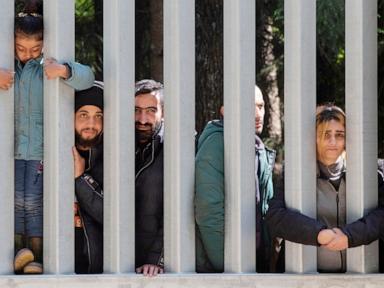
Cold.
It starts in the boots, creeping upward through wet wool socks until your toes feel like pebbles rattling inside rubber casings, and by three in the morning in the Białowieża Forest, the mist hangs so thick between the ancient oaks that a flashlight beam hits a solid white wall ten feet in front of your face. For a more detailed analysis into similar topics, we suggest: this related article.
To understand why Warsaw decided to tear up one of Europe’s oldest legal playbooks, you have to stand in that mud along the Bug River, where the eastern edge of the European Union meets Belarus. For years, policymakers in Brussels debated migration policy inside climate-controlled conference rooms, drafting directives about burden-sharing and processing quotas. Out here, policy smells like wet pine needles, diesel exhaust from border patrol trucks, and the sharp, metallic tang of razor wire unspooled across peat bogs.
In late 2024 and rolling straight into 2025, Polish Prime Minister Donald Tusk announced a move that sent shockwaves from Berlin to Geneva: Poland would temporarily suspend the right to claim asylum for people crossing irregularly from Belarus, and Warsaw began actively lobbying the rest of the European Union to follow its lead. According to statements from the Polish government and reporting by major international outlets including the BBC, Reuters, and the Associated Press, Tusk framed the suspension not as an abandonment of humanitarian values, but as an act of national self-defense against what Warsaw and Brussels call "hybrid warfare." To get more context on this topic, extensive analysis can be read at NPR.
That phrase sounds clinical. Sanitizing, even.
In practice, it looks like a travel agency in Baghdad or Damascus selling a "European package" for several thousand dollars, flying families into Minsk on Belarusian state-approved visas, loading them onto buses driven by armed men, and dropping them at a razor-wire fence in the middle of a freezing swamp with wire cutters and instructions to run west.
The Architecture of a Weaponized Border
Consider a hypothetical scenario, grounded in hundreds of documented testimonies collected by both Polish border guards and humanitarian workers on the ground.
Picture Tariq, a thirty-four-year-old civil engineer from Aleppo who sold his mother’s gold and his own small workshop to pay a smuggler $6,000 for safe passage to Germany. He was promised a clean flight to Minsk and a short walk across an unguarded border into Poland, where, he was told, European law guaranteed him the right to utter one magic word—asylum—and immediately receive shelter, a lawyer, and a fair hearing.
Instead, Tariq finds himself standing waist-deep in freezing water at two in the morning. Behind him, Belarusian border troops in balaclavas fire warning shots into the air to prevent him from turning back toward Minsk. Ahead of him stands a five-meter-tall steel barrier topped with coiled concertina wire, monitored by thermal cameras and patrolled by Polish soldiers carrying assault rifles.
If Tariq manages to squeeze through a gap in the steel, he expects to be handed a form and a warm blanket. Under the 1951 Geneva Refugee Convention and the European Union’s own Charter of Fundamental Rights, anyone stepping onto EU soil has the legal right to apply for international protection, regardless of how they crossed the line.
That legal guarantee is the exact lever Belarusian President Alexander Lukashenko and Russian President Vladimir Putin decided to weaponize.
Think of the European asylum system like a hospital emergency room built on a sacred oath: anyone who walks through the sliding doors bleeding must be treated before anyone asks how they got hurt or whether they can pay. For seventy years, that oath held. Now imagine an arsonist down the street deliberately setting fires, loading victims onto buses, and dumping hundreds of them at the emergency room doors every single night—not to save them, but to bankrupt the hospital, exhaust the doctors, and turn the waiting room into a riot.
At what point does the hospital lock the front doors?
Why Warsaw Pulled the Emergency Brake
Polish officials argue that point arrived months ago. According to data published by Poland’s Border Guard (Straż Graniczna), tens of thousands of irregular crossing attempts have been recorded along the 418-kilometer Belarusian border since the crisis began in 2021, with spikes regularly exceeding hundreds of attempts in a single twenty-four-hour period. In May 2024, the conflict turned fatal when a young Polish soldier, Mateusz Sitek, was fatally stabbed through the border fence with a makeshift spear while trying to block a group attempting to breach the barrier.
His death changed the political gravity in Poland overnight.
"No one talks about human rights when our soldiers are being killed on the border," became the unspoken consensus across nearly the entire Polish political spectrum. Even Donald Tusk—a former President of the European Council who spent years criticizing his nationalist predecessors for violating EU rule-of-law norms—concluded that the old legal framework had become a suicide pact.
When Warsaw pushed legislation through parliament allowing the government to temporarily suspend asylum applications in designated border zones, Tusk stated plainly in speeches before the Sejm and at European Council summits in Brussels that the right to asylum was being "instrumentalized" by hostile intelligence services in Minsk and Moscow. According to Polish government briefings, roughly ninety percent of those crossing from Belarus do not actually want to stay in Poland; they view Poland merely as a transit corridor to Germany, France, or Scandinavia, and many destroy their identity documents before crossing to complicate deportation if their claims fail.
And Warsaw is no longer content to act alone.
Across European capitals, Polish diplomats have been carrying a blunt message: stop pretending this is a standard migration crisis, and rewrite European law before the political center collapses.
The Quiet Revolt Spreading Across Europe
If you listen closely to the corridors of Brussels, you can hear the creaking of a continental shift.
For years, countries on Europe’s external rim—Greece, Italy, Spain, Poland, Finland, and the Baltic states—felt abandoned by wealthier northern neighbors who lectured them on human rights while struggling to absorb arrivals themselves. Then the arithmetic changed.
Finland had already closed its entire 1,340-kilometer land border with Russia in late 2023 and passed emergency legislation in 2024 permitting border guards to reject asylum seekers at the frontier when Moscow began funneling migrants toward Finnish snowfields. According to statements from Finnish Prime Minister Petteri Orpo, Helsinki faced an impossible choice between rigid adherence to post-war treaties and national security.
By the time Tusk arrived at EU summits demanding explicit backing for Poland’s asylum suspension, he wasn't met with the outraged lectures he might have faced five years earlier. Instead, leaders from countries like Denmark, the Netherlands, Austria, and even Germany—which reinstated temporary checks on all its land borders in September 2024—nodded along. Even European Commission President Ursula von der Leyen acknowledged in official letters to EU leaders that Russia and Belarus were exploiting European compassion as a geopolitical weapon, signaling that member states have the right to take "exceptional and temporary" measures to protect their security.
The taboo is gone.
What used to be whispered by far-right parties on the fringes of European politics is now official policy drafted by centrist prime ministers in Warsaw and Helsinki.
The Human Cost Hidden Behind the Razor Wire
Yet standing on the ground in eastern Poland, it is impossible to ignore the other half of this story—the part that keeps human rights lawyers awake at night and makes even hardened border residents flinch.
A law doesn't discriminate between a cynical geopolitical pawn and a terrified mother carrying a feverish toddler.
According to reports from Amnesty International, Human Rights Watch, and Polish medical volunteers like Grupa Granica, suspending asylum rights at the border creates a legal black hole. When border guards conduct immediate "pushbacks"—forcing people back through gates in the fence into Belarusian territory without registering their claims—those people are trapped in a lethal ping-pong match. Belarusian guards beat them with batons and set dogs on them if they try to return toward Minsk; Polish guards push them back into the woods if they step onto EU soil.
Dozens of bodies have been pulled from the rivers and marshes of the Podlasie region since 2021. Many remain unidentified, buried in simple graves in local cemeteries with numbers instead of names on the wooden crosses.
Legal scholars and officials from the United Nations High Commissioner for Refugees (UNHCR) have warned repeatedly that blanket suspensions of asylum violate both international treaty obligations and EU law, which strictly prohibits non-refoulement—the core principle forbidding countries from returning people to places where they face torture or persecution. Once a major EU democracy decides it can switch off fundamental human rights by decree whenever an adversary manufactures a crisis, critics ask, what stops another government from using the exact same excuse tomorrow?
It is a terrifying question, and nobody in Europe has an easy answer.
If you open the border unconditionally, hostile regimes in Moscow and Minsk gain a cheap, bottomless lever to destabilize European democracies, fuel far-right extremism, and fracture the EU from within. If you seal the border and suspend asylum, you survive the hybrid attack—at the cost of dismantling the very legal and moral architecture that separated Europe from the autocracies on its doorstep.
Living Between Two Fences
Walk into any small bakery or hardware store in Hajnówka, a quiet town on the edge of the Białowieża Forest, and you can feel that contradiction sitting right on the counter next to the cash register.
The people who live here are tired. They are tired of military convoys rumbling past their bedroom windows at four in the morning, tired of helicopters rattling the teacups in their cupboards, and tired of seeing their ancient forest—a UNESCO World Heritage site where European bison still roam—sliced in half by a wall of steel and concrete.
Some residents leave bottles of water, dry socks, and thermoses of hot tea tucked under fallen logs for desperate strangers shivering in the undergrowth. Those same residents will tell you, in the very next breath, that they feel safer knowing the soldiers are patrolling the fence at night.
Empathy and fear live in the exact same chest here.
That is the reality lost in clean newspaper headlines about policy shifts and summit communiqués. Europe is not debating an abstract legal theory. It is trying to figure out how a free society defends itself when its enemies realize that decency itself can be turned into a vulnerability.
Out in the Białowieża Forest tonight, the temperature will drop below freezing again. Somewhere in the dark between the pine trees, a thermal camera will blink red on a monitor inside a Polish command post, a patrol vehicle will shift into gear on a muddy track, and another human being who paid everything they owned for a lie in Minsk will press their bare hands against cold steel, waiting to find out whether Europe still answers to the law—or only to the wall.


