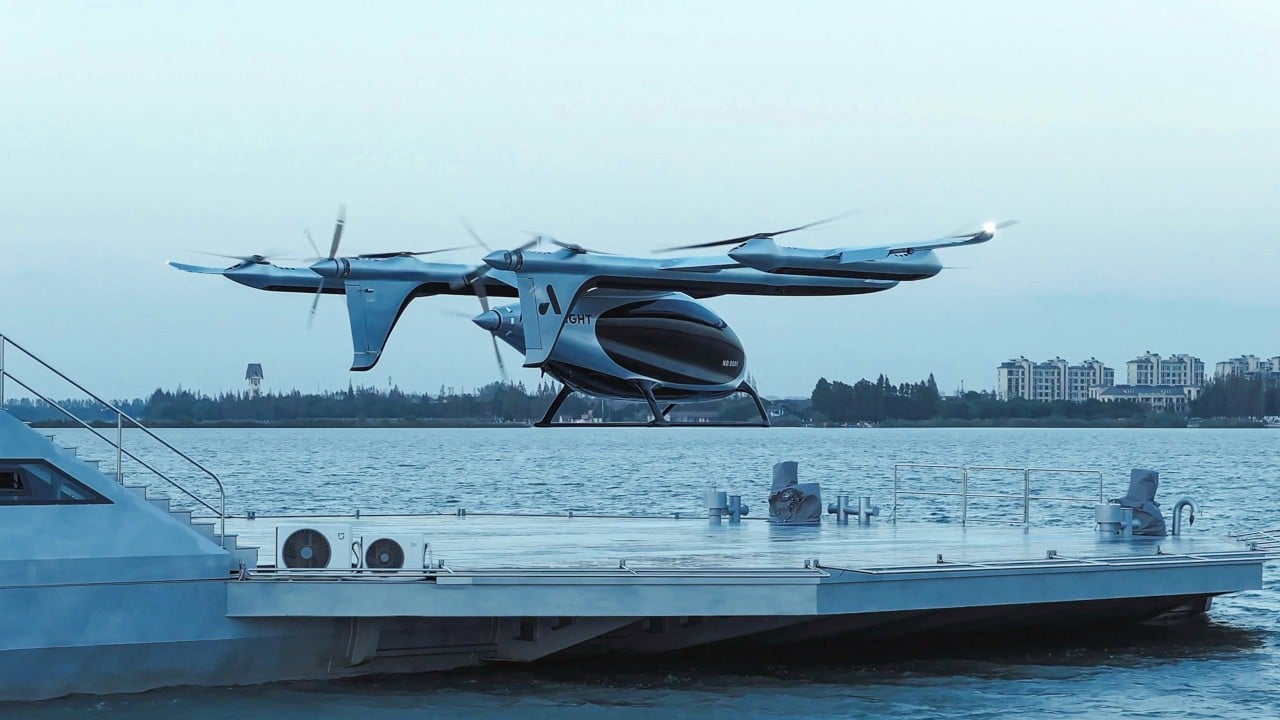
Every few months, the tech press gets high on its own supply. A major battery manufacturer drops a press release about energy density milestones, and suddenly, the headlines are filled with flying cars descending upon our cities. The lazy consensus says that once energy density hits a magic threshold—usually cited around four to five hundred watt-hours per kilogram—electric vertical takeoff and landing vehicles will populate our skies and solve urban gridlock.
It is a comforting fairy tale. It is also completely detached from reality.
I have spent the last decade watching investors flush hundreds of millions of dollars down the drain chasing vertical mobility pipe dreams while ignoring the physical architecture of the ground beneath them. CATL can stuff all the lithium and silicon into a pouch cell they want. They can push gravimetric energy density high enough to make aerospace engineers smile. It does not matter. The battery is not the bottleneck.
Physics is not the problem. Physics never was the problem. The problem is municipal bureaucracy, noise ordinances, kinetic energy limits, and the absolute impossibility of scaling point-to-point air traffic control for millions of flying lawnmowers.
The Energy Density Trap
Let us address the core technical misconception. The dominant narrative treats battery breakthroughs as the missing puzzle piece for low-altitude aviation. If we get better chemistry, the vehicle works. If the vehicle works, we fly.
This logic collapses the moment you examine the energy budget of vertical flight. Hovering requires continuous, brute-force thrust against gravity. A fixed-wing aircraft is efficient because lift is generated by forward motion over a wing. A vertical takeoff vehicle must lift its entire maximum takeoff weight straight up using rotor thrust alone.
When you scale a battery chemistry to meet this demand, you run into a brutal compounding penalty. Every extra kilogram of battery weight requires a stronger structural frame, which requires larger motors, which requires more current, which requires more thermal management, which adds more weight.
Even if CATL achieves a breakthrough that doubles standard automotive pack densities, low-altitude electric aircraft remain trapped in a miserable compromise between payload and range. A commercial prototype might manage a twenty-minute hop with a pilot and two passengers, provided there is a tailwind and the heater is off. That is not a transportation revolution. That is an expensive amusement park ride for venture capitalists.
The Physics of Noise
If you ignore the battery math and assume a breakthrough grants us one hundred miles of range with heavy payloads, you run straight into the next wall: acoustics.
People who build these craft live in wind tunnels and simulation labs. They do not live underneath flight paths. The public assumes electric motors mean quiet skies. This is a dangerous falsehood. Electric motors are quiet; propellers and rotors displacing air at high tip speeds are violently loud.
A multi-rotor aircraft or a tilt-rotor design operating at urban altitudes does not hum. It produces a high-frequency, directional drone that cuts through concrete canyons and rattles double-paned glass. Scale that up to commercial frequency—thousands of daily sorties over a major metropolitan area—and you create an environment hostile to human habitation.
Cities will not zone for this. Neighborhood associations will sue out of existence any vertiport proposed within five miles of a residential district. You can pack all the energy density you want into a battery pack, but if the local government bans you from landing anywhere convenient because your fleet sounds like an angry swarm of mechanical hornets, your product is a very expensive paperweight.
The Air Traffic Control Illusion
Let us engage in a thought experiment. Imagine a regulatory miracle occurs. Noise standards are magically waived, batteries last for hours, and the public welcomes low-altitude transit with open arms.
Now, look at air traffic control.
The current commercial aviation system relies on massive separation buffers, highly trained human controllers, and flight plans filed hours in advance. To make low-altitude urban air mobility viable at scale, you need automated, decentralized air traffic management capable of handling thousands of simultaneous, dynamic trajectories in a three-dimensional corridor over a dense city.
We do not have the software architecture for this. More importantly, we do not have the error tolerance. In a highway traffic jam, a mistake results in a fender-bender. In three-dimensional low-altitude space, a routing error or a lost telemetry link results in a hull loss over a crowded pedestrian plaza.
Insurance markets understand this risk calculus. The liability premiums alone would choke any commercial enterprise trying to run scheduled routes over downtown centers. You cannot code your way out of kinetic energy falling from three hundred feet onto a crowded sidewalk.
The Real Problem is the Ground
The obsession with flying cars is a symptom of a deeper societal disease: our refusal to fix ground transportation.
We are dumping capital into vertical mobility because the regulatory and physical friction of building functional high-speed rail, dedicated bus rapid transit, or sensible micro-mobility infrastructure on the ground has become politically toxic. It is easier to pitch a sci-fi fantasy to investors than it is to negotiate eminent domain for a rail line through a suburban county.
The companies winning in this space are not the ones building flashy carbon-fiber airframes. They are the ones optimizing battery supply chains for stationary storage and heavy commercial trucking—sectors where every kilowatt-hour actually displaces diesel and moves real freight at scale.
Stop asking if batteries are ready to push flying cars into commercial reality. The question is a distraction. The technology is irrelevant to a market that cannot legally, acoustically, or logistically exist at scale. Fix the ground first. Everything else is just expensive noise.


