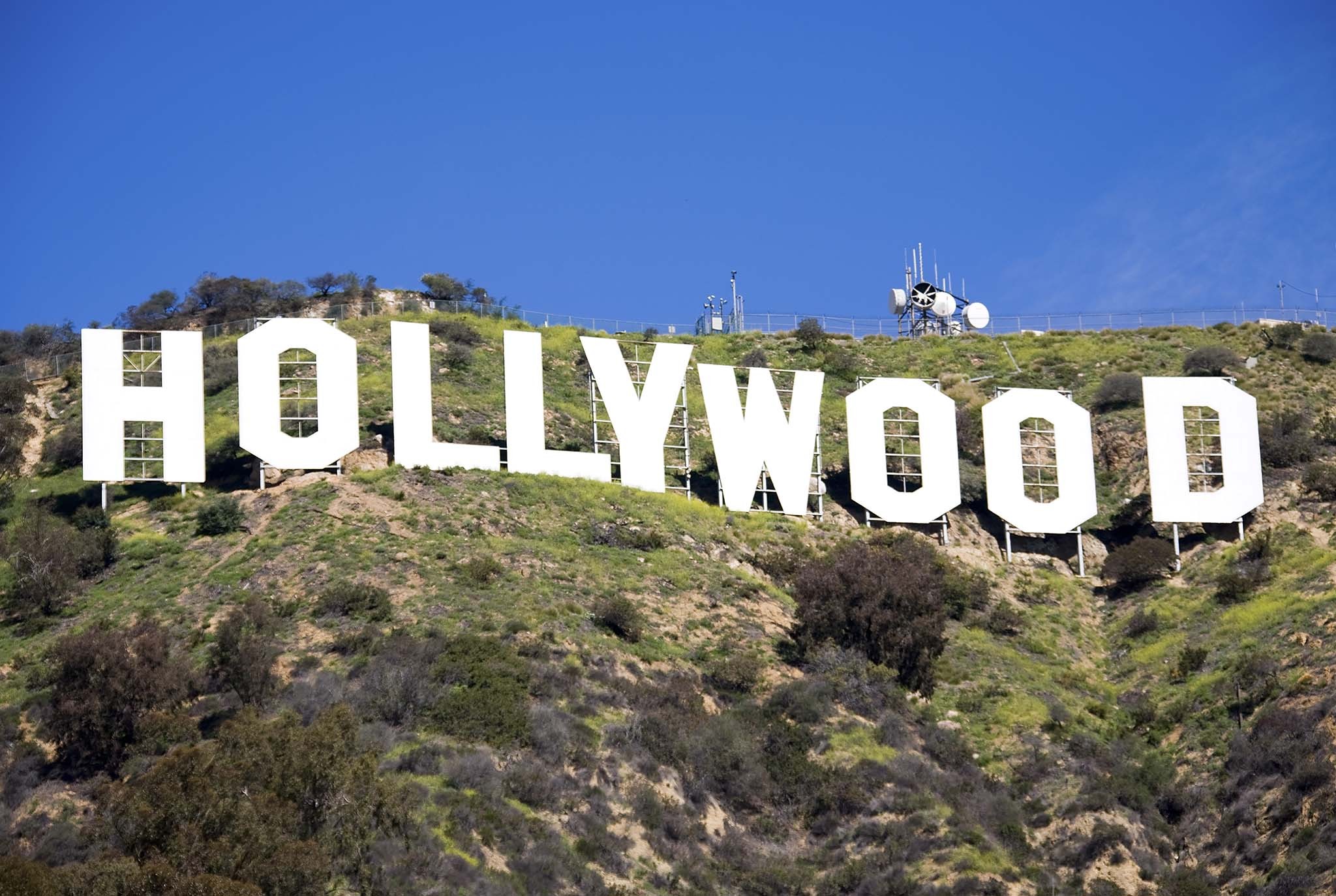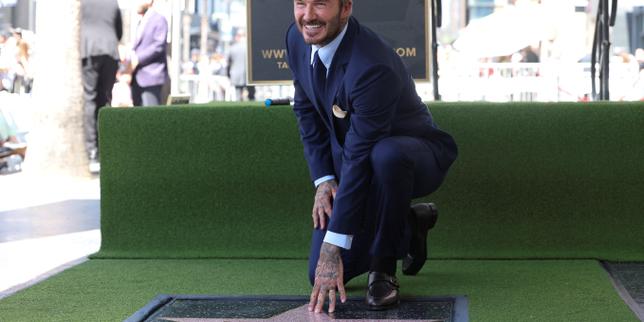
Every year, millions of tourists shuffle down Hollywood Boulevard, their eyes glued to the pavement. They step over names. They take selfies next to terrazzo pentagrams. To the casual observer, the Hollywood Walk of Fame looks like a permanent monument to spontaneous cultural adoration. We assume that when someone becomes sufficiently famous, a mysterious committee of elders summons a stonemason, a velvet rope is dropped, and history is made.
The truth is much colder. It is also much more fascinating.
To understand how a piece of coral pink terrazzo and black granite gets embedded into a dirty Los Angeles sidewalk, you have to look past the flashbulbs. You have to look at the machinery of legacy. A star on Hollywood Boulevard is not an award. It is a highly coordinated, expensive, and intensely political corporate campaign. It is a business transaction disguised as immortality.
The Anonymous Fan and the Five Thousand Dollar Letter
Imagine an administrative assistant named Sarah. She works in a mid-level talent agency in Century City. It is a Tuesday morning, and her desk is piled with contracts, but her focus is on a single, daunting PDF. It is the official nomination application for the Hollywood Walk of Fame.
Sarah is not filling this out because the universe demanded it. She is filling it out because her agency’s biggest client has a major film releasing next summer, and the star’s publicist realized that a Walk of Fame ceremony would provide the perfect, free worldwide press coverage right before opening weekend.
This is where the first illusion shatters. Anyone can nominate a celebrity. A fan club can do it. A spouse can do it. A movie studio can do it. You could do it for your favorite character actor tomorrow. But the application itself is merely the ticket to enter a brutal lottery.
The real hurdle is a single signature.
The application requires a written statement from the celebrity or their management, explicitly stating that the nominee wants the star and will absolutely attend the unveiling ceremony. This is a hard, non-negotiable rule. If the celebrity refuses to show up, the star is not granted. The Hollywood Chamber of Commerce, the business organization that actually manages the Walk, is not in the business of honoring ghosts who cannot draw a crowd. They want the spectacle. They need the cameras.
Then comes the first financial gate. To even submit that piece of paper, someone has to write a check. The current fee just to submit a nomination is hundreds of dollars, non-refundable, regardless of whether the committee throws the application into the recycling bin five minutes later.
The Secret Room in June
Once a year, in June, a small group known as the Walk of Fame Selection Committee meets behind closed doors. The committee is comprised of five experts from different facets of the entertainment industry, chaired by a member of the Chamber’s Board of Directors.
Picture this meeting. It is a room filled with hundreds of files. Famous faces stare up from glossy headshots. The committee’s job is to whittle down roughly 200 to 300 massive nominations into a final selection of just 20 to 30 names.
The criteria look straightforward on paper. Longevity in the industry. Five years or more of professional achievement. Contributions to the community. Civic participation.
But how do you measure a human life in a spreadsheet? How do you compare a veteran radio DJ who has spent thirty years broadcasting to commuters in Southern California with a British theater actor who just won an Oscar?
The committee divides the world into strict categories: Motion Pictures, Television, Recording/Audio Recording, Live Theatre/Live Performance, Radio, and Sports Entertainment. This last category is a modern addition, created to accommodate the massive cultural footprint of professional athletes and digital creators who did not fit into the classic definitions of stage and screen.
The debate in that room is not just about talent. It is about politics, relevance, and timing. If a studio executive on the committee knows that a particular director is about to retire, that might tip the scales. If a legendary singer has recently survived a major health scare, their file might move to the top of the pile. It is a delicate dance of sentimentality and commercial strategy.
The Price of Immortality
Let us assume our hypothetical client is selected. The publicist calls Sarah. There are screams of joy in the hallway. The press release is drafted.
Then the invoice arrives.
As of today, the cost of securing a star on the Hollywood Walk of Fame is $75,000.
Let that number sit for a moment. This is the detail that surprises almost everyone outside the industry. The city of Los Angeles does not pay for these stars. The fans do not get a discount. The money must be paid up front after selection.
Where does that $75,000 go? It is easy to assume it is pure profit for the Chamber of Commerce, but the breakdown reveals the literal logistics of maintaining a monument in the middle of an urban center. Half of the fee goes into the actual manufacturing of the star. The terrazzo must be mixed. The brass letters must be cast by a local artisan shop that has held the contract for decades. The sidewalk must be jackhammered out, usually in the middle of the night to avoid shutting down traffic on Hollywood Boulevard.
The other half of that fee goes into something far more mundane: the Hollywood Historic Trust.
This is the non-profit entity tasked with the endless, thankless job of maintaining the Walk. Hollywood Boulevard is not a museum museum gallery. It is a public street. People drop coffee on it. Skateboards grind across it. Protesters paint over names. Vandals with chisels occasionally try to pry pieces of history out of the ground. The trust uses that money to repair cracked granite, polish weathered brass, and ensure that the names do not fade into the gray concrete of Los Angeles grime.
Usually, the celebrity does not pay this out of their own pocket. A movie studio, a television network, or a record label will pick up the tab. They view it as a production expense, a marketing line item for an upcoming project. It is a tax-deductible investment in a PR stunt that will live forever on Google Images.
The Two Year Timer
Once the selection is announced and the money is secured, a countdown begins. The recipient has exactly two years from the date of selection to schedule their ceremony.
If they do not? The selection expires.
This is where the human drama often gets messy. Scheduling a Walk of Fame ceremony is a nightmare of logistics. You need the star to be available. You need at least two other famous co-stars or directors to give speeches. You need the city to grant permits to close a portion of the sidewalk. Most importantly, you need the timing to align with something the celebrity is trying to sell.
Consider what happens next when a star’s schedule falls apart. A movie gets delayed. A divorce scandal hits the tabloids, and the PR team decides that standing in front of a hundred cameras right now is a terrible idea. The two-year window starts ticking down.
Some celebrities have let their selection lapse entirely, requiring their teams to start the entire process over again years later. Others have waited decades between their peak fame and the moment their shoes finally touched the pink star.
The Unclaimed Concrete
There is a final, strange truth about this process: some people simply say no.
The Walk of Fame is littered with the ghosts of icons who are conspicuously absent. Clint Eastwood has never wanted one. Al Pacino never chased it. Bruce Springsteen’s name is missing.
To some, the idea of paying tens of thousands of dollars to have tourists drop chewing gum on your name feels less like an honor and more like an indignity. It highlights the fundamental tension of the Walk of Fame. It is a monument that exists at the exact intersection of high art and low commerce. It is a place where the sweat of an actor’s lifetime achievement is cast into stone, only to be walked over by a teenager looking for a fast-food restaurant.
Yet, despite the cynicism, despite the corporate underwriting and the calculated PR campaigns, something magical happens on the day of the unveiling.
The black velvet curtain is pulled back. The brass letters gleam in the California sun. The actor, now perhaps in their seventies, looks down at their name written in that specific, unmistakable font. They look up at the crowd of strangers who have stood behind metal barricades for six hours just to catch a glimpse of them.
In that specific, fleeting afternoon hour, the marketing strategy fades away. The invoice is forgotten. The corporate sponsors slip into the background. There is only a human being looking at a sidewalk, realizing that long after they are gone, long after their movies have moved from theaters to streaming platforms to whatever comes next, their name will still be etched into the crust of the earth.