The steel door slams shut with a sound that vibrates through your teeth before it ever reaches your ears.
If you have ever stood inside a maximum-security segregation unit—the kind of place where the fluorescent lights hum twenty-four hours a day and the air smells faintly of bleach, boiled cabbage, and damp concrete—you know that time does not move in a straight line. It pools. It stagnates. It turns heavy, pressing down on your shoulders until you forget what wind feels like on your face or what grass smells like after rain.
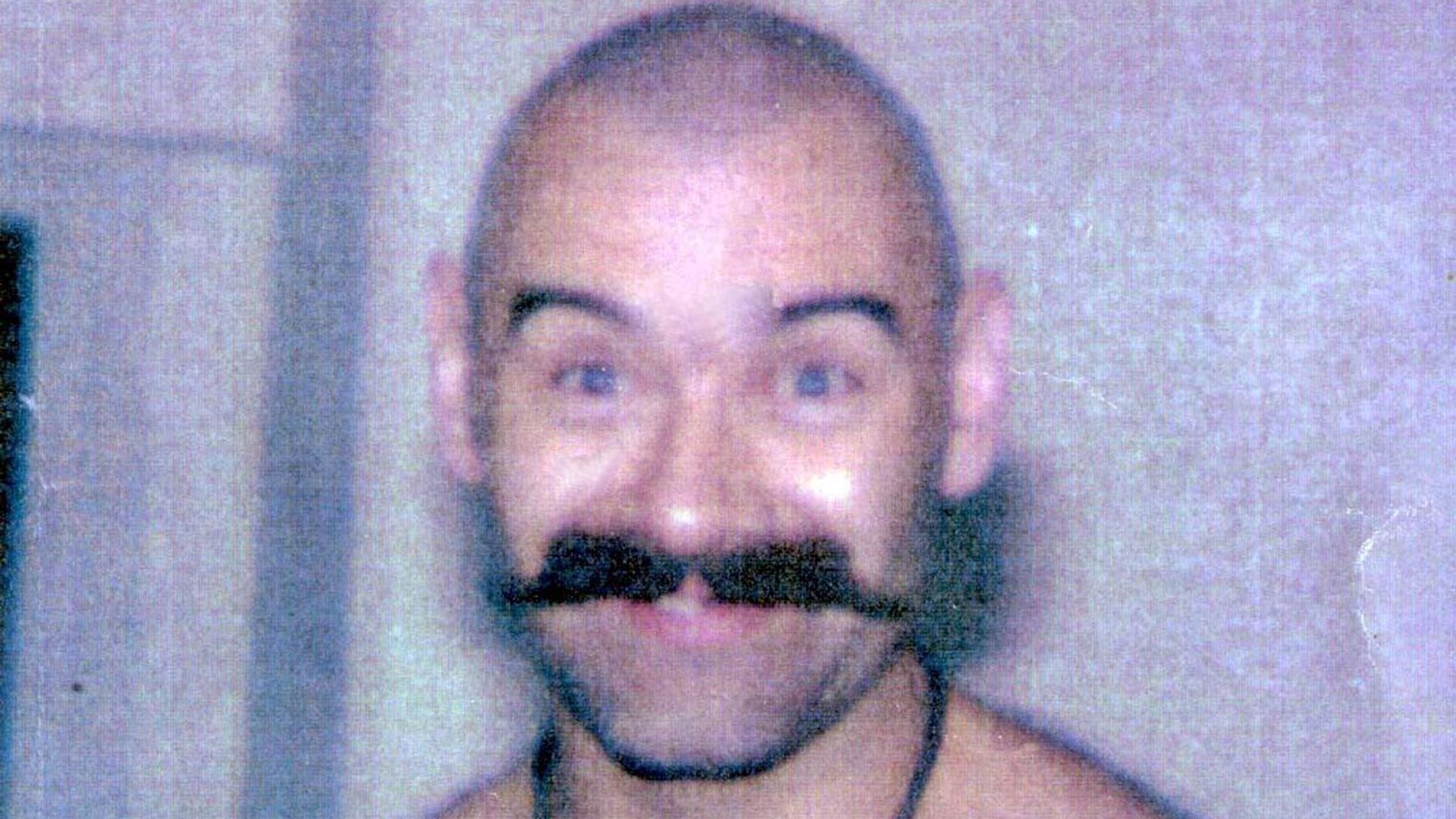
For half a century, that concrete box has been home to Michael Gordon Peterson.
The British tabloids know him by a different name, one borrowed from a Hollywood tough guy in the nineteen-eighties: Charles Bronson. Or, more recently, Charles Salvador, after the surrealist painter Salvador Dalí. Whatever name sits on his prison file, the verdict from the Parole Board of England and Wales remains identical to the eight that came before it.
Denied.
Again.
For the ninth time, a panel of legal and psychological experts looked at the seventy-something-year-old man sitting before them and decided that unlocking his cell door remains an unacceptable risk to the public. To the casual observer scrolling through morning headlines, the story looks simple, almost cartoonish. Britain’s most notorious prisoner, the bare-knuckle fighter who smeared himself in butter to wrestle prison guards, the hostage-taker who turned rooftop protests into front-page theater, has been told to stay put. Case closed.
Except the real problem lies elsewhere. When we reduce a fifty-year sentence to a punchline about a violent eccentric, we miss the far more unsettling truth sitting right in front of us. The story of Charles Bronson’s ninth parole refusal is not really about one man’s legendary temper. It is about what happens when a justice system builds a cage so tight that the person inside can never prove they have outgrown it, and what happens when a society becomes addicted to the monster it helped create.
The Seven-Year Sentence That Swallowed a Lifetime
To understand how a man ends up fighting for his freedom in his seventies after entering prison in his early twenties, you have to rewind the tape to 1974.
Michael Peterson was twenty-two years old. He was not a serial killer. He was not a terrorist, a child predator, or a cartel boss. He was a petty criminal from Luton who walked into a post office with a sawn-off shotgun and walked out with twenty-six pounds and eighteen pence. Nobody died. Nobody was even shot. The judge handed down a seven-year sentence—a harsh but finite punishment meant to teach a reckless young man a lesson and send him back into society before he turned thirty.
Consider what happens next.
Instead of serving seven years, Peterson stepped onto a conveyor belt of institutional escalation that has not stopped turning since the mid-seventies. Inside, he fought. He fought other inmates, he fought prison officers, he destroyed prison property, and he staged elaborate, terrifying rooftop protests and hostage situations. Every outburst added months, then years, to his tariff. Every transfer to a stricter unit—from Wandsworth to Parkhurst, from Broadmoor to Wakefield—stripped away whatever fragile tether he still had to normal human interaction.
Think of it like a pressure cooker with a welded lid. When you lock a volatile, claustrophobic young man in solitary confinement for twenty-three hours a day, denying him exercise, conversation, and daylight, you do not cure his aggression. You ferment it. Each time he exploded, the system responded with tighter chains; each time the chains tightened, his need to shatter them grew more desperate.
By the time he took a prison art teacher, Phil Danielson, hostage for forty-four hours at HMP Hull in 1999—critiquing the man’s paintings while holding a makeshift spear—the courts had seen enough. In 2000, Peterson received a discretionary life sentence with a minimum term of just three years.
That three-year minimum expired in 2003. Twenty-three years ago.
Inside the Parole Board’s Impossible Equation
Why, then, does the Parole Board keep saying no? If he has served more than two decades past his minimum tariff, and if he has avoided serious violence for years, what keeps him locked inside HMP Woodhill?
To grasp the Parole Board’s dilemma, step into the shoes of a panel member for a moment. Imagine a hypothetical risk assessor—let’s call her Sarah—sitting across a table from an applicant who has spent fifty years behind bars. Sarah’s job is not to punish; the courts already did that. Her sole legal mandate is to answer one terrifying question: Is it no longer necessary for the protection of the public that this person be confined?
Notice the phrasing. Not "Is he a good guy now?" Not "Has he suffered enough?" The law demands certainty that he will not snap when dropped into a crowded, noisy, unpredictable world he hasn't navigated since Richard Nixon was in the White House.
In his recent hearings—including the landmark 2023 public hearing, only the second in UK history, and this latest ninth review—Bronson has presented a radically different version of himself. He speaks softly now. He paints delicate, intricate watercolors and pencil sketches, raising thousands of pounds for children’s charities and animal shelters. He talks about growing old, tending a small garden, and eating a steak dinner with his family. During his public hearing, he even admitted, with a rare flicker of vulnerability, that he had been a "villain" who deserved to be locked up in the past, though he insisted that man was dead.
Yet when Sarah and her colleagues look at his file, they don't just see the paintings. They see a glaring, structural paradox.
Because Bronson has spent almost his entire adult life in segregation or close supervision centers, he has never been tested in open conditions. In the British prison system, lifers typically step down gradually: from Category A maximum security to Category B, then Category C, and finally to a Category D open prison, where they might work in the community by day and return at night. That gradual decompression chamber proves they can handle minor frustrations—a rude cashier, a delayed bus, an unexpected bill—without resorting to violence.
Bronson has never had that decompression chamber. And the Parole Board repeatedly concludes that he still lacks the emotional self-regulation to handle sudden stress without reverting to the survival instincts he honed over five decades of concrete and steel.
The Trap of the Myth
I will be honest with you: thinking about this case makes me deeply uncomfortable, because both sides of the argument carry an undeniable weight, and neither offers an easy moral exit.
On one side sit the victims of his past hostage-takings—men like Phil Danielson, whose life was permanently derailed by forty-four hours of terror, and prison officers who went to work simply to earn a paycheck and ended up bruised, bound, or traumatized. Their trauma does not evaporate just because the perpetrator found a paintbrush and started calling himself an artist. When a man has spent decades turning violence into his primary language, skepticism isn't cruelty; it's common sense.
On the other side sits a haunting question about human capacity for change—and our own appetite for spectacle.
Look at how Britain talks about Charles Bronson. Even as the state insists he is too dangerous to walk down a high street, British pop culture has turned him into a folk anti-hero. Tom Hardy played him in a critically acclaimed biopic. People buy prints of his artwork. True-crime podcasts dissect his escapades with breathless fascination. Even Bronson himself has leaned into the caricature over the years, flexing his muscles, bragging about his press-up records, and delivering quotable one-liners to the press.
That performance is a double-edged sword. Every time he plays the legendary hardman for his fans outside the walls, he hands the psychologists inside the walls fresh ammunition. They look at the persona and see someone who still romanticizes his own notoriety, someone who hasn't truly dismantled the ego that fueled his worst crimes.
At the same time, we have to ask: how does a human being survive fifty years in a cage without inventing a myth to keep himself sane? When you have no career, no marriage, no children to watch grow up, and no freedom, your reputation is the only currency you own. Letting go of "Charles Bronson" means admitting that Michael Peterson threw away his entire life for twenty-six pounds and eighteen pence. That is a psychological abyss few people could stare into without losing their minds.
What Happens When Nobody Knows How to Unlock the Door
Look closely at the mechanics of this ninth refusal, and you notice something troubling about how modern corrections operate.
In theory, prison is a two-way street: the state removes liberty, and the prisoner works through a structured pathway to earn it back. In practice, once someone is labeled "too dangerous to test," the pathway vanishes. If you cannot move to an open prison until you prove you are safe, and you cannot prove you are safe until you move to an open prison, you are trapped in a closed loop.
Consider the sensory reality of release for someone like Peterson. The world he left in 1974 had rotary phones, paper maps, and four television channels. Today’s world is a relentless assault of glowing screens, contactless payments, facial recognition cameras, and crowds of strangers staring at smartphones. Even for a completely balanced person, stepping out of prison after twenty years triggers severe institutionalization—panic attacks in supermarkets, paralysis when choosing what to eat, overwhelming paranoia in open spaces.
After fifty years? Stepping out of HMP Woodhill wouldn't be like walking into freedom. It would be like landing on an alien planet without a spacesuit.
This is why the Parole Board’s refusal, while legally defensible, feels so bleak. They did not recommend his release, nor did they recommend moving him to open conditions. He remains right where he has been since the last hearing, and the hearing before that, waiting another two years for his tenth roll of the dice—by which time he will be pushing eighty.
The Mirror Held Up to the Walls
There is a temptation, whenever Charles Bronson makes the news, to treat him as an anomaly—a bizarre outlier who exists completely outside normal human experience. That distance feels safe. It lets us shake our heads, marvel at the sheer number of years he has spent locked away, and move on with our day.
Look closer, though, and the distance shrinks.
Every society decides what it believes about redemption, risk, and proportionality. We like to think our justice system is a precise instrument, calibrating punishment cleanly to match the crime. Yet here sits a man who never took a human life, serving a longer continuous stretch behind bars than almost any murderer in modern British history, trapped inside a cycle where past behavior forever outweighs present stillness.
Maybe the Parole Board is right. Maybe the anger that drove him onto prison rooftops in the nineteen-eighties still simmers just beneath the surface, waiting for one bad afternoon to boil over. Nobody wants to be the panel member who signs the release papers only to read a tragic headline six months later.
Still, as the heavy steel door slides shut once more on a seventy-something-year-old man holding a set of watercolor brushes, it is hard to shake the feeling that something has gone quietly, profoundly wrong—not just with the prisoner inside the cell, but with a system that spent half a century building a monster and now has no idea what to do with the old man left behind.