Climbing a 390-foot vertical cliff with your bare hands is terrifying. Doing it over a boiling, toxic volcanic lake without a single safety rope is pure madness. Yet, that is exactly how Al-Qaqa Ibn Antar, a 30-year-old climber known globally as the Spider-Man of Yemen, spent his final moments.
On June 12, 2026, Antar lost his grip while scaling the razor-sharp rock faces of the Hardah Dam volcanic crater in Yemen’s southern Dhale province. A horrific ten-second video captured the exact moment his right hand slipped from the stone wall. He plummeted directly into the crater lake below.
It is easy to look at this tragedy and blame the modern thirst for digital validation. Comment sections are already filled with people calling him reckless. But reducing Antar’s death to mere chase for views ignores a much harsher, uncomfortable reality. For young men trapped in conflict-torn, economically devastated nations, extreme internet stunts are not a hobby. They are a desperate ticket out of systemic poverty.
Inside the Deadliest Climb in Dhale Province
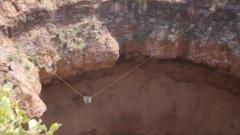
The Hardah Dam, or Haradhat Damt, is not a typical climbing destination. Located near the city of Damt, the landmark is a massive volcanic crater characterized by crumbly, unstable terrain. At the very bottom lies a treacherous lake filled with sulfur-rich waters. Temperatures in the pool range from 100°F to 140°F.
Antar was no stranger to this spot. He had built an enormous online following by performing acrobatic stunts and high-risk free solo ascents here. He would regularly hang from craggy ledges by his fingers, dangling his legs over the abyss. On the day he died, he was scaling a section of the wall where names had been scrawled in white Arabic chalk. He paused, raised his left hand to wave or steady himself, and then his right hand gave out.
Recovering his body became a nightmare for local emergency workers. The Yemeni Civil Defense Authority had to launch a complex, highly dangerous four-hour operation. They deployed specialized water rescue teams, divers, and heavy lighting equipment into the crater.
The environment was brutal. Rising underground vents pumped toxic, potent gases into the air, making it hard for rescue personnel to breathe. Divers eventually located Antar’s body submerged 100 feet beneath the surface of the scalding, sulfurous water. The mission was so grueling that the state agency publicly praised the "exceptional field capabilities" of its team and immediately promoted the rescuers involved.
The Financial Desperation Behind the Free Solo Trend
Western free solo legends like Alex Honnold, who famously scaled El Capitan and recently climbed Taiwan’s Taipei 101 tower without ropes, do what they do for the pure psychological thrill and athletic mastery. They have corporate sponsorships, medical teams, and financial safety nets.
Yemeni creators do don't have those luxuries.
Before his death, Antar openly admitted to local media outlets like Yemen Online that poverty was his primary motivator. Yemen has been fractured by over a decade of civil war, economic collapse, and blockades. Career options for young adults are practically nonexistent. In a place where traditional employment cannot buy basic groceries, the monetization of global social media platforms looks like a viable lifeline.
When your daily choices are slow starvation or risking your life for ad revenue, the calculus changes. Antar discovered that the more dangerous his stunts were, the faster his videos went viral. He traded his physical safety for a chance to feed his family.
The Internet Algorithmic Death Trap
Social media algorithms are inherently predatory toward daredevil creators. Platforms reward escalating danger. A standard climb gets minor engagement. A climb over a deadly, boiling volcanic pit gets millions of clicks. This algorithmic structure forces creators into an arms race against death. They have to keep pushing the envelope to keep their metrics alive.
The Civil Defense Authority has since issued strict warnings. They are begging tourists and locals to stay away from steep crater slopes and use proper protective gear. But these warnings usually fall on deaf ears. As long as structural poverty exists alongside an internet culture that monetizes extreme human risk, we will see more tragedies exactly like this one.
If you want to support creators in developing nations, stop only clicking when they put their lives on the line. Watch their cultural content, share their art, and engage with their safer projects. We must stop letting algorithms dictate the worth of a human life.