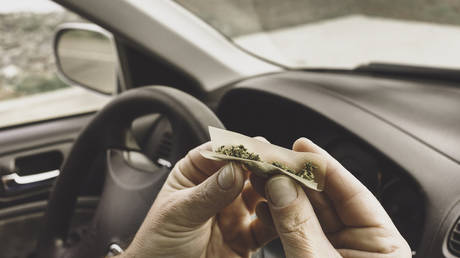
The British media is in the middle of a collective meltdown. Headlines are screaming that the UK is mired in a terrifying "drug-driving epidemic". The latest panic stems from Driver and Vehicle Licensing Agency (DVLA) data showing that drug-driving licence endorsements (30,707) have officially overtaken drink-driving endorsements (29,769) for the first time.
Road safety charities are calling for emergency powers. Politicians are looking grave on television. The lazy consensus has been established: British roads are suddenly crawling with lawless, drug-fueled motorists, and the only solution is to clamp down harder.
It is a compelling narrative. It is also entirely wrong.
What the mainstream press is feeding you is a classic correlation error masked by a fundamental misunderstanding of enforcement technology. The UK is not experiencing a sudden, unprecedented surge in drugged motorists. What the UK is actually experiencing is the predictable outcome of an administrative trap, a highly sensitive roadside testing tool, and a flawed legal framework that punishes biological footprints rather than actual physical impairment.
We are not witnessing a crisis of public safety. We are witnessing a triumph of bureaucratic metrics.
The Illusion of the Drug Driving Surge
To understand why the "epidemic" is a myth, you have to stop looking at the raw endorsement numbers and start looking at how those numbers are generated.
For decades, catching a drunk driver required a clear, undeniable demonstration of danger or a random breathalyzer test that measured a universally accepted threshold of cognitive degradation. Alcohol leaves the system relatively quickly. If you blow over the limit, you are almost certainly unfit to pilot a two-ton piece of metal.
Drugs do not work this way.
The introduction of roadside drug kit swabs allowed police forces to screen for cannabis and cocaine with extreme efficiency. But here is the critical detail the mainstream analysis ignores: the legal limits for illegal substances in the UK were never set based on a threshold of impairment. They were set at a near-zero level purely to facilitate easy prosecutions.
Consider the mechanics of cannabis. Tetrahydrocannabinol (THC) is fat-soluble. A driver can smoke a joint on a Friday night, wake up on Monday morning completely sober, clear-headed, and perfectly capable of driving, yet still fail a roadside saliva test because trace metabolites remain in their system.
When the DVLA registers a 28% increase in drug-driving endorsements since 2022, they are not recording an increase in impaired drivers. They are recording an increase in the number of swabs being handed out by police forces who know that these tests are essentially fish in a barrel.
The Statistical Reality Nobody Wants to Talk About
If the roads were truly being overrun by a new wave of stoned drivers, you would expect self-reported data and broader health metrics to reflect an explosion in drug consumption among motorists. The exact opposite is true.
Let us look at the hard data from the Crime Survey for England and Wales. When you look at self-reported driver behavior, the proportion of motorists who admit to driving while under the influence of illegal drugs has plummeted from 2.3% in 2010 down to a mere 0.4% in 2025.
Read that again.
While the police are handing out record numbers of points and bans, actual self-reported drug-driving has dropped by more than 80% over the last fifteen years.
| Metric | 2010 | 2025 | Trend |
|---|---|---|---|
| Self-Reported Drug-Driving | 2.3% | 0.4% | Massive Decrease |
| Annual Licence Endorsements | Low (Pre-Swab) | 30,707 | Artificial Surge |
How do you reconcile a 28% spike in convictions over three years with a massive, multi-year decline in actual behavior? You do it by realizing that the testing system is designed to catch people who are no longer high.
I have spent years analyzing how public policy intersects with enforcement data. I have watched government agencies celebrate "crackdowns" that are nothing more than shifted goalposts. If you change the law to state that having a single molecule of a substance in your body constitutes a crime, and then you deploy millions of pounds worth of high-tech kits to detect that molecule, your conviction rates will skyrocket.
That is not a safety victory. That is a manufacturing line for criminals.
The Catch-22 of the Reoffender Loop
Another pillar of the current moral panic is the revelation that nearly half of all drug-driving offences (44%) are committed by repeat offenders. Activists use this statistic to demand immediate roadside licence suspensions and longer prison sentences. They claim the current penalties are not acting as a deterrent.
Let us apply some basic logic to the mechanics of addiction and systemic marginalization.
Imagine a scenario where a young driver from an underprivileged background uses cannabis medicinally or recreationally. They are pulled over, swabbed, and hit with an automatic one-year driving ban and an unlimited fine. They lose their job because they can no longer commute. They are handed a criminal record that effectively bars them from secure employment for years.
What happens next? Their structural options collapse, but their drug use does not magically vanish because a magistrate waved a piece of paper. They continue to use, they are forced to drive unregistered or uninsured vehicles out of sheer economic necessity, and because they are now flagged in the police database, they are pulled over and swabbed again.
The 44% reoffending rate is not proof that drug-drivers are a hardened cartel of reckless maniacs who despise public safety. It is proof that the current punitive model strips people of their livelihoods, pushes them into the informal economy, and leaves them trapped in a loop where they are repeatedly penalized for the same underlying lifestyle or dependency issues.
Offering a "rehabilitation scheme" modeled after drink-driving courses—as many charities are currently begging for—is a fundamentally flawed approach. Alcohol rehabilitation works because alcohol consumption patterns are heavily tied to social situations and acute binging. Drug usage, particularly cannabis, is frequently integrated into daily routines, chronic pain management, or mental health coping mechanisms. Treating them as identical problems is lazy policy.
The Age Demographics Disconnect
The narrative loves to point the finger at the youth. Media outlets are eager to highlight that drivers aged 17–24 account for roughly 18% of all drug-driving endorsements despite making up only 6% of licence holders. The immediate conclusion drawn by commentators is that Gen Z and young millennials are uniquely reckless.
This ignores the glaring bias in police profiling.
Who gets pulled over for a "routine vehicle stop" at 11:00 PM on a Tuesday? Is it a 55-year-old executive in a pristine Audi, or a 20-year-old in a faded hatchback with a noisy exhaust?
Police forces do not deploy roadside drug swabs entirely at random. They deploy them based on suspicion, behavioral cues, and, inherently, demographic profiling. Young drivers are heavily targeted for these stops. Therefore, they are swabbed at vastly higher rates.
Furthermore, younger demographics are statistically more likely to consume cannabis, whereas older demographics are far more likely to rely on prescription sedatives, opioids, and anti-anxiety medications.
Under UK law, driving while impaired by prescription medication is also illegal. Yet, how often do you see police officers setting up roadblocks outside affluent suburban neighborhoods on a weekday morning to swab retirees and middle-aged professionals for their prescription benzodiazepines or heavy painkillers? Rarely, if ever.
The data does not prove that young people are destroying road safety. It proves that the enforcement apparatus is highly effective at hunting within a specific, easily targeted demographic while ignoring the quiet, medicated reality of older drivers.
Dismantling the Premise of Public Safety
To challenge this consensus cleanly, we have to look at the tragic metrics: fatalities. The media notes that fatalities involving drug impairment as a contributory factor rose to 149 in 2023. Any loss of life on the road is a tragedy. But let us contextualize that number against the broader spectrum of road hazards.
Every single year, thousands of accidents are caused by driver fatigue, poor road maintenance, and basic distractions like mobile phones or poorly designed infotainment screens. Yet, we do not see demands for immediate roadside vehicle seizures for drivers who look tired or drivers who have overly complex digital dashboards.
By focusing entirely on the sensationalized concept of the "drugged driver," the state distracts from systemic failures in infrastructure, underfunded traffic policing that could catch erratic driving before an accident occurs, and the total lack of reliable public transport that forces people to drive in the first place.
The current legal framework creates a dangerous paradox. If an individual is completely sober at the moment of driving but has trace elements of an illegal substance from three days prior, they are treated by the law exactly the same as a driver who is actively hallucinating on hallucinogens or profoundly drunk. This is not justice. It is an arbitrary numbers game designed to make a broken political system look like it is winning a war on crime.
Stop Funding the Swab Machine
If the objective is truly to make roads safer rather than to artificially inflate conviction statistics, the entire approach must be flipped on its head.
First, the UK must abandon the zero-tolerance chemical presence standard for driving offences and replace it with a genuine, science-based impairment standard. If a driver cannot pass a physical coordination and cognitive reaction assessment, they should not be driving—regardless of whether that impairment is caused by cannabis, an over-the-counter antihistamine, or a lack of sleep.
Second, the fixation on roadside suspensions without blood test verification must be rejected. Allowing a police officer to instantly strip an individual of their licence based on a highly volatile, unquantified saliva swab at the side of the road is a terrifying infringement on due process. It assumes guilt before a laboratory has even verified the concentration levels.
The data is screaming a truth that nobody in power wants to admit. The drug-driving epidemic is an administrative mirage. The system has built a perfect trap: a law that criminalizes sobriety-adjacent traces, a device that detects them effortlessly, and a media apparatus that panics on cue.
Stop pretending this is about saving lives. It is about filling quotas.