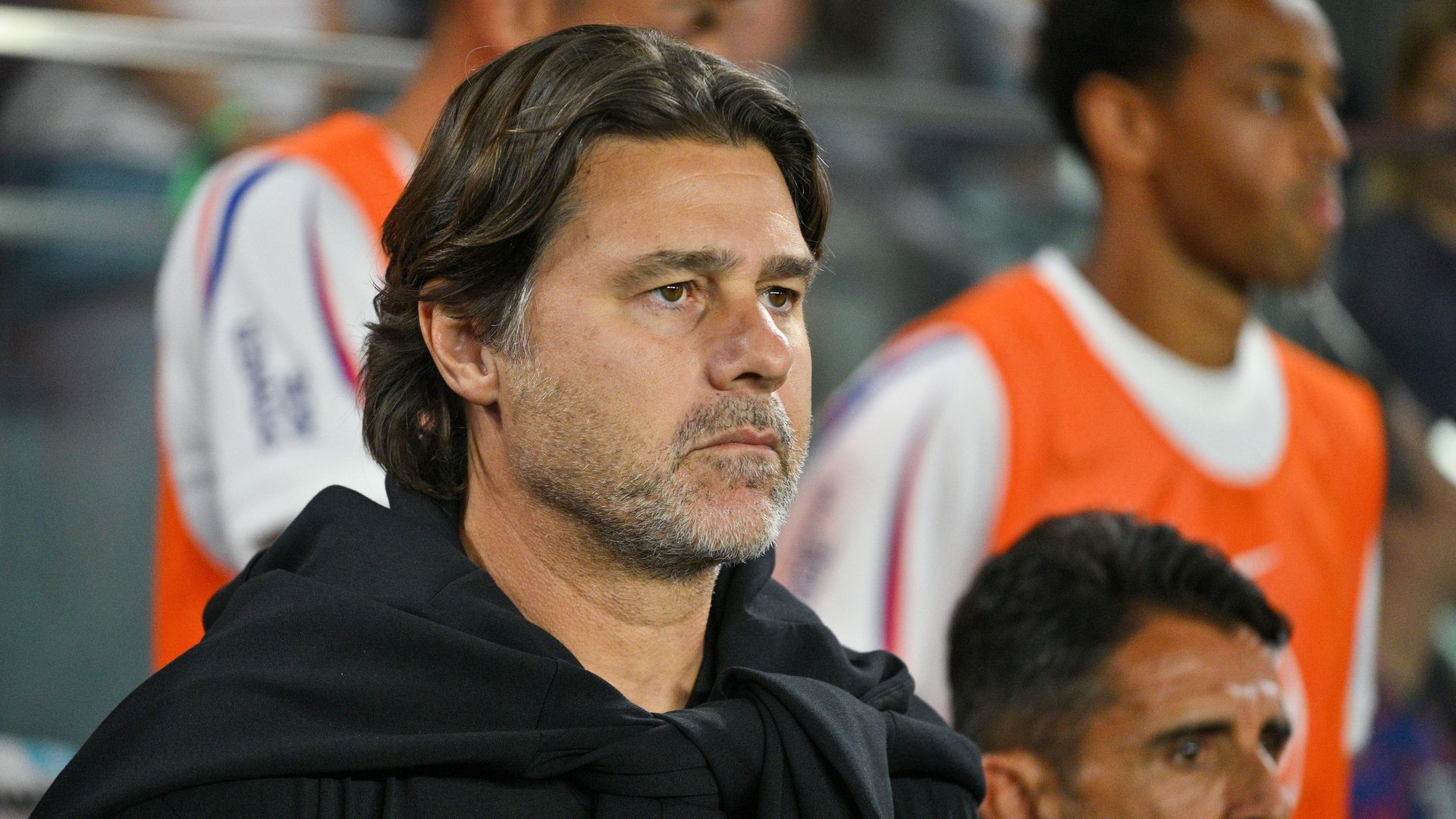
Rumors about a Manchester United agreement in principle with Mauricio Pochettino have sent Old Trafford into a familiar tailspin. You have seen this movie before. A big-name manager gets linked with the hot seat, whispers of a handshake deal leak to the press, and the current caretaker is left twisting in the wind while the boardroom weighs its options.
Let's be brutally honest about what is actually happening here. An "agreement in principle" in Premier League football is rarely a signed, sealed contract. It's usually a verbal understanding between agents and executives designed to keep an option warm while everyone waits to see how the current season—or international tournament—plays out. Right now, the spotlight isn't just on Pochettino's availability; it's squarely on Michael Carrick and the massive decision sitting on the desk of United's football leadership. Meanwhile, you can find related stories here: What You Actually Need to Know About the FC Barcelona Camp Nou Memorial.
If you're trying to figure out whether Pochettino is genuinely walking through the doors at Carrington or if Carrick has earned the right to stay, you need to separate agent noise from boardroom reality.
Why the Man Utd Pochettino Agreement Rumors Keep Coming Back
Manchester United and Mauricio Pochettino have been doing this dance for almost a decade. Every time the Old Trafford dugout hits turbulence, his name floats straight to the top of the shortlist. There's a good reason for that. Sir Jim Ratcliffe and the INEOS sporting structure—led by figures like Omar Berrada and Jason Wilcox—have spent the last couple of years trying to build a modern, data-driven recruitment model rather than chasing shiny celebrity managers. To see the full picture, check out the excellent article by Yahoo Sports.
Pochettino fits a very specific profile that INEOS values. He develops young players, demands high-intensity pressing, and knows the Premier League inside out from his spells at Southampton, Tottenham, and Chelsea. He doesn't need six months to learn what a cold Tuesday night in the English top flight looks like.
Still, an agreement in principle is miles away from an official unveiling. Think about how football negotiations work behind closed doors. Agents float these stories to apply pressure, either to force a club's hand or to signal to other suitors that their client is off the market. For United's hierarchy, having a verbal framework ready with a proven coach is basic risk management. You don't wait until the house burns down to buy insurance.
The International Football Complication
There is also the small matter of Pochettino's commitments on the international stage with the United States Men's National Team. Walking away from a national team project—or lining up a club return right after a major tournament cycle—isn't as simple as packing a suitcase. Compensation clauses, release dates, and squad planning all get messy fast.
If United's decision-makers have indeed spoken with his camp and outlined personal terms, it tells you one thing clearly. They want a fallback plan ready to trigger the second they decide a permanent change is necessary. It doesn't mean Pochettino has already picked out his office furniture at Carrington.
What Michael Carrick Actually Brings to the Table
While the media obsesses over Pochettino, Michael Carrick is the guy actually doing the work on the training pitch. And honestly, people underestimate him constantly because he doesn't scream on the touchline or give theatrical press conferences.
Carrick knows the DNA of Manchester United better than almost anyone currently working in football. He won five Premier League titles and a Champions League under Sir Alex Ferguson, served on the coaching staffs of both Jose Mourinho and Ole Gunnar Solskjaer, and already proved during his brief undefeated caretaker spell back in 2021 that he doesn't flinch under the Old Trafford floodlights.
More importantly, Carrick went out and cut his teeth as a number one at Middlesbrough in the Championship. He didn't just sit around waiting for a handout from his old club. At the Riverside, he took a struggling side and turned them into one of the most progressive, possession-based outfits in the division, earning widespread praise for his tactical clarity and calm demeanor.
Here is why Carrick's candidacy is giving the United board a genuine headache:
- Tactical adaptability without chaos. Unlike managers who force square pegs into round holes to satisfy a rigid philosophy, Carrick builds around the technical strengths of his midfielders and wide players.
- Dressing room credibility. You can't bluff elite players. When a guy who anchored United's midfield for twelve years tells a young player how to position his body to receive the ball under pressure, that player listens.
- Alignment with the sporting structure. Carrick doesn't demand total control over transfers. He is comfortable operating as a pure head coach within a sporting director model—which is the exact setup INEOS wants.
The Trap of the Caretaker Bounce
Every United fan remembers what happened with Ole Gunnar Solskjaer in 2019. He came in as a temporary fix, strung together a miraculous run of results, beat Paris Saint-Germain in the Champions League, and forced the board into handing him a permanent deal before the season even ended. Then the wheels came off.
That memory haunts the corridors at Old Trafford. It is the single biggest hurdle standing in Carrick's way right now.
Boardrooms are terrified of making emotional decisions based on short-term momentum. When a caretaker steps in, the immediate lift often comes from removing the tension left behind by the previous regime. Players feel freer, the atmosphere lightens, and results pick up. The real test only starts when the honeymoon ends, injuries pile up, and opponents figure out how to block your passing lanes.
If you're Omar Berrada or Jason Wilcox, you have to ask yourself a cold, hard question. Are we watching sustainable tactical progress under Carrick, or are we watching a temporary relief bounce that will collapse over a grueling 38-game Premier League campaign?
That fear is precisely why reports of an agreement in principle with Pochettino make total sense. Even if Carrick is doing well, the executives would be negligent if they didn't have an experienced, battle-hardened alternative lined up in case things stall.
Comparing the Two Visions for Old Trafford
Choosing between Mauricio Pochettino and Michael Carrick isn't just picking a name out of a hat. It's choosing between two completely different organizational timelines.
Pochettino represents immediate external authority. His track record at Tottenham—taking them to a Champions League final and consistently finishing in the top four on a tighter budget than his rivals—remains one of the best coaching achievements of the modern Premier League era. Even during his turbulent single season at Chelsea, his young squad finished strongly, winning their final five league matches to secure European football before he departed by mutual consent. He knows how to manage big egos, handle relentless media scrutiny, and build physical intensity into a squad that has historically looked sluggish without the ball.
Carrick represents continuity and internal evolution. Promoting or retaining him avoids yet another disruptive summer reset. Every time United hire a high-profile external manager, the squad goes through another expensive churn. Players bought for the previous system get frozen out, new signings take months to adapt, and the club writes off another season as a "transition year." Fans are sick of transition years.
Where the Squad Stands Right Now
Look at the current roster at Old Trafford. You have a core of talented young players—like Kobbie Mainoo, Alejandro Garnacho, and Leny Yoro—mixed with senior internationals on massive wages. Whoever takes charge permanently has to bridge that gap immediately.
Pochettino has a proven gift for turning raw young talent into Premier League stars; just ask Harry Kane, Dele Alli, or Cole Palmer. Carrick has shown that exact same touch with young loanees and academy graduates, giving them clear instructions rather than overwhelming them with complicated tactical jargon. Either man can develop youth, which is non-negotiable under the current ownership model.
What to Watch Before the Final Decision Drops
Don't fall for every breathless social media update claiming a deal is done until the club releases an official statement. Transfer and managerial news cycles thrive on recycling the same three quotes from unnamed "club sources" to generate clicks.
If you want to know which way the wind is actually blowing at Old Trafford over the next few weeks, ignore the noise and watch three concrete indicators instead:
- Performance metrics, not just lucky wins. INEOS relies heavily on underlying numbers like expected goals (xG), high turnovers, and pressing intensity. If Carrick's team is scraping 1-0 wins while getting battered on shot volume, the data department will push for Pochettino regardless of the league table.
- Summer transfer target leaks. Watch the profiles of players linked with United. If the club suddenly starts chasing high-engine, aggressive pressing midfielders and athletic full-backs, that's a massive tell that Pochettino's blueprint is already guiding recruitment.
- Timing of the official announcement. If United drag out the decision on Carrick's future past the end of the domestic campaign, it usually means they are waiting on a contractual trigger or tournament finish involving an external candidate like Pochettino. Conversely, if they back Carrick early, they'll want him front and center for pre-season planning right away.
Manchester United can't afford another half-baked compromise. Whether they pull the trigger on the Pochettino agreement or hand the keys permanently to Carrick, the hierarchy has to commit fully to the choice—because the days of buying time at Old Trafford are officially over.