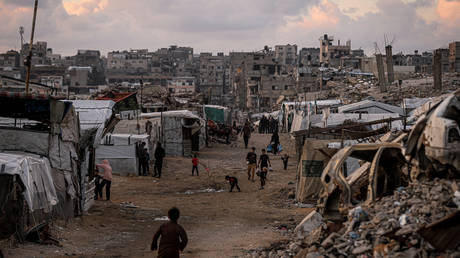
Modern kinetic warfare in densely populated urban centers generates a compounding environmental debt that outlasts the cessation of hostilities by decades. In the Gaza Strip, the destruction of infrastructure, widespread use of heavy munitions, and collapse of municipal sanitation systems have converged into a multi-vector toxicological crisis. Standard post-conflict assessments focus on immediate structural replacement costs, ignoring the underlying chemical, hydrogeological, and atmospheric mechanisms that render territory uninhabitable long after rebuilding begins. Evaluating the long-term viability of the region requires mapping how explosive remnants, pulverized building materials, and untreated waste interact with a fragile coastal ecosystem.
The Debris Matrix and Particulate Toxicity
The primary physical output of prolonged urban bombardment is a massive volume of pulverized construction material. When reinforced concrete, masonry, and industrial facilities collapse under high-explosive concussions, they generate millions of tons of heterogeneous rubble. This debris is not chemically inert; it acts as a concentrated reservoir for hazardous particulates and heavy metals. For a closer look into this area, we recommend: this related article.
The immediate threat lies in airborne particulate matter, specifically PM10 and PM2.5 fractions, which remain suspended during bombardment and are continuously re-aerosolized during clearing operations. Structural demolition in older urban zones inevitably fractures asbestos-containing materials used in roofing, insulation, and piping. Once disturbed, friable asbestos fibers disperse into the ambient air, creating a persistent inhalation hazard with a latency period of twenty to forty years for mesothelioma and asbestosis.
Beyond silicate and asbestos dust, the debris matrix traps heavy metals released from both munitions casings and destroyed civilian infrastructure. Lead from plumbing and batteries, mercury from electrical switches, cadmium from electronics, and chromium from industrial coatings mix directly with crushed concrete. Without specialized hazardous waste sorting—a logistical impossibility during active conflict and early recovery—this toxic dust settles onto agricultural topsoil and penetrates indoor living spaces. To get more information on this issue, in-depth reporting can also be found at The Washington Post.
Hydrogeological Contamination Vectors
Gaza relies almost entirely on the Coastal Aquifer, a shallow, porous sandstone and gravel formation that is acutely vulnerable to surface-level pollution. Decades of over-extraction had already caused severe seawater intrusion prior to recent hostilities; the destruction of surface water and sanitation networks has accelerated chemical and biological degradation of this critical resource.
Three distinct mechanisms drive this aquifer contamination:
- Direct Munitions Leaching: High-explosive residues, particularly RDX (cyclotrimethylenetrinitramine), TNT (trinitrotoluene), and perchlorates from rocket propellants, do not fully combust upon detonation. Unreacted energetic compounds settle on the soil surface. Rainwater infiltration dissolves these water-soluble compounds, carrying them downward through the permeable sandy soil directly into the groundwater table. RDX and perchlorates resist natural biodegradation, persisting in groundwater plumes for decades and interfering with human thyroid function and central nervous system regulation.
- Sewage and Pathogen Infiltration: The destruction of wastewater treatment plants, pumping stations, and pressurized sewer mains forces raw sewage to pool on the surface or discharge directly into the Mediterranean Sea. As untreated effluent percolates into the unsaturated soil zone, it introduces high concentrations of nitrates, heavy metals, and enteric pathogens into the shallow aquifer, rendering untreated well water unusable for human consumption or crop irrigation.
- Industrial and Agricultural Runoff: Damaged fuel depots, automotive repair shops, and agricultural chemical storage facilities leak hydrocarbons, solvents, and organophosphate pesticides. Unlike biological waste, dense non-aqueous phase liquids (DNAPLs) such as chlorinated solvents sink below the water table, pooling on impermeable clay layers where they slowly dissolve into passing groundwater over decades.
Munitions Chemistry and Soil Degradation
Agricultural viability in a blockaded or isolated coastal enclave depends on maintaining the biological and chemical integrity of limited arable land. Heavy armored maneuvers, cratering from aerial ordnance, and chemical fallout systematically degrade soil fertility through both physical compaction and toxicological poisoning.
Military-grade explosives and incendiaries introduce white phosphorus, depleted or tungsten-alloy penetrators, and polycyclic aromatic hydrocarbons (PAHs) into the topsoil. White phosphorus oxidizes rapidly upon exposure to air, forming phosphoric acid that alters soil pH, while unburned remnants embedded in wet soil remain chemically active and toxic to soil microorganisms. Heavy metals from munitions fragments—specifically copper, zinc, lead, and antimony—bind to soil organic matter. While this binding slows their migration into groundwater, it makes them bioavailable to root systems.
Crops cultivated in heavy-metal-contaminated soils bioaccumulate these toxins in edible tissues. Leafy greens and root vegetables grown in peri-urban zones absorb cadmium and lead, transferring chronic toxicological loads into the local food supply. Simultaneously, the physical destruction of orchard root systems and topsoil structure increases wind and water erosion, stripping away the nutrient-rich upper horizon that takes centuries to regenerate naturally.
Systemic Collapse of Waste Management Infrastructure
Municipal solid waste and medical waste management represent the secondary, slow-moving engine of environmental degradation. When collection fleets are destroyed, fuel is unavailable, and access to engineered sanitary landfills is severed, waste accumulates in informal, unlined dumpsites within or adjacent to residential areas.
Uncontrolled waste accumulation triggers a predictable cascade of environmental failures:
- Leachate Generation: As organic waste decomposes in open piles, rainwater mixes with rotting matter, household chemicals, and medical waste to form toxic leachate. Lacking high-density polyethylene (HDPE) liners or leachate collection systems, these informal dumpsites act as point-source polluters, draining concentrated heavy metals and organic pollutants straight into the Coastal Aquifer.
- Open Burning Emissions: In the absence of waste removal or heating fuel, populations routinely burn accumulated trash—including plastics, tires, and treated wood—for waste reduction or warmth. Low-temperature, incomplete combustion of polyvinyl chloride (PVC) and synthetic materials releases dioxins, furans, and volatile organic compounds (VOCs) at ground level. Dioxins are persistent organic pollutants that resist environmental breakdown, accumulating in fatty tissues and causing severe immune, reproductive, and developmental damage.
- Vector Proliferation: Rotting organic waste combined with stagnant surface sewage creates optimal breeding grounds for disease vectors, including rodents, sandflies, and mosquitoes, directly linking environmental collapse to acute outbreaks of cutaneous leishmaniasis, cholera, and hepatitis A.
Marine Ecosystem Disruption
The Mediterranean coastline absorbs the terminal runoff of Gaza’s terrestrial environmental collapse. With wastewater treatment infrastructure offline, tens of thousands of cubic meters of raw sewage discharge daily into the nearshore marine environment.
This continuous nutrient loading causes severe localized eutrophication. Excess nitrogen and phosphorus trigger algal blooms that deplete dissolved oxygen in coastal waters, creating hypoxic dead zones that suffocate benthic organisms and drive away commercial fish stocks. Simultaneously, the influx of heavy metals, hydrocarbons, and microplastics from degraded urban debris contaminates marine sediments. Filter-feeding organisms and bottom-dwelling fish accumulate these toxins, turning a vital regional protein source into a vector for heavy metal poisoning and disrupting coastal fisheries far beyond the immediate shoreline.
Remediation Bottlenecks and Strategic Constraints
Reversing multi-decade environmental degradation in Gaza is constrained by severe technical, logistical, and geopolitical bottlenecks. Standard environmental remediation protocols cannot be executed in a vacuum; they require uninterrupted energy, specialized heavy machinery, cross-border hazardous waste transport, and long-term institutional governance.
The primary operational constraints include:
- Debris Volume vs. Processing Capacity: Clearing tens of millions of tons of rubble requires industrial crushers, screening plants, and fuel supplies at a scale that takes years to mobilize under optimal conditions. Without strict source-separation protocols, crushing contaminated concrete for use as roadbed aggregate simply redistributes asbestos and heavy metals across the entire territory.
- Groundwater Remediation Limits: Pump-and-treat systems for aquifer decontamination require continuous electrical power and chemical reagents, alongside safe disposal sites for extracted brine and sludge. Given the pre-existing saline intrusion in the Coastal Aquifer, full restoration of freshwater lenses is hydrologically unfeasible within a single generation; desalination must permanently replace groundwater extraction for potable supply.
- Analytical Blind Spots: Effective remediation requires high-resolution soil and water sampling to map contamination plumes. Currently, the destruction of local laboratories and restrictions on importing chemical reagents prevent granular toxicological mapping, forcing recovery teams to operate without baseline data.
Operational Framework for Environmental Stabilization
Addressing this toxicological fallout requires abandoning traditional linear reconstruction—which prioritizes rapid housing rebuilds over environmental containment—in favor of a sequenced containment and remediation protocol.
- Immediate Containment and Hazardous Isolation: Before mass rubble clearance begins, engineering teams must establish zoned exclusion areas around destroyed industrial sites, fuel depots, and suspected asbestos-heavy structures. Informal urban dumpsites must be consolidated into temporary, clay-lined containment cells to halt immediate leachate percolation into the aquifer.
- Decoupling Potable Water from the Aquifer: Recovery capital must prioritize modular, solar-powered seawater desalination plants paired with closed-loop wastewater treatment and agricultural reuse systems. The Coastal Aquifer should be placed under a strict extraction moratorium for human consumption, designated solely for controlled managed aquifer recharge (MAR) using treated effluent to push back saline intrusion over a twenty-year horizon.
- Closed-Loop Debris Processing: Establish centralized, wet-suppression rubble processing facilities equipped with magnetic separators and air-filtration systems. Non-hazardous concrete must be separated from asbestos and heavy-metal-laden fractions; contaminated materials must be encapsulated in engineered monofills rather than recycled into civilian construction materials.
- Phytoremediation and Topsoil Reconstruction: For agricultural zones exhibiting moderate heavy metal contamination, deploy targeted phytoremediation using hyperaccumulator plant species (such as Indian mustard or sunflowers) to extract bioavailable lead and cadmium from the root zone over multiple harvest cycles, followed by the systematic application of biochar and composted organic matter to immobilize remaining trace metals and rebuild soil microbial communities.


