Silence.
In the high-stakes choreography of international diplomacy, where every handshake is timed to the millisecond and every lapel pin is debated by teams of protocol officers, silence is never an accident—it is a broadcast. When news broke that First Lady Melania Trump is unlikely to accompany President Donald Trump to the upcoming Asia-Pacific Economic Cooperation (APEC) summit in China, the political press treated it like a scheduling footnote. A single line on a manifest. A routine travel update. Discover more on a similar topic: this related article.
They missed the real story entirely.
To understand what an empty seat beside the President of the United States actually means in Beijing or Shenzhen, you have to step away from the briefing rooms of Washington and stand inside the suffocating, fluorescent-lit corridors of a diplomatic advance team. I have spent years watching how global summits are built from the ground up, observing the frantic, sleepless choreography that happens weeks before Air Force One ever touches down on foreign tarmac. You learn quickly that the official itinerary—the press conferences, the trade signings, the stiff bilateral meetings—is only half the machinery. The other half is soft power. It is the human theater that lowers the temperature in a room when tariffs and naval posturing threaten to boil over. Additional reporting by TIME delves into related views on this issue.
And right now, that theater is missing its lead actress.
The Architecture of Soft Power
Think of a major international summit like a high-wire act stretched over a canyon. The economic ministers and trade representatives are the ones walking the wire, carrying heavy poles balanced with semiconductor restrictions, agricultural quotas, and currency disputes. One wrong step, one misread inflection, and the whole negotiation plunges into a trade war.
In this analogy, the First Lady’s traditional role is the safety net—and the spotlight that keeps the crowd from panicking.
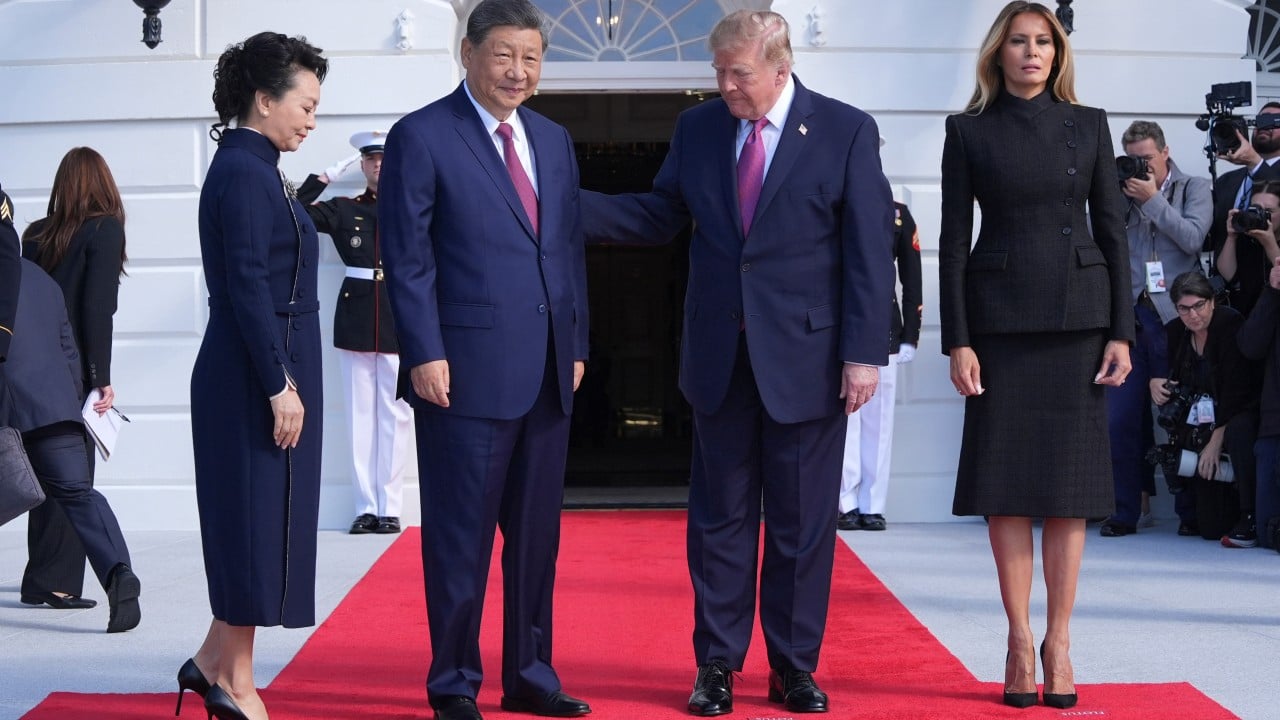
Historically, when a U.S. president travels to China, the spouse's itinerary is meticulously engineered to project warmth, cultural respect, and long-term friendship, even when the closed-door meetings are brutal. Consider Michelle Obama’s 2014 trip to Beijing with her mother and daughters, walking the Great Wall and visiting schools while maritime tensions simmered in the background. Or think back to Laura Bush, using quiet cultural diplomacy to soften the edges of a muscular foreign policy. Even Melania Trump herself played this exact card in November 2017 during the Trumps’ first state visit to Beijing. Back then, she visited the Beijing Zoo to see the giant pandas, toured the Mutianyu section of the Great Wall, and stood beside Peng Liyuan, the glamorous soprano and wife of Chinese President Xi Jinping, at an elementary school where children sang traditional folk songs.
Those images weren't fluff. They were deliberate, state-sanctioned pressure valves. For a Chinese domestic audience, seeing the American First Lady admire their heritage signaled respect. For an American audience, it humanized a complex, often adversarial relationship.
Now, picture the upcoming APEC summit without that counterbalance.
According to multiple reports citing White House insiders and diplomatic observers, Melania Trump is expected to stay behind in the United States, bypassing the trip to China altogether. While the White House has not issued a dramatic proclamation explaining the decision, the pattern is unmistakable. During President Trump’s second term, the First Lady has drastically redefined the boundaries of her office, operating less like a traditional political spouse and more like a selective, fiercely private sovereign. She splits her time between New York, Palm Beach, and Washington, guarding her calendar and her son Barron’s privacy with an intensity rarely seen in the modern East Wing.
A Tale of Two Protocol Officers
To feel the immediate weight of this absence, imagine a hypothetical scenario playing out right now in a conference room overlooking the Pearl River Delta.
Let’s call them Mei, a senior protocol director for the Chinese Ministry of Foreign Affairs, and David, a seasoned advance operative from the U.S. State Department. Neither of them is a politician; both are mechanics of the diplomatic machine. For months, Mei has been drafting what is known in diplomatic circles as the "Spousal Program." She has vetted museum curators, arranged private tea ceremonies, cleared security perimeters around historic gardens, and coordinated wardrobe color palettes so that Peng Liyuan and Melania Trump would look harmonious in the inevitable front-page photographs.
Then comes the quiet phone call from Washington. The U.S. side is scaling back. The First Lady is unlikely to travel.
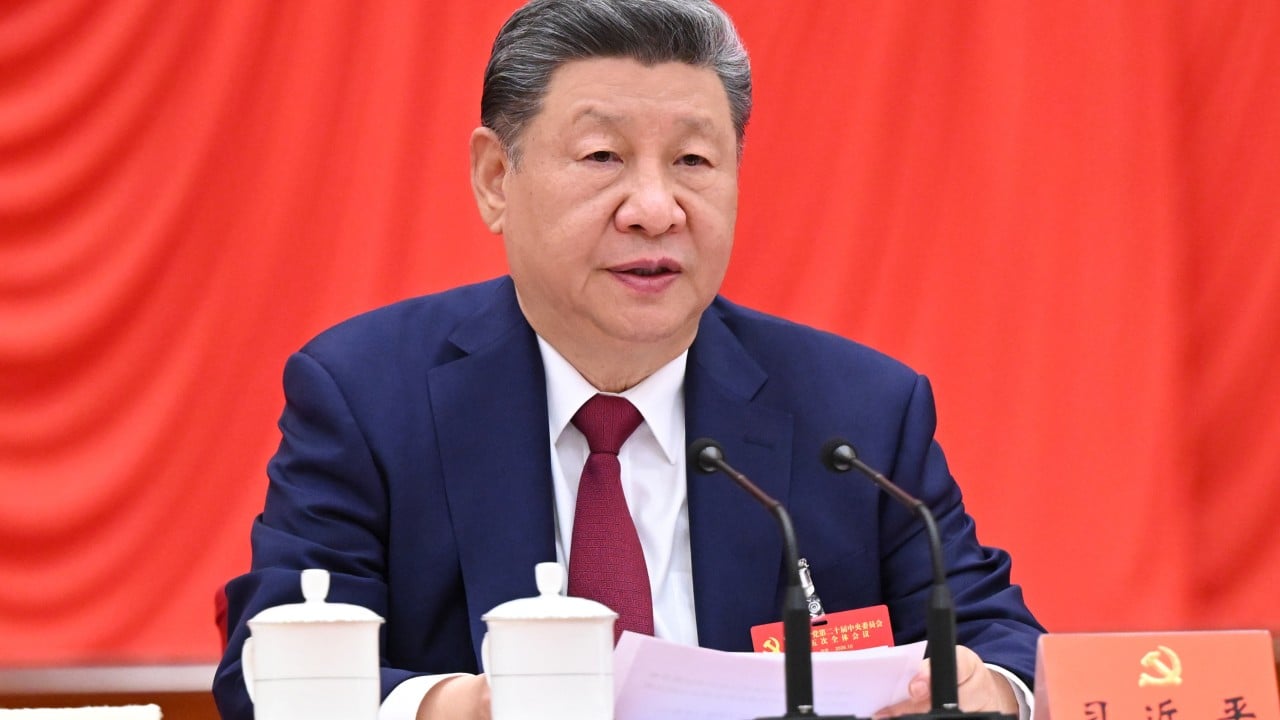
For David, the American operative, this means shredding half a binder of security protocols and quietly apologizing to counterparts he has worked with for months. But for Mei, on the Chinese side, the implications are far heavier. In Chinese political culture, hospitality is not merely politeness; it is a metric of status and reciprocity. Xi Jinping and Peng Liyuan present a united, traditional front on the world stage, where the First Lady’s presence is an integral part of China’s cultural outreach. When the American First Lady declines to attend a major summit hosted on Chinese soil—especially after having attended in 2017—Beijing does not read it as a simple scheduling conflict or a preference for staying close to home.
They read it as a signal.
Is it a deliberate snub? Probably not. Anyone who has followed Melania Trump’s public life over the past decade knows that her decisions are driven overwhelmingly by personal autonomy rather than geopolitical signaling. She has consistently rejected the unspoken rule that an American First Lady must be a full-time, unpaid diplomat at the beck and call of the West Wing. In her memoir and her rare interviews, she has been candid about marching to her own beat, prioritizing family and select personal initiatives over the relentless ribbon-cutting expected by Washington traditionalists.
Yet in geopolitics, intent matters far less than perception.
The Cold Geometry of a Business Trip
Without the First Lady on the manifest, the APEC summit in China undergoes an immediate, visible transformation. It ceases to be a grand diplomatic pageantry and shrinks into something much sharper, colder, and purely transactional.
Donald Trump has always preferred the posture of the dealmaker over the statesman. When he travels alone—surrounded by trade hawks, cabinet secretaries, and business executives—the visual narrative shifts entirely to leverage, tariffs, and bottom lines. There are no panda visits to soften the headlines. There are no joint appearances at local schools to remind both nations that there are human beings living beneath the weight of macroeconomic policy.
Instead, every camera lens will lock onto the bilateral table. Every micro-expression between Trump and Xi will be dissected by algorithmic trading desks in New York and Hong Kong within seconds.
I remember watching a similar dynamic unfold at a smaller economic forum in Europe several years ago, where a last-minute spousal cancellation turned a planned three-day cultural summit into a grueling, forty-eight-hour sprint of closed-door ultimatums. Without the ceremonial dinners and the accompanying spouses to force small talk about art, family, or travel, the leaders had nowhere to retreat. They went straight from the tarmac to the negotiating table, and straight from the table back to the tarmac. The air in the press center felt brittle, like glass ready to snap. You could practically taste the absence of goodwill.
That is the invisible stake of Melania Trump’s likely absence from APEC. People often ask whether a First Lady’s travel schedule actually changes foreign policy. Does her presence lower a tariff by two percent? Does it alter a naval patrol route in the South China Sea?
No. Of course not.
What it changes is the climate in which those decisions are made. Diplomacy is conducted by human beings, not spreadsheets. When leaders bring their families, they implicitly acknowledge a shared humanity and a stake in a peaceful future that extends beyond the next quarterly earnings report or election cycle. When they arrive strictly as solitary executives, the message is unmistakable: We are here to do business, and nothing more.
Redefining the East Wing on Her Own Terms
Still, it would be a mistake to view this solely through the lens of what Beijing loses. To be honest about the modern presidency, we have to admit that the traditional role of the First Lady has always been a strange, contradictory tightrope. We pay her nothing, elect her to nothing, give her no constitutional authority, and yet demand that she serve as the nation’s chief hostess, moral compass, and goodwill ambassador whenever Air Force One fires up its engines.
Melania Trump is simply the first modern First Lady to look at that unwritten contract and quietly push it back across the desk.
By choosing not to make the grueling trans-Pacific flight to China for APEC, she is reinforcing a precedent that will outlast this administration. She is demonstrating that the East Wing is no longer an automatic extension of the State Department’s travel bureau. For observers used to the hyper-visible, always-on model of political spouses from the 1990s and 2000s, this restraint can look startling, even confusing. We are conditioned to expect constant performance from our public figures. When someone declines the stage, we scramble to invent dramatic reasons why.
Maybe there is no grand conspiracy. Maybe there is no secret diplomatic message encoded in her absence. Perhaps it is simply the quiet choice of a woman who has already seen the Great Wall, already shaken hands with the Chinese leadership in the Great Hall of the People, and sees no compelling reason to fly seven thousand miles just to wave from a tarmac.
Yet, when Air Force One lands in China for the APEC summit, and the cabin door swings open to reveal the President descending the stairs alone, the cameras will still click. The empty space beside him on the red carpet will be framed, cropped, and beamed across the Pacific. And in the quiet rooms of Beijing, where diplomats measure power in inches and absences, that empty space will speak volumes.