Silence.
That is the actual sound of a diplomatic vacuum—not the cinematic roar of fighter jets tearing across a desert sky, nor the sharp crack of a sniper’s rifle, but the sterile, fluorescent hum of a conference room in Geneva or Muscat where a chair remains stubbornly, infuriatingly empty.
Consider a hypothetical scenario that plays out in real life more often than intelligence agencies care to admit. Imagine a mid-level Swiss diplomat—let’s call him Lukas—sitting at a polished mahogany table in a neutral European hotel. Across from him sits an envoy from Tehran. For six months, Lukas has carried carefully worded messages back and forth, translating suspicion into tentative progress, mapping out the fragile coordinates of a ceasefire or a prisoner exchange. Then, on a Tuesday morning, a drone strike vaporizes a senior commander in Damascus or Beirut. By Wednesday, the man across the table from Lukas isn't just angry. He is paralyzed. He no longer knows who in his own capital holds the authority to sign a piece of paper without getting shot—either by an American missile or by a rival faction stepping over his predecessor’s warm ashes.
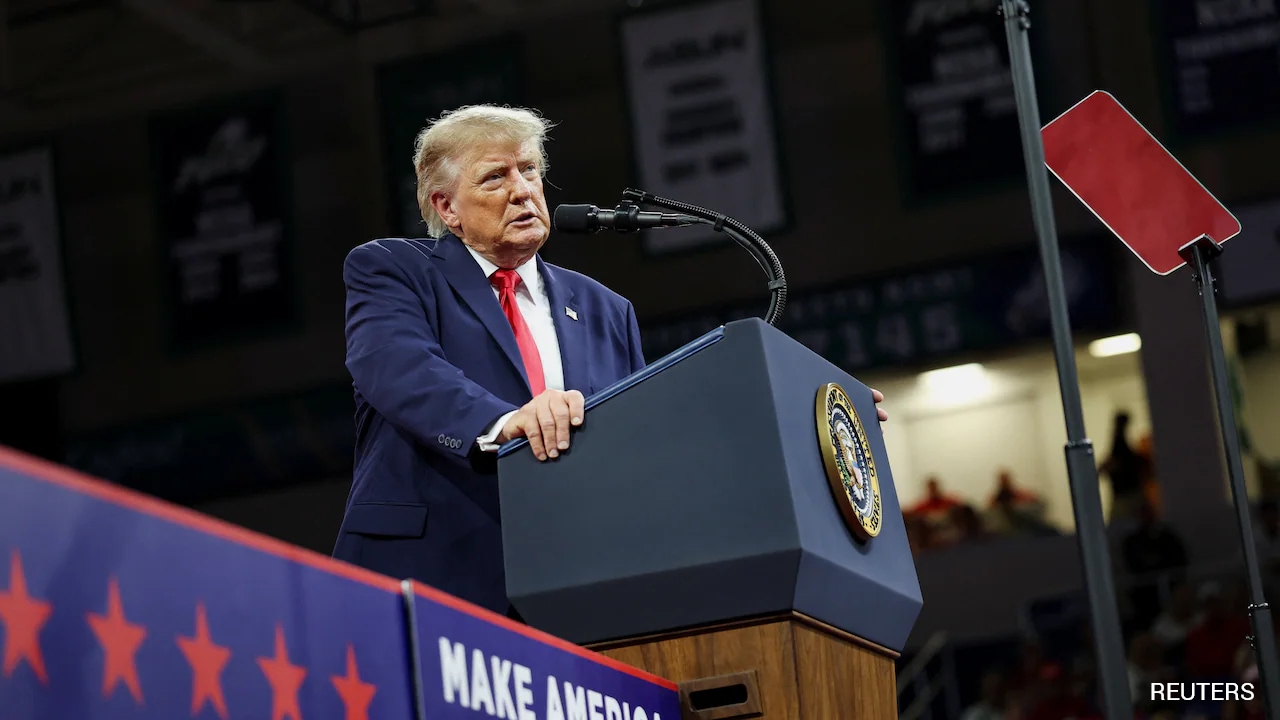
This is the strange, paradoxical truth behind a blunt remark made by President Donald Trump, who stated that the United States has "gotta stop" killing Iranian leaders if it actually wants to know who it is dealing with. On the surface, the statement sounds like a jarring reversal from a commander-in-chief whose first administration ordered the 2020 strike that killed Qasem Soleimani, the powerful architect of Iran’s regional military network, and whose second term has seen intense friction with Tehran. Yet beneath the casual, off-the-cuff phrasing lies one of the oldest, most agonizing dilemmas in statecraft: you cannot negotiate a surrender, a treaty, or even a temporary truce with a ghost.
The Illusion of the Decapitation Strike
For decades, modern warfare has been seduced by the promise of precision. Military planners call it "decapitation"—the idea that if you remove the head of an adversarial organization, the body will thrash around briefly and then collapse. It feels clean. It satisfies the public hunger for immediate, visible justice. When a general or a nuclear scientist or a militia commander is eliminated from thirty thousand feet, the headlines declare a decisive blow.
I have spent years watching the aftermath of these strikes from the ground and through the debriefings of those left to pick up the diplomatic pieces, and the reality on the pavement rarely matches the briefing room slides. You smell the cordite and the dust of shattered concrete, you see the state funerals where hundreds of thousands of people press against police barricades in grief and fury, and then, three weeks later, you realize the machine hasn't stopped. It has simply gone dark.
Think of an adversary’s chain of command not as a single towering tree, where cutting the trunk brings everything crashing down, but as a subterranean root system. When you burn the visible stalks, the network doesn't die; it fragments. Authority splinters into smaller, harder-to-track nodules.
According to geopolitical analysts and historians of Middle Eastern conflict, targeted killings frequently trigger a phenomenon known as "radicalization of the successor." The veteran official who understood the unspoken rules of brinkmanship—the man who knew exactly how close to push toward war without stepping over the cliff—is suddenly gone. In his place steps a younger, hungrier deputy who has spent his entire career in the shadows, who has zero personal rapport with Western interlocutors, and who must prove his ideological purity to survive internal power struggles.
When President Trump remarked that Washington needs to stop eliminating Iranian leaders so American officials actually know who is across the table, he was pointing directly at this blind spot. Foreign policy is, at its core, a human transaction. Even among bitter enemies, predictability is a currency. During the Cold War, Washington and Moscow maintained backchannels precisely because both sides needed to know whose voice carried weight in the Kremlin and the White House. When leadership turns into a revolving door of targeted strikes, that currency becomes worthless.
The Human Machinery of Uncertainty
To understand why this matters to someone sitting thousands of miles away in Ohio or London or Dubai, you have to trace how uncertainty ripples outward.
When a crisis erupts in the Strait of Hormuz—a narrow waterway through which roughly a fifth of the world’s petroleum passes—oil traders don't just look at naval deployments. They look at phone lines. They want to know if there is an adult in the room in Tehran who can pick up a receiver, call an intermediary in Oman or Qatar, and say, Stand down, that patrol boat acted without orders.
If that person was killed two weeks ago, nobody picks up the phone.
Let’s look at how institutional memory works inside a closed regime like the Islamic Republic of Iran. Power in Tehran is notoriously opaque, divided between the elected presidency, the Supreme Leader’s office, and the Islamic Revolutionary Guard Corps (IRGC). Navigating that labyrinth requires knowing which factions are ascendant, which generals hold real sway over proxy militias in Lebanon, Iraq, or Yemen, and which diplomats are actually authorized to make concessions rather than merely stall for time.
When external strikes repeatedly remove top figures, two things happen simultaneously inside Tehran:
- Paranoia replaces pragmatism. Every surviving commander begins looking over his shoulder, assuming his own inner circle is compromised by foreign intelligence. In that atmosphere of existential dread, proposing a compromise with the United States isn't just politically unpopular; it looks like treason.
- Accountability vanishes. If a cease-fire breaks down or a tanker is seized, Washington cannot tell whether the escalation was a deliberate strategic move by Tehran’s top leadership or a rogue operation by a local commander operating without central oversight.
Trump’s observation cuts through layers of polished State Department jargon to expose this operational reality. As reported by multiple news outlets covering his remarks, the President framed the issue in transactional terms: if you want to make a deal, you need a counterparty who is alive, identifiable, and empowered to deliver on their promises. It is a striking admission of the limits of lethal force, especially coming from a leader who has consistently emphasized "peace through strength" and maximum pressure campaigns.
The Weight of the Unsaid
It is tempting, when reading headlines about geopolitical maneuvering, to reduce everything to chess pieces. We talk about "leverage," "deterrence," and "strategic ambiguity" as if these were clean geometric shapes sliding across a board.
They aren't. They are human beings operating under immense, suffocating pressure.
Think about what it feels like to be an intelligence analyst in Langley or a diplomat in Foggy Bottom trying to brief the President on Iran’s next move. Your job is to read the tea leaves of a regime that already shrouds its decision-making in secrecy. For years, you have built psychological profiles of key figures—studying their public speeches, their family ties, their past compromises, their red lines. You know that General X is cautious when his domestic economy is faltering, or that Minister Y prefers financial incentives over ideological posturing.
Then, overnight, those dossiers become obsolete.
The new names on your desk are ghosts. There are no decades of public statements to analyze, no track record of past negotiations to reference. You are staring at a blank screen, trying to guess how a stranger will react when a destroyer enters the Persian Gulf. That kind of blindness doesn't make a superpower stronger; it makes every single miscalculation exponentially more dangerous. A radar blip mistaken for an incoming missile, a warning shot fired too close to a hull—without known interlocutors to de-escalate within minutes, a minor skirmish can spiral into a regional war before anyone even knows who to call to stop it.
Critics of Trump’s stance argue the exact opposite, and their perspective deserves honest weight. Hawks in Washington and allied capitals contend that targeted killings are the only language Tehran truly understands—that removing key architects of regional militancy disrupts operational planning, degrades technical expertise, and demonstrates that no official is beyond reach. From their viewpoint, sparing adversarial commanders doesn't create reliable negotiating partners; it simply gives dangerous adversaries time to rebuild their networks and plot future attacks.
Both arguments carry a grim logic, which is precisely why this question has haunted every American administration since 1979. Do you degrade an enemy’s capability today at the cost of your ability to talk to them tomorrow? Or do you preserve the chain of command in hopes of a diplomatic off-ramp that may never materialize?
The Anatomy of a Deal
Consider how past breakthroughs between bitter adversaries actually happened. None of them occurred in a vacuum of leadership.
When the United States and North Vietnam finally hammered out the Paris Peace Accords in 1973, Henry Kissinger needed Le Duc Tho sitting across from him—a senior Politburo member with the indisputable authority of Hanoi behind him. When the U.S. and the Soviet Union negotiated nuclear arms reductions in the 1980s, Ronald Reagan needed Mikhail Gorbachev—a leader secure enough in his own domestic power base to sign away entire classes of missiles without being overthrown the next morning.
Even in the chaotic landscape of the Middle East, the 2015 nuclear deal—the Joint Comprehensive Plan of Action, which Trump later withdrew from in 2018—only became possible because Iranian Foreign Minister Mohammad Javad Zarif had the explicit backing of Supreme Leader Ali Khamenei to sit in a room with U.S. Secretary of State John Kerry for days on end. You didn't have to trust Zarif, and Washington certainly didn't. You only had to know that when he spoke, he spoke for the people who controlled the centrifuges.
Now imagine trying to replicate even a fraction of that diplomatic architecture when the people who control the centrifuges, the missiles, and the regional militias are constantly being hunted, replaced, or driven deep underground. You end up negotiating with shadows, signing agreements that the next man in line feels no obligation to honor because he wasn't in the room when the ink dried.
The Quiet Room
Look back at that hypothetical conference room in Geneva—the polished mahogany table, the pitched silence, the empty leather chair.
In modern politics, restraint rarely looks heroic. Calling off a strike doesn't produce dramatic satellite footage for the evening news. Keeping an adversary’s leadership intact so that a backchannel stays open feels counterintuitive, even weak, to anyone raised on the grammar of total victory. It requires admitting a truth that superpowers hate to confront: lethal force can destroy a bunker, sink a fleet, or eliminate a commander, but it cannot manufacture a handshake.
Trump’s blunt warning—that America has to stop killing Iranian leaders if it wants to know who it is dealing with—strips away the comforting myth that military strikes alone solve political problems. Eventually, the smoke clears. Eventually, the phone rings in a quiet room, and someone has to decide whether to answer it.
The only question that matters then is whether anyone is still alive on the other end of the line who knows how to say yes.