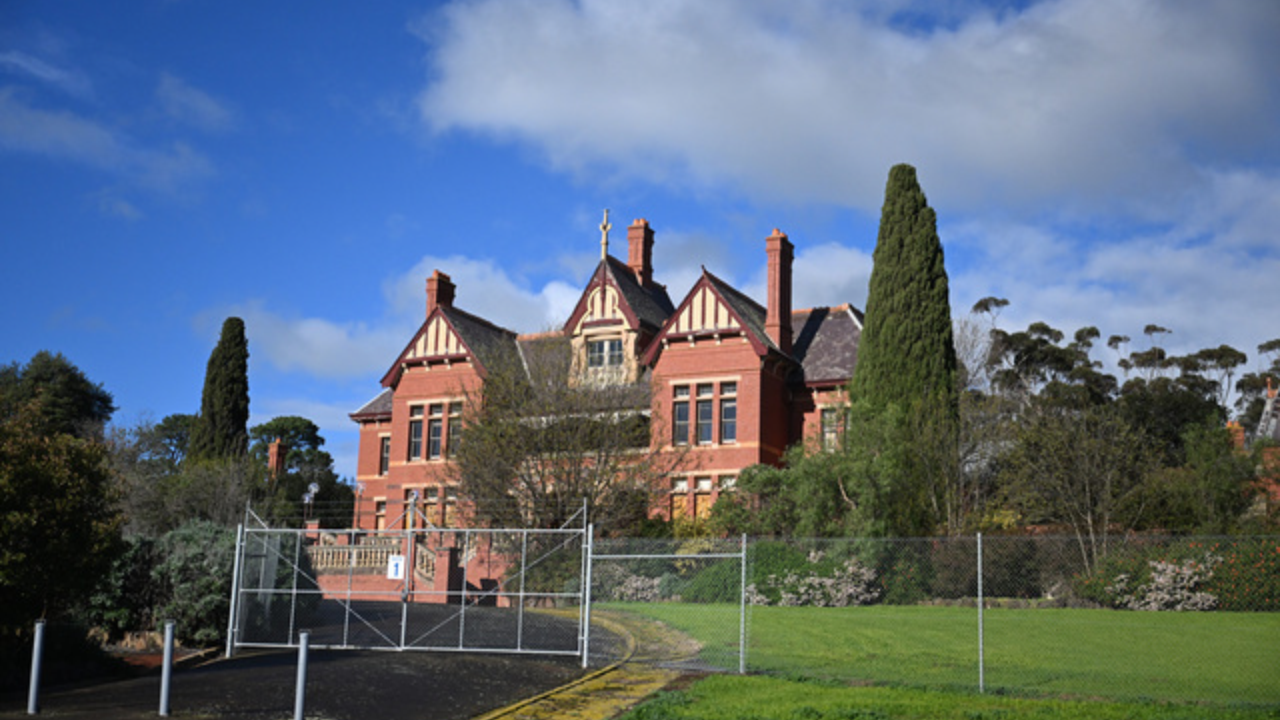
Public asset monetization relies on a delicate balance between fiscal optimization, regulatory oversight, and public trust. When the Victorian government disposed of 2.6 hectares of heritage land at Sunbury's former psychiatric hospital site to Nine Entertainment for A$1 million, translating to approximately A$38 per square meter, it triggered an intense debate regarding valuation integrity. Critics, including local members of parliament and community advocates, questioned the mechanics of a transaction where high-profile media production intersects with public property. Deconstructing this controversy requires analyzing the structural cost functions, regulatory frameworks, and market constraints that govern state-owned land divestments.
The Cost Function of Heritage Assets
Standard commercial real estate valuation models assume that land value correlates directly with development yield and unobstructed zoning utility. However, historic or institutional properties introduce severe structural friction into the valuation equation.
The Sunbury site houses legacy structures subject to stringent heritage restrictions. The economic reality of heritage preservation is defined by high fixed capital expenditures. Restoring dilapidated 19th-century asylum buildings requires specialized labor, adherence to heritage building codes, and extensive remediation before any commercial or residential utility can be realized.
The net present value of such a parcel is expressed through the following structural relationship:
$$\text{Net Asset Value} = \text{Gross Realization Value} - (\text{Remediation Costs} + \text{Heritage Compliance Overhead} + \text{Holding Costs})$$
When remediation costs approach or exceed the projected gross realization value of the finished product, the baseline land value plummets. Critics evaluating the transaction on a raw price-per-square-meter metric fail to account for the negative externalities and liability burdens transferred to the developer. The statutory valuation certified by Valuer-General Victoria and approved by the Victorian Government Land Monitor reflects this heavy discount, factoring in the immense capital outlay required to bring derelict historical infrastructure up to habitation standards.
The Transparency Deficit and Market Testing
The primary friction point in the Jacksons Hill transaction is not merely the final purchase price, but the mechanism of price discovery. Public sector asset disposals generally operate across two distinct methodologies:
- Competitive Open Tender: Maximizes price discovery through open market competition, forcing buyers to bid against alternate commercial interests.
- Direct Negotiation / Targeted Disposal: Utilizes independent valuations to set a fixed price with a specific counterparty, often justified by unique project timelines, economic stimulus, or specialized redevelopment capabilities.
The Victorian government bypassed a broad public tender, relying instead on independent statutory valuation. While legally sanctioned via the Valuer-General framework, this approach creates an information asymmetry between the state and the tax-paying public. Without a transparent public auction, the market cannot independently validate whether the statutory valuation captured the maximum potential economic rent.
When a high-visibility commercial entity like Nine Entertainment acquires public land for a mass-media production project, the intangible brand exposure and promotional externalities add value beyond standard residential metrics. The absence of a competitive bidding process obfuscates how these secondary economic variables were weighted—or if they were excluded entirely—from the final ledger.
Policy Implications for Public Land Stewardship
Divesting state-held property under specialized development conditions exposes a fundamental tension in public administration: balancing immediate infrastructure relief or regeneration against long-term public wealth generation.
When governments absorb the political risk of direct allocations, they assume the burden of proving that the counterparty offers non-monetary returns that offset any potential discount on the land. If a project revitalizes a decaying community asset that would otherwise drain public maintenance budgets for decades, that fiscal relief represents a quantifiable savings. However, failing to publicly disclose the precise calculus behind these trade-offs invites continuous skepticism from urban planners, economists, and local residents.
Establish a mandatory public disclosure threshold for any state land transaction involving heritage assets or targeted commercial partners, requiring the publication of all independent valuation inputs and cost-benefit models prior to contract execution.


