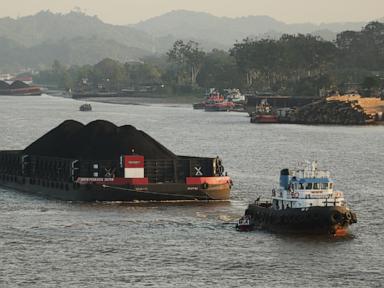
Industrial policy in Southeast Asia is undergoing a structural realignment driven by geopolitical fragmentation and raw material nationalism. Indonesia is aggressively scaling its downstream processing capabilities, transitioning from a raw bauxite exporter to an aluminum manufacturing hub. This strategy relies on an inherent contradiction: deploying off-grid, fossil-fuel-fired power generation—specifically designated as captive coal plants—to build a metal output matrix marketed as a transition asset. Analyzing this expansion requires looking past generalized sustainability narratives to examine the energy-intensity equations, capital expenditure hurdles, and feedstock depletion timelines that dictate the commercial reality of Indonesian metal processing.
The Thermodynamic Cost Function of Smelting
Aluminum reduction is fundamentally an exercise in heavy electrical consumption. Producing a single metric ton of primary aluminum via the Hall-Héroult process demands approximately 14,000 to 15,700 kilowatt-hours of continuous baseload electricity. Unlike discrete manufacturing sectors that can utilize intermittent renewables with battery storage buffers, aluminum smelters require an uninterrupted, high-amperage power supply to maintain the molten bath temperature inside reduction cells. Any unscheduled power interruption causes the electrolyte bath to solidify, destroying multi-million-dollar potlines.
Because Indonesia’s national grid infrastructure in outer islands lacks the transmission capacity and baseload stability required for heavy industrial loads, private consortia have resorted to building dedicated, off-grid thermal stations. These captive assets bypass grid constraints entirely, pairing coal extraction directly with smelting operations. This pit-to-power architecture guarantees the requisite energy availability but locks the production life cycle into high carbon intensity. Consequently, the resulting metal carries an embedded carbon footprint that directly conflicts with the decarbonization mandates enforced by importing jurisdictions, particularly the European Union's Carbon Border Adjustment Mechanism.
Capital Allocation and the Chinese Offshore Arbitrage
The financial architecture underpinning Indonesia's metal expansion is heavily reliant on foreign direct investment, predominantly from Chinese industrial entities. This capital migration is governed by regulatory constraints in Beijing. Following domestic output caps implemented to control industrial overcapacity and emissions, Chinese producers sought external jurisdictions featuring laxer environmental constraints, cheap labor, and abundant raw inputs.
Chinese capital and engineering firms hold stakes in roughly three-quarters of Indonesia's planned alumina and aluminum projects. This dynamic creates a regulatory loophole. While sovereign commitments ostensibly restrict state financing for new international coal projects, capital is funneled through commercial structures or framed as mineral security investments, shielding the underlying fossil fuel combustion from direct multilateral scrutiny. The financial exposure is substantial: individual processing hubs require multi-billion-dollar outlays for Phase 1 construction alone, leaving project developers vulnerable to volatile global metal price cycles. Under standard pricing baselines, recovering capital expenditure on these high-capex, coal-reliant configurations requires protracted operational windows that extend past a decade, assuming zero margin compression from rising input costs.
Feedstock Depletion Dynamics and Supply Chain Fragility
The operational viability of the downstream push faces a severe constraint in the material balance of domestic bauxite reserves. State directives mandate domestic processing to maximize economic capture, accelerating extraction rates across Kalimantan and surrounding regions. However, the mining output velocity cannot indefinitely match the planned nameplate capacity of the newly constructed smelters.
Projections from energy and clean air analysts indicate that if all prospective alumina and aluminum facilities become operational, domestic bauxite reserves face exhaustion within a compressed timeline of under twelve years. This imbalance transforms the industrial strategy into a high-stakes race against resource depletion. Developers risk building multi-billion-dollar smelting assets optimized for a specific domestic ore grade, only to face feedstock exhaustion or mandatory ore importation long before the capital expenditure has been amortized. Furthermore, reliance on captive coal isolates these facilities from technological learning curves associated with green hydrogen or geothermal integration, cementing a high-cost operating expenditure floor dictated by thermal coal pricing volatility.
Strategic Execution Path
Deploy capital expenditure exclusively into modular, grid-integrated green energy infrastructure in regions where geothermal or hydro capacity can be scaled, abandoning prospective captive coal pipelines to insulate assets from impending carbon border adjustments.