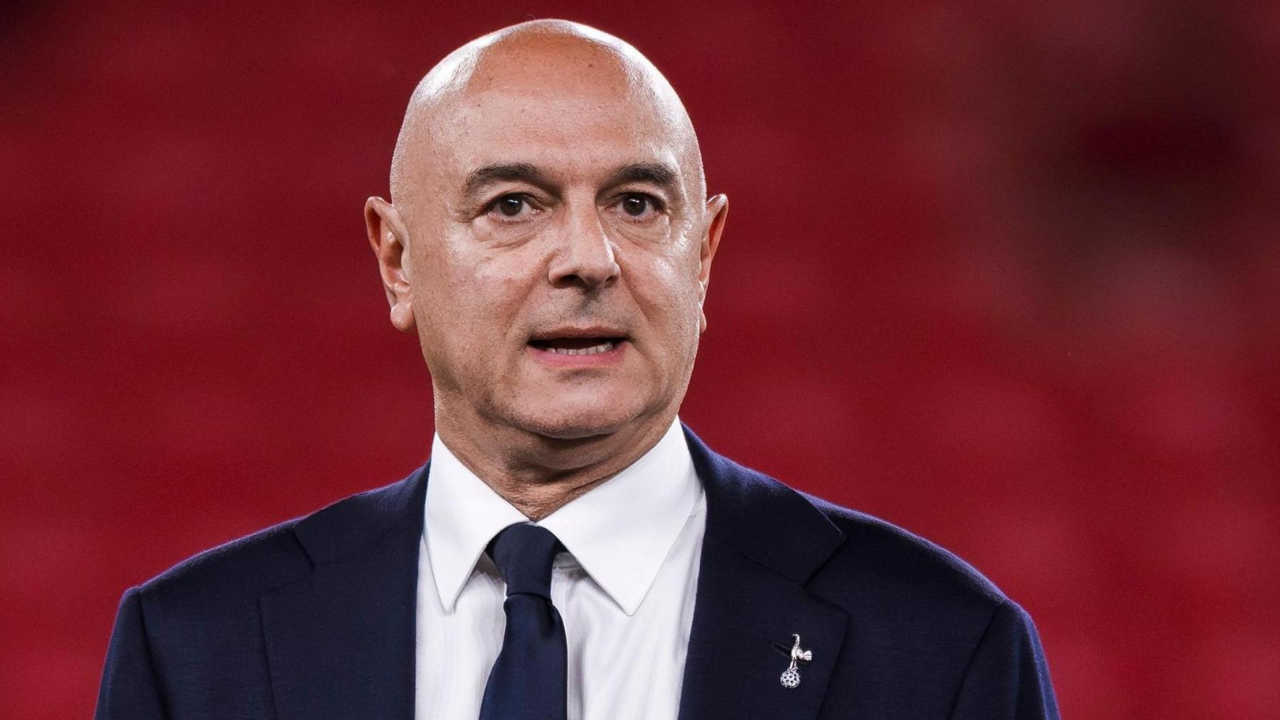
When a quarter-century executive stewardship terminates abruptly, the financial mechanics governing that departure reveal the underlying structural value placed on governance, risk mitigation, and asset appreciation. The disclosure that former Tottenham Hotspur executive chairman Daniel Levy received a twenty-seven million pound termination payout, culminating in career earnings of approximately eighty-eight million pounds across a twenty-four-year tenure, provides a rare window into the cost function of elite football administration.
To evaluate these figures beyond surface-level reactions, one must deconstruct the economics of modern club management into three core operational vectors: baseline executive remuneration, asset inflation through infrastructure investment, and contractual termination mechanics.
The first vector involves cumulative operational compensation. Separate financial disclosures from Companies House records indicate that Levy accumulated roughly sixty-one million pounds in direct remuneration during his active tenure. For a multi-decade run operating at the apex of European football, this equates to an average annual compensation package that positioned him as one of the highest-paid administrators in the Premier League. In corporate governance terms, this compensation was tied directly to the enterprise value creation of the firm. When Levy assumed control under ENIC in December 2000, Tottenham Hotspur was valued within a bracket of eighty to one hundred million pounds. By the time his tenure concluded in September 2025, enterprise valuations placed the club north of three billion pounds. The accumulation of sixty-one million pounds in salary over twenty-four years represents less than two percent of total asset appreciation achieved under that specific governance model.
The second vector addresses the twenty-seven million pound exit payment. Public commentary frequently mischaracterizes such sums as discretionary bonuses or sudden severance settlements. In rigorous corporate structuring, this figure represents contractual fulfillment obligations upon termination rather than a negotiated goodwill package. Long-term incentive plans, deferred bonuses, and contractual guarantees embedded within high-level executive agreements dictate that an abrupt, unilateral dismissal by ownership triggers immediate vesting or payout of remaining structural covenants.
This mechanism introduces a distinct structural parallel often cited by financial analysts: the payout matches the exact fee Tottenham received from Bayern Munich for Harry Kane in 2023. While the numerical equivalence is a coincidence of accounting periods, it highlights the capital allocation scale within modern football enterprises, where single-player asset liquidations match executive exit liabilities.
The third vector evaluates the opportunity cost and strategic trade-offs of the stewardship model. Levy’s tenure was defined by a self-sustaining financial framework. Rather than relying on external debt injections or sovereign wealth ownership, the club funded infrastructural transformations—most notably the construction of the multi-purpose stadium—through operational cash flow discipline and player trading margins. This model protected the club from systemic financial insolvency, establishing a robust balance sheet and a globally recognized brand footprint.
However, the structural limitation of this approach manifested as a capital allocation bottleneck during peak sporting cycles. The strict adherence to wage-to-revenue caps and conservative net-spend parameters maximized asset valuation for ownership while occasionally restricting the squad-depth investments required to convert consistent top-four finishes into sustained silverware.
The transition of power and the subsequent financial adjustments underscore the reality of executive decoupling. When an executive exercises centralized control over commercial operations, real estate development, and sporting strategy for nearly a quarter of a century, removing that node creates immediate operational friction. The subsequent performance volatility experienced by the club following the restructuring highlights the dependencies built into a centralized leadership model.
Ultimate strategic forecast: Modern football governance is shifting away from centralized patriarchal oversight toward institutionalized, multi-departmental corporate structures. Clubs attempting to replace single-executive centralization must build algorithmic recruitment frameworks and robust sporting director networks to avoid the institutional vacuum left by long-serving administrators. The twenty-seven million pound exit fee is not merely a historical footnote of a single termination, but the benchmark price of transitioning an aging corporate governance model into a modern institutional enterprise.