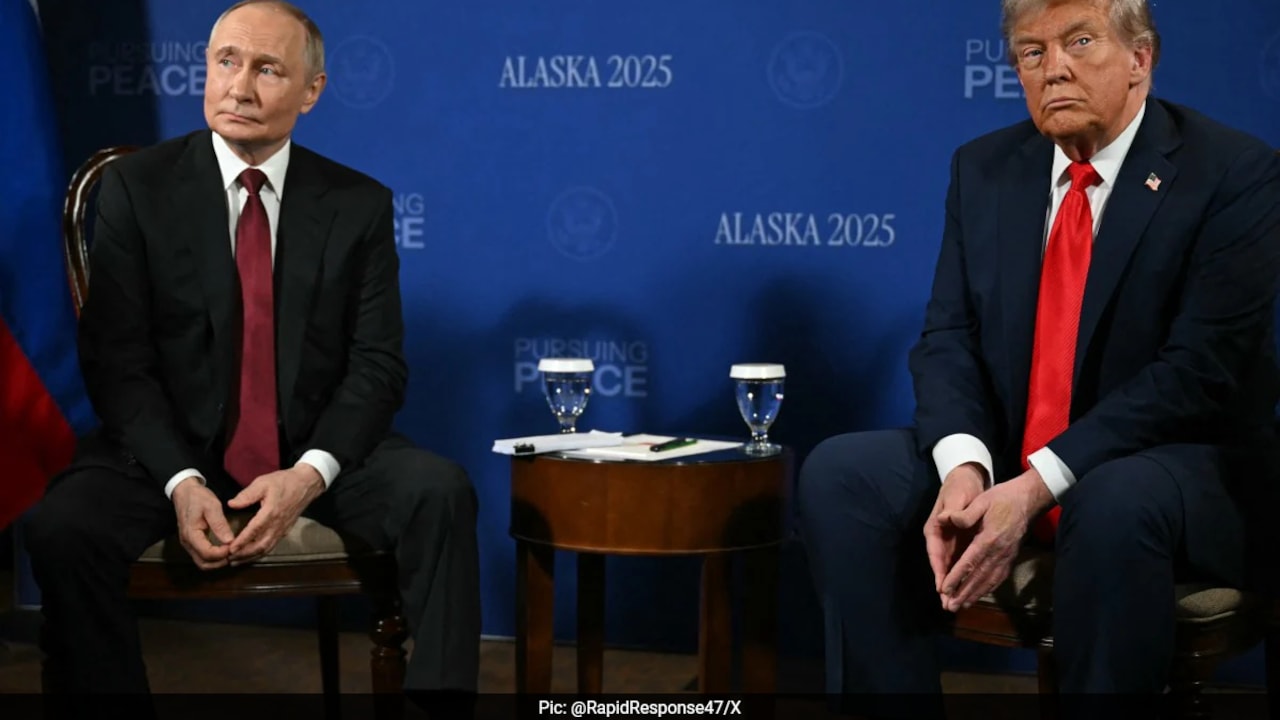
National diesel prices crossing critical operational thresholds create severe cost pressures across logistics, agriculture, and freight networks. When retail on-highway diesel averages double relative to historical baselines due to localized refinery bottlenecks and geopolitical supply shocks, executive administrations face immense pressure to intervene in commodity flows. The issuance of Office of Foreign Control Assets General License 135, which temporarily authorizes transactions, shipping, and importation of Russian-origin diesel through April 7, 2027, represents a calculated policy pivot away from total trade restriction in favor of domestic price stabilization. Deconstructing this mechanism requires evaluating the structural supply deficits, the jurisdictional friction between US and European restrictions, and the economic elasticity of targeted energy waivers.
The Structural Anatomy of the Diesel Squeeze
Global middle distillate markets operate under tight inventory margins. Prior to the Treasury Department's temporary authorization, Russian export volumes had been severely constrained by a dual vector: domestic export bans implemented by Moscow following targeted infrastructure disruptions at domestic refineries, and aggressive Western sanctions structures, including the European Union and United Kingdom product bans and the G7 price cap mechanism.
When refining capacity experiences physical shocks, the marginal barrel of diesel commands an acute scarcity premium. Commercial transportation, heavy machinery, and agricultural fleets cannot substitute fuel inputs in the short run. Price elasticity of demand for diesel is highly inelastic over a six-to-twelve-month horizon. Consequently, minor supply contractions translate into disproportionate price spikes at the wholesale rack and the retail pump.
The agreement structured between Washington and Moscow seeks to inject phased volumes into the global balancing market:
- Initial tranches exceeding 300,000 tons delivered immediately.
- Secondary increments of 500,000 tons scheduled for the subsequent month.
- Extended tranches scaling toward 1 million tons and up to an aggregate 3 million tons, conditioned explicitly upon the operational stability and recovery rate of Russian domestic refining infrastructure.
Regulatory Friction and Jurisdictional Divergence
The temporary lifting of restrictions via General License 135 introduces complex operational friction for international shipping, maritime insurance, and trade compliance. While the United States Treasury has carved out a time-bound window for Russian diesel transactions, multilateral alignment remains fractured.
European Union and United Kingdom prohibitions on Russian refined product imports remain fully codified, alongside the continuation of the $100 per barrel price cap enforced on third-country maritime services. This creates a bifurcated compliance matrix for multinational trading houses and bunker suppliers. Operators managing multi-jurisdictional voyages must verify transaction clearances twice: ensuring compliance with Washington's temporary waiver while simultaneously avoiding violations of enduring European maritime sanctions.
Furthermore, statutory tensions emerge regarding secondary legislation. Domestic legislative frameworks penalizing entities engaging with Russian energy infrastructure create legal ambiguity when the executive branch simultaneously issues treasury authorizations permitting those exact commercial channels. Compliance officers must treat the April 7, 2027 expiration date as a hard risk boundary, beyond which all permitted transactions instantly revert to prohibited status unless renewed.
Market Transmission and Cost Function Dynamics
Reintroducing Russian middle distillates into the cleared global supply pool alters international product flows. Traditionally, European markets absorbed significant volumes of Russian diesel before substitution protocols took effect. With EU ports closed to direct imports, Russian refiners rerouted barrels toward alternative hubs in Asia, the Middle East, and Latin America, creating a shadow fleet logistics network characterized by higher freight costs and complex vessel-to-vessel transfers.
A US Treasury authorization short-circuits this circuitous routing for participating entities, lowering logistical friction and reducing transport cost penalties. The primary beneficiaries of this administrative relief are commercial sectors with high fuel intensity:
- Agricultural operators reliant on diesel for planting, harvesting, and transport equipment.
- Long-haul trucking fleets facing compressed operating margins.
- Freight rail and logistics providers absorbing high wholesale fuel indices.
However, the intervention introduces supply-side moral hazard and regulatory unpredictability. Refiners in non-sanctioned jurisdictions face sudden price competition from newly unblocked Russian barrels, potentially altering capital expenditure decisions for domestic refining capacity expansion. Because the policy instrument is a temporary general license rather than a permanent structural repeal, long-term capital allocation toward domestic refining optimization remains unhedged against post-April 2027 regulatory shifts.
Execute the operational response by auditing all active maritime supply contracts for Russian-origin product exposure, mapping delivery schedules strictly against the April 7, 2027 cutoff, and establishing dual-compliance protocols to reconcile diverging US Treasury and European sanctions mandates.