Modern air defense is governed by an unforgiving financial arithmetic. When an attacker deploys low-cost, mass-produced one-way attack systems, the defender faces an immediate structural crisis: the price of neutralizing a threat routinely exceeds the cost of manufacturing it. This cost-exchange asymmetry has defined contemporary conflict since 2022, but the recent introduction of high-speed turbojet-powered strike drones has accelerated the crisis past the breaking point of existing interception models. The shift from slow propeller-driven airframes to jet-propelled systems operating at hundreds of kilometers per hour compresses engagement timelines, degrades visual tracking architectures, and forces defenders to rely on exponentially more expensive kinetic interceptors. Understanding why traditional countermeasures are failing requires a granular examination of kinetic physics, industrial manufacturing capacity, and the economics of attrition.
The Structural Mechanics Of Air Defense Attrition
The structural mechanics of air defense attrition operate on a simple economic ledger. Wars of attrition are accounting exercises conducted with explosives, where both sides expend capital, materials, and labor to achieve strategic exhaustion. The attacker chooses the timing, vector, and volume of engagement, forcing the defender to maintain a posture of perpetual reactivity. A defending nation cannot selectively ignore incoming vectors because the precise target remains ambiguous until terminal phase guidance or impact occurs. Thus, every inbound signature mandates radar tracking, airspace classification, civil alert generation, and the potential deployment of countermeasures.
This operational reality imposes massive overhead costs before a single interceptor is even launched. Radar networks consume electrical power and electronic lifespan; command-and-control nodes require continuous human staffing; mobile fire groups burn fuel repositioning across complex geography. When an attacker launches thousands of mass-produced airframes, the defender must expend resources simply to manage the sensory burden. If the attacking airframe costs twenty to forty thousand dollars to build, yet forces the deployment of a surface-to-air missile valued at one to three million dollars, the defender is locked into a losing economic transaction. Winning the tactical engagement by destroying the incoming asset guarantees an eventual strategic defeat if the aggregate cost curve bankrupts the state.
The Physics Of The Turbojet Interception Window
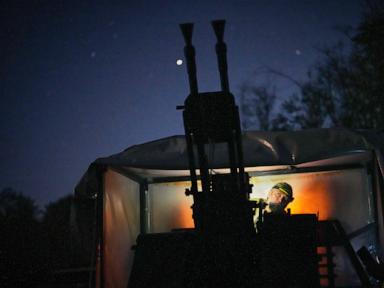
The introduction of turbojet propulsion into mass-produced strike drones shatters whatever fragile equilibrium defenders had established using low-cost kinetic solutions. Early iterations of long-range attack drones relied on internal combustion engines, propelling them at modest cruising speeds of roughly one hundred and fifty to two hundred kilometers per hour. These velocities permitted decentralized mobile defense units equipped with heavy machine guns, searchlights, and optical tracking systems to engage them effectively. While imperfect, these mobile groups provided a high-volume, low-cost interception layer that preserved expensive guided missile stockpiles for ballistic and cruise missile threats.
Turbojet engines alter this physical equation entirely. Operating at speeds exceeding four to six hundred kilometers per hour, jet-powered variants reduce the operational window for interception from minutes to mere seconds. Optical tracking and acoustic detection become largely obsolete against targets crossing the night sky at high velocities. Mobile fire groups lack the traverse rates, ballistic velocities, and radar cueing necessary to intercept objects moving at jet speeds. As a result, defenders are forced to push higher up the technological ladder, relying on sophisticated guided missiles or specialized interceptor aircraft that are neither manufactured in sufficient quantities nor priced within sustainable economic limits.
The decline in interception efficiency is a direct mathematical consequence of this velocity shift. Historical data from prolonged campaigns indicates that when threats transition from slow propeller platforms to high-speed jet propulsion, interception rates drop precipitously. Defending forces find themselves scrambling to deploy newly codified interceptor drones, yet the engineering challenge of building a jet-powered counter-drone system that remains economically competitive with the threat is formidable.
Industrial Bottlenecks In Interceptor Manufacturing
Scaling the production of these new interceptors exposes the friction points of modern defense manufacturing. Building a single prototype turbojet interceptor drone in a laboratory or small workshop is relatively straightforward; scaling that design to produce thousands of units per month is an industrial labyrinth. The manufacturing bottleneck is not merely a matter of assembling airframes. It requires a synchronized supply chain for microprocessors, guidance sensors, high-output turbojet micro-turbines, composite materials, and high-energy chemical propellants.
Global supply chains for microelectronics and specialized propulsion components are heavily constrained by export controls, industrial capacity limits, and geopolitical friction. When defense ministries attempt to rapidly codify and scale new interceptor categories, they routinely encounter component shortages that stretch manufacturing timelines from weeks to many months. Even if a design demonstrates combat efficacy on the testing grounds, transitioning from a pilot production line to mass industrial output requires capital investment, tooling validation, and quality control systems that cannot be compressed overnight.
Compounding the manufacturing hurdle is the strict requirement for cost parity. An interceptor drone designed to hunt a jet-powered attack drone must possess superior speed, climb rate, and maneuverability. Achieving these performance metrics typically demands advanced avionics and high-thrust powerplants, which immediately drive up the bill of materials. If an interceptor costs more than the target it is designed to destroy, the fundamental economic deficit remains unresolved. Manufacturers are thus caught in a severe engineering constraint: they must build a high-performance guided aerial vehicle at commercial drone pricing structures.
Strategic Adaptation And Defense Architecture Reorganization
The strategic response to this manufacturing and velocity crisis requires a fundamental reorganization of defensive architecture. Relying indefinitely on western-supplied surface-to-air missile systems is mathematically impossible due to finite stockpiles and prohibitive unit costs. Instead, military planners must pursue a multi-tiered structural adaptation that combines autonomous interceptor swarms, directed-energy applications, and decentralized industrial fabrication.
The first tier involves the rapid maturation of low-cost jet-powered interceptor drones equipped with onboard computer vision and autonomous terminal guidance. Traditional remote piloting fails at high closing speeds because signal latency and human reaction times are too slow to manage intercepts at four hundred kilometers per hour. Autonomous onboard processing systems must calculate intercept vectors, account for target evasion maneuvers, and execute terminal kinetic strikes without human-in-the-loop latency. Developing these edge-computing vision systems at scale requires software architectures that are resilient against electronic countermeasures and sensor spoofing.
The second tier addresses the energy cost curve through directed-energy and high-power microwave systems. While kinetic interceptors still incur a per-unit manufacturing cost, directed-energy weapons shift the marginal cost per engagement down to the price of the electrical power consumed during emission. High-energy lasers and microwave emitters offer virtually unlimited magazine depth, removing the supply chain dependencies that plague physical missile and drone production lines. However, directed-energy systems face severe operational limitations, including atmospheric attenuation, power generation requirements, and high initial capital expenditure. They remain regional defense tools rather than a comprehensive blanket solution for national airspace protection.
The third tier requires decentralizing the defense industrial base itself. Centralized manufacturing facilities are prime targets for strategic bombardment, making them single points of failure in a war of attrition. Transitioning toward a distributed network of smaller, modular production nodes allows a nation to manufacture interceptors closer to the front lines or deployment zones, reducing logistical vulnerability and insulating supply chains against localized disruptions. This distributed model mirrors the bottom-up innovation ecosystems that originally enabled the mass production of first-person view strike drones, applying decentralized engineering agility to sophisticated air defense requirements.
Ultimately, the competition between attack drones and defensive interceptors is an unyielding test of industrial capacity and economic endurance. The deployment of high-speed turbojet strike systems has exposed the fragility of traditional air defense models, forcing a painful transition toward high-velocity, low-cost countermeasures. Success in this environment does not belong to the nation with the most sophisticated single weapon system, but to the one that can engineer, finance, and manufacture defensive parity at scale before cumulative economic exhaustion decides the outcome.