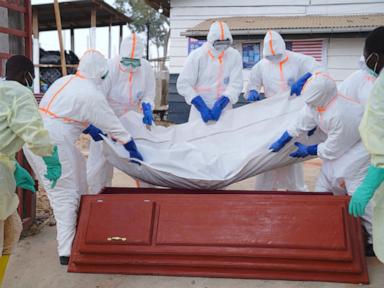
The World Health Organization loves a clean narrative. They want an outbreak to look like a predictable fire—flaring up in one corner, smothered by international intervention, and carefully monitored until the embers die. So when the headlines emerged claiming encouraging signs in the Democratic Republic of Congo while a single eastern region stubbornly surges, the global health establishment breathed a collective sigh of relief.
They are looking at the map upside down.
If you focus on the so-called stabilizing zones while panicking over the surging eastern hotspot, you miss the structural failure rotting the entire response from the inside. The real story is not that one region is resisting treatment; the story is that our entire metric for success is built on bureaucratic self-deception.
I have watched public health technocrats burn billions of dollars on tactical containment while ignoring the institutional decay that makes these outbreaks inevitable in the first place. Stop listening to press releases written in Geneva. The numbers coming out of the Kivu provinces do not represent an anomaly or a stubborn pocket of resistance. They represent the logical endpoint of a top-down medical model that treats symptoms while alienating the population it claims to save.
The Myth of Containment Metrics
Let us look at how success is measured. When international agencies report encouraging signs, they talk about response speed, contact tracing numbers, and cold-chain vaccine delivery. These are comforting data points for donors sitting thousands of miles away. They look great on a slide deck.
They are also largely irrelevant on the ground.
Epidemiology is not a math problem you solve by throwing more personnel at a zip code. It is an exercise in social trust. When an outbreak surges in eastern Congo, the knee-jerk diagnosis from international experts is always community resistance or misinformation. That framing is a convenient excuse. It shifts the blame from a flawed operational strategy to the victims of the crisis.
People do not run from treatment centers because they are superstitious. They run because those centers have historically functioned as quarantine prisons disconnected from local realities, local leadership, and basic bodily autonomy. When you militarize public health, you turn medical workers into occupation forces. No amount of contact tracing apps or vaccine stockpiles will overcome the fundamental deficit of legitimacy.
Why the Eastern Hotspot is the Only Data Point That Matters
Focusing on the quiet zones while treating the eastern surge as an outlier is a masterclass in denial. The eastern region is surging precisely because it bears the brunt of long-standing state neglect, armed conflict, and economic desperation. Ebola is not a standalone pathogen operating in a political vacuum. It is an opportunistic amplifier of institutional failure.
When health infrastructure is non-existent during peacetime, dropping millions of dollars worth of experimental therapeutics into a warzone during an emergency does not build a system. It creates an enclave. It creates a temporary medical bubble surrounded by a sea of unmet basic needs.
Imagine a scenario where a village has no clean drinking water, no functioning primary health clinic for malaria or measles, and a history of exploitation by both state security forces and rebel groups. Then, a convoy of white UN Land Cruisers arrives overnight, completely focused on one specific hemorrhagic fever while ignoring the children dying of preventable dehydration twenty feet away.
How would you react?
Calling that community difficult or resistant is not just arrogant; it is mathematically illiterate. The surge in the east is the baseline reality. The quiet zones are the temporary anomalies.
Dismantling the Global Health Complex
We need to stop treating outbreaks as technical glitches to be patched by emergency task forces. The WHO and its partner NGOs operate under the delusion that they can parachute into complex geopolitical landscapes, impose protocols, and declare victory before moving on to the next crisis.
This approach creates moral hazard on an industrial scale. Local health authorities are sidelined. Community leaders are treated as obstacles to manage rather than partners to empower. Every time an international agency takes over an outbreak response, it robs the local healthcare system of the chance to build indigenous capacity.
Look at what actually works when outsiders leave. It is the local nurses, the grassroots burial teams recruited from the community, and the traditional healers who understand how to communicate risk without terrifying the populace. They do not need more international coordinators telling them how to wash their hands. They need sustained financing for basic infrastructure, secure supply chains that do not rely on emergency flights, and the political space to run responses on their own terms.
The Counter-Intuitive Prescription
If we actually want to stop panicking over recurring surges, we have to do something terrifying to the global health establishment: decentralize control entirely.
First, stop funding vertical emergency silos. Every dollar spent on high-profile, short-term international response teams should instead go directly into recurrent operational budgets for provincial clinics that treat malaria, malnutrition, and routine infections 365 days a year. Trust is built in the years between outbreaks, not during the panic of the first death.
Second, reframe community skepticism as a feedback loop. When a population rejects an intervention, do not send in more police or launch a radio campaign about compliance. Listen to what they are asking for. If they want safe water and malaria drugs before they care about contact tracing, give them water and malaria drugs. Health security is indivisible. You cannot isolate a virus while ignoring the environment that incubates it.
Third, hold international agencies accountable for long-term capacity building rather than short-term containment theater. Declaring victory because numbers drop for six weeks while the underlying vulnerability remains unchanged is not success. It is a ticking clock.
The next surge is already baked into the system we refuse to fix. Until we dismantle the colonial architecture of global health intervention and hand the steering wheel to the people actually living through the crisis, every encouraging sign from Geneva is just a prelude to the next headline.