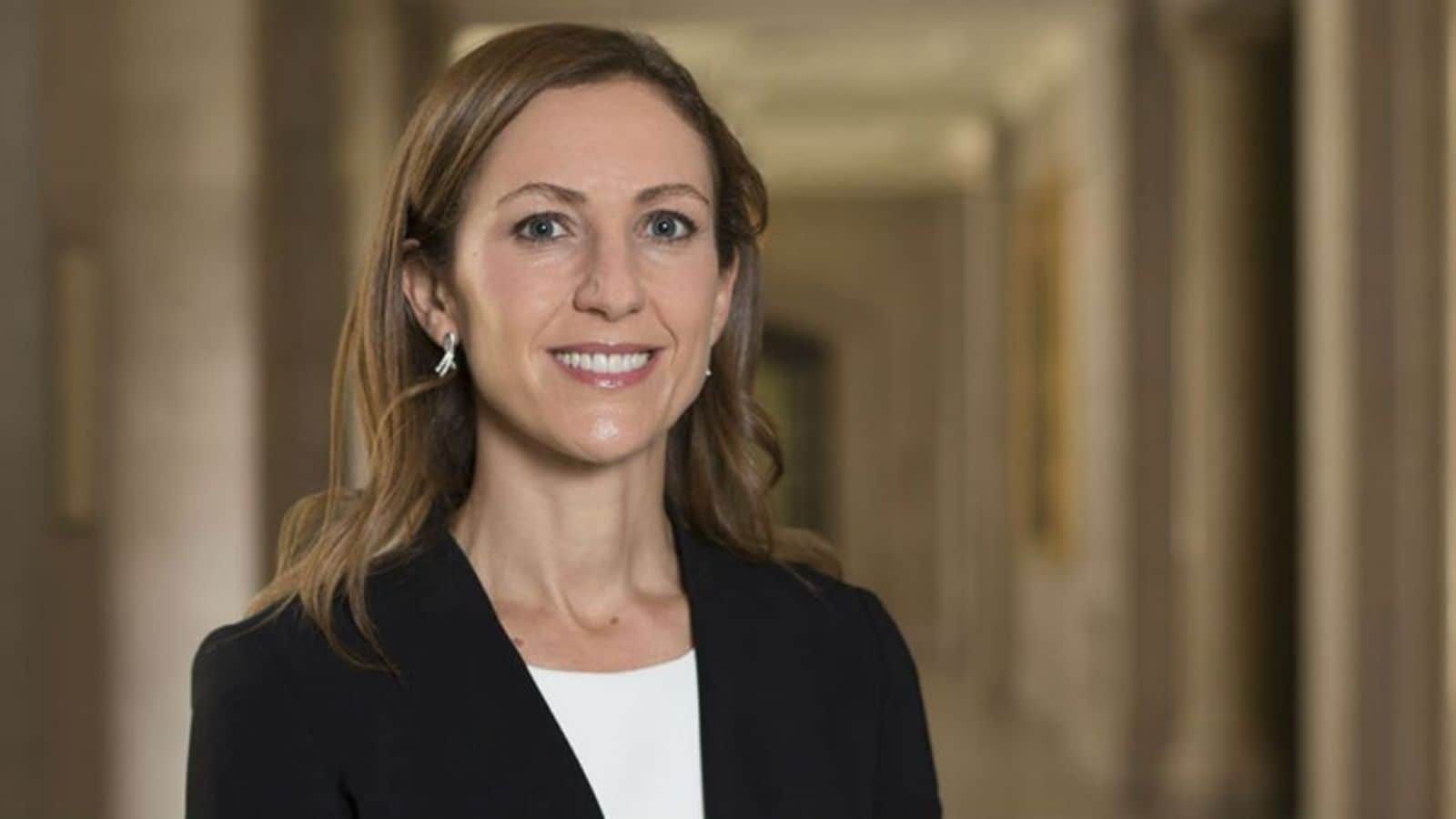
The International Monetary Fund is shifting its intellectual anchor. On August 10, 2026, Silvana Tenreyro will take over as the institution's economic counsellor and director of the research department, succeeding Pierre-Olivier Gourinchas. The announcement, delivered by Managing Director Kristalina Georgieva, marks a profound pivot in how the world’s lender of last resort will likely diagnose global economic ailments. Tenreyro, a highly decorated London School of Economics professor with citizenships spanning Argentina, Italy, and the United Kingdom, steps into a role that defines the parameters of global economic policy.
She inherits a global economy fracture line. Central banks are exhausted after a multi-year battle against post-pandemic inflation, emerging markets are suffocating under dollar-denominated debt, and trade fragmentation is rewriting supply chains. By placing Tenreyro at the helm of its research department, the IMF is not just hiring an academic. It is signaling a willingness to entertain a much softer, more cautious approach to monetary tightening than the orthodoxy of the past decade allowed.
The Monetary Record at Threadneedle Street
To understand where the IMF is going, look at where Tenreyro has been. Her six-year tenure as an external member of the Bank of England’s Monetary Policy Committee, ending in 2023, provides the clearest roadmap of her economic philosophy. During the worst inflationary surge the United Kingdom had witnessed in forty years, Tenreyro consistently broke from the consensus. She voted repeatedly against aggressive interest rate hikes.
Her rationale was grounded in a specific view of economic data. She argued that aggressive monetary tightening takes eighteen months or more to fully permeate the real economy, meaning that hiking rates rapidly in response to supply-side shocks, like surging energy costs or supply chain blockages, risked triggering an unnecessary and painful recession. She believed inflation would drop naturally once these external supply constraints eased. History partially validated her view as supply chains untangled, but critics blamed her dovish positioning for letting domestic inflation expectations harden.
This intellectual stubbornness is exactly what makes her appointment significant. The IMF has traditionally acted as the world’s chief advocate for fiscal austerity and monetary discipline. When a developing nation faces a balance-of-payments crisis, the Fund's traditional prescription is predictable: raise interest rates, slash public spending, and stabilize the currency. Tenreyro’s academic and policy footprint suggests she will question these standard templates.
Re-engineering the Bailout Calculus
A chief economist at the IMF does not directly negotiate loan terms with distressed governments, but their research department sets the analytical framework that justifies those terms. If the research department shifts its view on the efficacy of austerity during supply-side crises, the conditions attached to multi-billion-dollar bailouts will change.
Consider the ongoing debt crises across Sub-Saharan Africa and Latin America. Under traditional IMF modeling, these nations are told to clamp down on domestic demand to curb inflation. Tenreyro’s extensive academic work on international trade and macro-development offers a different perspective. She has written extensively on how developing economies suffer disproportionately from external volatility. Forcing an economy to contract when its inflation is driven by global grain shortages or shipping bottlenecks often destroys local productive capacity without solving the underlying currency weakness.
Traditional IMF Doctrine vs. Potential Tenreyro Direction
+-------------------------+-------------------------+-------------------------+
| Policy Area             | Traditional Approach    | Predicted Shift         |
+-------------------------+-------------------------+-------------------------+
| Inflation Response      | Immediate rate hikes    | Focus on supply factors |
| Debt Restructuring      | Strict fiscal austerity | Preservation of growth  |
| Capital Controls        | Generally discouraged   | Tactical acceptance     |
+-------------------------+-------------------------+-------------------------+
This structural view matters immensely for countries negotiating relief. If the IMF's core modeling begins to accept that keeping interest rates lower for longer can preserve tax revenues and prevent economic collapse, the policy conditions attached to future bailouts could become significantly less punitive.
The Crypto Confrontation
The IMF faces an escalating battle with sovereign experimentation in digital assets. Under Gourinchas and his predecessor Gita Gopinath, the Fund maintained an unyielding stance against cryptocurrency adoption. The institution repeatedly warned developing economies that embracing decentralized digital assets would compromise monetary sovereignty, destabilize domestic banking sectors, and disrupt anti-money laundering frameworks.
Tenreyro enters this arena with a deep academic fascination with currency unions and monetary architecture. Her past research under supervision from economic heavyweights like Robert Barro and Kenneth Rogoff focused heavily on what makes currencies succeed or fail. She understands the mechanics of transaction costs and trade flows better than most.
Her appointment arrives as several emerging markets look at digital assets not as a speculative toy, but as a mechanism to bypass a restrictive dollar-dominated financial architecture. Tenreyro will likely approach cryptocurrency and central bank digital currencies through a lens of transaction efficiency rather than pure systemic risk. While she is unlikely to endorse the wilder, unregulated corners of the crypto market, her research could steer the IMF toward a more nuanced framework regarding sovereign digital currencies and cross-border payment networks.
A Triple National for a Fractured Era
The identity of the IMF chief economist has historically carried political weight. Wall Street and Washington insiders often expect an American academic to take the post, maintaining a quiet consensus over global financial governance. Choosing an economist with Argentine, Italian, and British citizenship shatters that mold.
Her background gives her unique credibility. Having grown up in Argentina, a country that has spent decades in a perpetual cycle of default and IMF intervention, she has a native understanding of how Fund policies translate on the ground. She knows that abstract economic models can fail catastrophically when applied to societies with weak institutional trust or structural inflation dynamics.
This lived experience will be tested immediately. The global trade system is splintering into regional blocs as tariff walls rise between Western economies and China. Tenreyro’s pioneering academic work on the gravity model of trade, which measures how geographic and political distance affects commerce, is suddenly highly relevant. She understands that when trade routes alter, inflation dynamics change permanently.
Central bankers globally are watching this transition with high stakes. If Tenreyro uses her new pulpit to argue that global inflation is structural rather than cyclical, she will be giving implicit permission to central banks to tolerate higher inflation targets. A shift from a $2%$ inflation target to a $3%$ or $4%$ tolerance band would change asset allocation, corporate borrowing costs, and sovereign debt sustainability across the earth.
The IMF is choosing an intellectual path that prioritizes economic preservation over dogmatic stabilization. Tenreyro’s writings indicate she will not back down from a fight when the data contradicts prevailing consensus. Her appointment means the era of uniform, rigid policy prescriptions from Washington is drawing to an end.