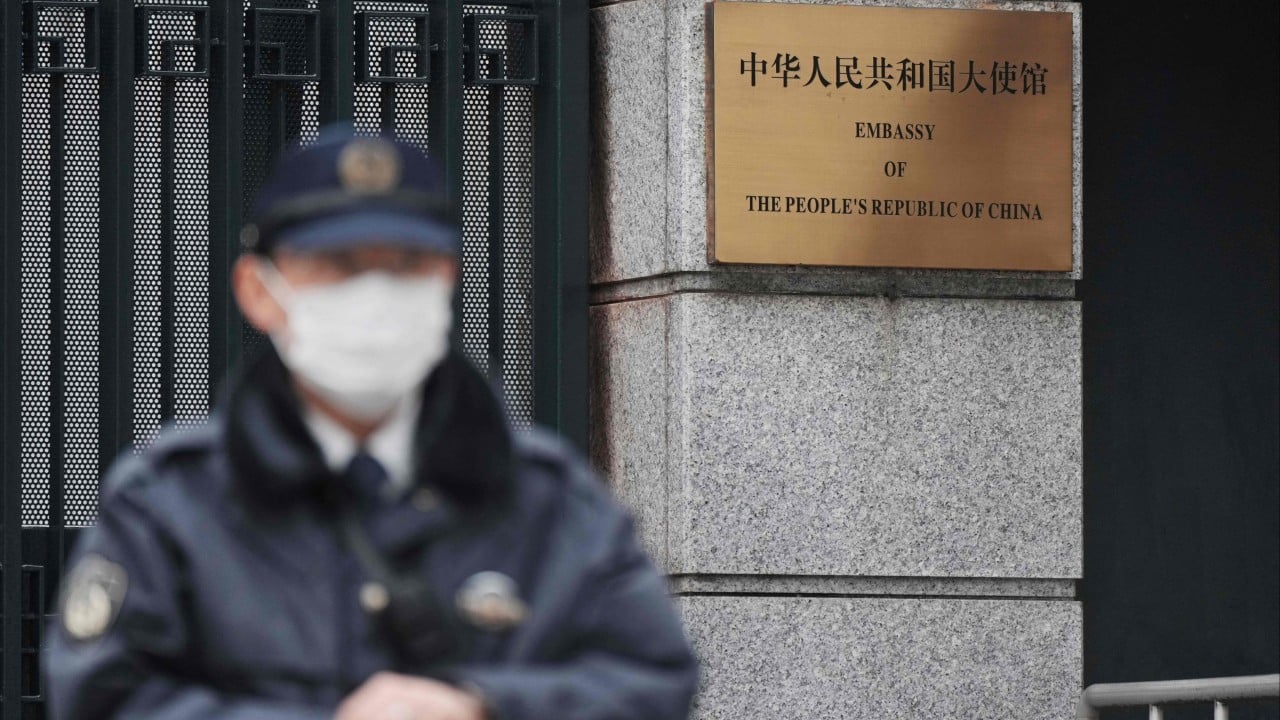
The recent accusations by the Chinese Ministry of Foreign Affairs regarding "grave violations" of diplomatic immunity at its Tokyo embassy—specifically citing forced entry and bomb threats—represent more than a bilateral spat; they signal a breakdown in the Westphalian Security Equilibrium. This equilibrium relies on the absolute sanctity of diplomatic premises as sovereign enclaves. When these boundaries are breached, whether by state-sanctioned actors or unmitigated domestic radicals, the functional utility of the Vienna Convention on Diplomatic Relations (VCDR) degrades. The current friction between Beijing and Tokyo serves as a case study in how domestic security failures translate into geopolitical leverage, creating a cycle of "Retaliatory Reciprocity."
The Tripartite Framework of Diplomatic Vulnerability
To analyze the severity of the Tokyo incident, we must categorize the breach through three distinct vectors of risk. These frameworks determine how a state responds: through private demarches, public condemnation, or economic counters.
- Physical Inviolability (Article 22 of the VCDR): The receiving state (Japan) has a "special duty" to protect the premises of the mission against any intrusion or damage. A bomb threat represents a failure of the intelligence and preventive policing apparatus. If an intruder successfully enters the grounds, the failure shifts from a "threat" to a "breach of sovereignty," which is the highest tier of diplomatic provocation.
- Psychological Coercion: Constant harassment or threats against mission staff function as a form of "Soft Blockade." By making the environment untenable for diplomatic personnel, the host country effectively throttles the communication channels necessary for conflict resolution.
- The Information Asymmetry Gap: China’s publicizing of these events via official channels (Foreign Ministry spokesperson Mao Ning) serves a dual purpose. It creates a domestic narrative of victimhood while simultaneously signaling to the Japanese government that China is prepared to lower the threshold for its own "special duty" protections toward Japanese diplomats in Beijing.
The Mechanics of State Accountability and Negligence
Japan’s legal responsibility is not predicated on its ability to stop every lone-wolf actor, but on the Standard of Due Diligence. Under international law, a state is liable if it fails to provide protection commensurate with the known threat level.
The friction here emerges from a discrepancy in "Threat Assessment Weights." China posits that the rise in anti-China sentiment in Japan, fueled by disputes over the Fukushima wastewater release and territorial claims in the Senkaku Islands (Diaoyu Islands), should have triggered an immediate hardening of embassy perimeters. Japan’s failure to prevent an intrusion suggests either a tactical intelligence gap or a strategic decision to allow "contained" protests to manifest, thereby reflecting domestic public opinion.
When a bomb threat is introduced, the logic of the situation shifts from protest to terrorism. The "Response Function" of the Japanese police is now under scrutiny. If the response was delayed, it validates China's claim of "grave violations." If the response was immediate but the threat persisted, it indicates a structural inability to manage extremist elements within the Japanese domestic sphere.
The Cost-Benefit Analysis of Diplomatic Outcry
Beijing’s decision to label these incidents as "grave violations" is a calibrated rhetorical escalation. In diplomatic signaling, terms are selected based on the desired "Escalation Ladder."
- Concern: Signals a need for dialogue.
- Dissatisfaction: Signals a potential for minor policy shifts.
- Grave Violation: Signals that the relationship is entering a "Frozen State" where normal diplomatic functions may be suspended or countered with equal severity.
This rhetoric creates a Liability Loophole. By establishing that its diplomats are unsafe, China creates the legal and moral justification for "Symmetric Retaliation." If a Japanese consulate in Shanghai or Guangzhou were to face similar harassment, Beijing can now point to the Tokyo incident as the precedent, arguing that the standard of protection has been mutually lowered.
Structural Bottlenecks in Sino-Japanese Crisis Management
The primary bottleneck in resolving these "grave violations" is the lack of a Bilateral De-escalation Mechanism that operates independently of public sentiment. Currently, diplomatic security is tethered to the "Nationalist Fever" on both sides.
The second limitation is the Jurisdictional Conflict. Japanese authorities must balance the VCDR requirements with domestic laws regarding freedom of assembly and speech. However, international law is clear: domestic legal constraints do not excuse a failure to meet treaty obligations. This creates a friction point where the Japanese executive branch may lack the legal tools to suppress the very groups causing the "violations" without triggering a domestic political backlash.
The Erosion of the Sovereign Enclave
The "Sovereign Enclave" concept is the bedrock of global trade and peace. When an embassy is targeted, the perceived risk of doing business in that country increases for all foreign entities.
- Capital Flight Risk: If a superpower like China cannot secure its embassy in Tokyo, smaller nations must reassess the safety of their own missions. This leads to increased security costs (Internalized Costs) for foreign governments.
- Intelligence Degradation: When a mission is under threat, its primary function—gathering information and building networks—is replaced by "Fortress Mentality." Personnel are restricted to the compound, and local contacts are intimidated.
This environment favors "Hardline Factions" in both governments. In China, it justifies a more aggressive, "Wolf Warrior" posture to protect national dignity. In Japan, it provides ammunition for those seeking to bolster the Self-Defense Forces and tighten internal security laws, often at the expense of regional diplomatic nuance.
Strategic Reconstitution of Diplomatic Protocols
The resolution of this crisis cannot be found in a simple apology or a single arrest. It requires a fundamental shift in how both nations manage the Public-Diplomatic Interface.
The first tactical step is the establishment of a Neutral Security Zone (NSZ) around diplomatic missions during periods of high geopolitical tension. This involves moving beyond standard police cordons to include automated surveillance and the suspension of protest permits within a specific radius of sovereign grounds.
The second requirement is a Direct Intelligence Link between the embassy’s internal security and local counter-terrorism units. This bypasses the bureaucratic delays inherent in the Foreign Ministry-to-Police communication chain.
Finally, Japan must demonstrate a "Visible Enforcement" strategy. To de-escalate, the Japanese legal system must prosecute intruders and threat-makers with the same severity used for domestic attacks against high-ranking state officials. Failure to do so confirms China’s hypothesis that the "violations" are, at best, tolerated or, at worst, encouraged.
The current trajectory points toward a Symmetry of Hostility. Unless Japan treats the security of the Chinese embassy as a core component of its own national stability, the "grave violations" will become the new baseline for diplomatic engagement in East Asia, rendering the Vienna Convention a relic of an era characterized by higher standards of statecraft.