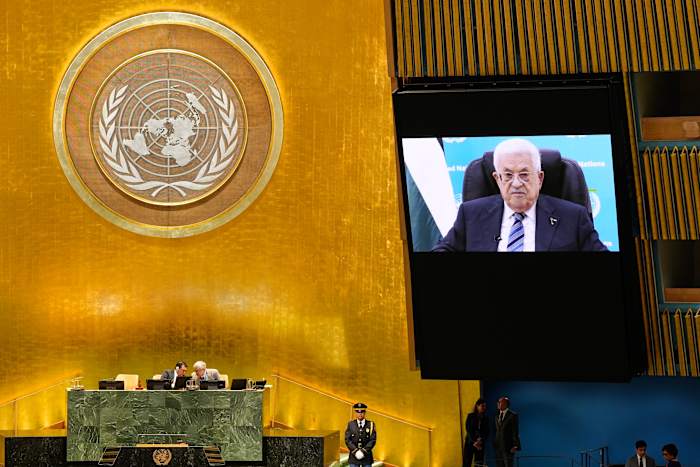
Every time a Palestinian leader gets locked out of a physical podium and relegated to a screen, the international press corps treats it as a diplomatic tragedy. Headlines wring their hands over denied visas, closed borders, and the erosion of multilateral norms. It is treated as a silencing.
It is the exact opposite.
Denying a visa to speak at the United Nations General Assembly does not silence Palestinian leadership. It protects them from accountability. A prerecorded video feed is a frictionless shield. It allows a speaker to project an unchallengeable, polished monologue to an empty chamber while completely bypassing the messy, bruising reality of face-to-face diplomacy, live press scrums, and the uncomfortable friction of global corridors where real leverage is traded.
For decades, international analysts have bought into the lazy consensus that physical presence at Turtle Bay equals power. If you are on the dais, you are winning. If you are on a monitor, you are oppressed. Let us strip away the sentimentality and look at how global institutions actually function. The UN General Assembly is a theatre of moral validation, not a legislative engine. When a leader is barred from entering New York, the diplomatic machine rushes to grant them moral martyrdom. Sympathy spikes, resolutions are tabled, and the core structural failures of the leadership itself are swept neatly under the rug.
I have watched foreign policy writers waste millions of words parsing the symbolism of a denied travel document while ignoring the catastrophic governance vacuum on the ground. The real scandal is not that a video link had to be used. The scandal is that a video link is treated as a substitute for a strategy.
Let us define terms precisely. Realpolitik is not about who gets a microphone; it is about who holds leverage. When leadership relies on proxy appearances—whether through digital feeds or symbolic resolutions—they outsource their political strategy to global sympathy. Sympathy is a depreciating asset. It buys you a standing ovation in Manhattan, but it does not change a single checkpoint, fund a single municipal grid, or alter the strategic calculus of regional actors who have grown tired of choreographed speeches that yield zero material gains.
Consider the mechanical utility of the prerecorded address. When you stand at the UN podium physically, you are exposed. Reporters can corner you in the lobby. Critics can challenge your talking points in real time. Discrepancies between rhetoric in New York and governance at home get exposed to daylight. A video file sent via upload link suffers none of these indignities. It is broadcast, applauded, and archived without a single awkward question asked.
Diplomats love to talk about the erosion of multilateralism as if the UN were a pristine temple of international law that keeps breaking down. It is not. It is a mirror. And the reflection shows an international community that prefers ritualistic grievances over hard problem-solving. By focusing the entire geopolitical debate on whether a visa stamp was granted or denied, both sides of the diplomatic aisle maintain a convenient fiction: that the primary obstacle to peace or statehood is logistical rather than structural.
Stop treating visa denials as censorship. They are bureaucratic friction used by gatekeepers to maintain control, matched blow-for-blow by leadership that uses digital appearances to evade domestic scrutiny.
If Palestinian leadership wants to change the game, they should stop lamenting the loss of the New York podium. Physical or digital, the speeches have become an echo chamber. The real work of statehood has never happened under the gold leaf of the General Assembly hall. It happens when leaders stop performing for global spectators and start answering to the people standing right in front of them.
The next time a visa is blocked, do not look for the tragedy. Look at who benefits from the distraction.



