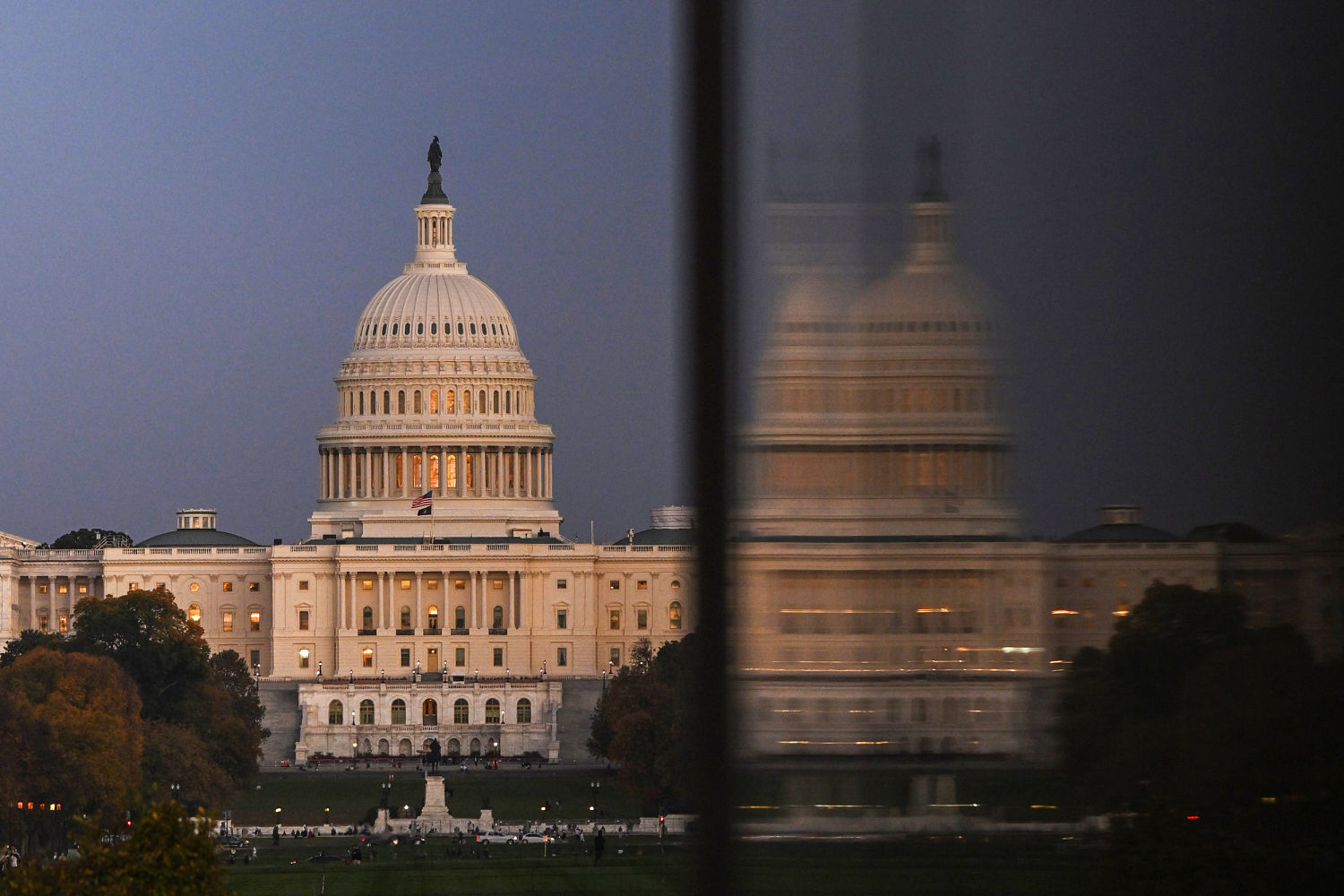
Democrats secured unified control of the United States Congress by flipping key battleground seats in both the House of Representatives and the Senate, propelled by a wave of diverse, first-time candidates who shattered long-standing demographic barriers across the country. While surface-level coverage celebrates the historic firsts on election night, the real story lies in the mechanical shift of suburban voter coalitions, targeted ground-game investments, and the immediate legislative reality facing a narrow majority.
The victory did not happen by accident. It was the result of a multi-cycle strategic overhaul that prioritized local infrastructure over nationalized media spectacles.
The Structural Mechanics Behind the Congressional Sweep
Political pundits love a simple narrative. They want to point to a single gaffe, a sudden shift in gas prices, or one viral debate moment to explain why millions of people changed their minds at the ballot box.
After covering Washington for thirty years, I can tell you that national waves rarely work that way. The reclamation of full congressional control was built precinct by precinct, months before a single mail-in ballot was cast. When a party wins both chambers simultaneously, it means they successfully solved the hardest puzzle in modern American politics—aligning the disparate turnout engines of urban centers with the unpredictable persuasion metrics of outer-ring suburbs.
In the House, the path to the majority ran directly through districts that had been drawn to favor incumbents. Redistricting cycles typically lock in partisan advantages for a decade, making sweeping reversals exceptionally rare. Yet Democratic strategists bypassed traditional top-down television ad buys in favor of hyper-local digital organizing and sustained field offices that opened over a year before Election Day.
They treated midterm and off-year voter drop-off as an operational failure rather than an inevitability. By embedding organizers directly into community hubs, unions, and local civic associations, the party neutralized the enthusiasm gap that usually plagues the incumbent president's coalition.
The Senate map presented an entirely different set of structural hurdles. Defending vulnerable seats in purple and red-leaning states while simultaneously mounting credible offenses in traditionally conservative territory requires immense financial discipline. Rather than spreading resources thin across a dozen long-shot races, national committees consolidated capital early into a handful of high-leverage states where demographic shifts had outpaced existing voter registration rolls.
The Suburban Realignment
The decisive factor across both chambers was the continued evolution of the American suburb. For decades, suburban counties served as the reliable firewall for fiscal conservatives. That firewall has not merely cracked; it has fundamentally reconfigured.
College-educated voters, driven by concerns over institutional stability, reproductive healthcare access, and public education funding, broke decisively toward Democratic challengers. More importantly, they showed up in numbers that rivaled presidential turnout models.
Consider a hypothetical swing district in the Midwest, composed of an aging industrial core surrounded by rapidly expanding medical and tech-corridor suburbs. Ten years ago, a candidate could win that district by running up the score in the outer townships while conceding the urban center. Today, those outer townships look and vote like the city core, leaving traditional partisan playbooks obsolete.
Beyond the Headlines of Historic Firsts
Every election cycle produces a flurry of press releases touting historic milestones. The first candidate of a specific background to represent a state, the youngest person elected to a particular delegation, or the breaking of a century-old gender barrier.
These moments matter deeply. Representation alters the internal dynamics of congressional committees, shifts the priorities of legislative drafting, and signals to marginalized communities that the levers of power are accessible. When the demographic makeup of the Capitol begins to mirror the actual population of the country, the definition of a "kitchen-table issue" expands automatically.
However, seasoned observers know that biographical milestones do not automatically translate into legislative power.
When historic candidates arrive in Washington, they immediately confront an institution designed to reward seniority above all else. Committee chairs, subcommittee gavels, and spots on high-profile panels like Ways and Means or Appropriations are distributed based on tenure and institutional loyalty, not the excitement of an election-night victory speech.
- Freshman reality: Newly elected members spend their first term learning arcane parliamentary rules while fighting for staff budgets and office space.
- Caucus friction: A more diverse caucus inherently brings a wider spectrum of ideological demands, making unified floor votes harder to whip.
- District vulnerability: Many candidates who made history did so by winning razor-thin victories in purple districts, meaning they must immediately pivot to defending their seats for the next cycle.
Celebrating the barrier-breakers is warranted, provided we do not confuse winning an election with reforming the system. The true test of these historic victories begins when the ceremonial swearing-in ends and the grueling work of amending bills in windowless committee rooms starts.
The Recruitment Shift
What made this crop of barrier-breaking candidates different from previous cycles was how they were recruited. Historically, party leadership favored self-funders—wealthy business owners or established lawyers who could write a seven-figure check to kickstart their own campaigns.
That model inadvertently filtered out working-class candidates, women, and people of color who lacked access to generational wealth or elite donor networks. Over the last several cycles, independent recruitment pipelines and grassroots fundraising platforms shattered the monopoly of the self-funder. Small-dollar donations, aggregated across millions of individual contributors, allowed first-time candidates with backgrounds in public teaching, nursing, and local organizing to outraise entrenched incumbents.
What Unified Control Actually Buys in Washington
Controlling the White House, the Senate, and the House of Representatives creates the illusion of unchecked authority. Voters who delivered this trifecta expect rapid, sweeping legislative action on the promises that animated their turnout.
Washington rarely cooperates with public expectations.
Even with full control of Congress, the governing party runs headfirst into the institutional speed bumps built into the United States Senate. Unless a majority is willing to dismantle the legislative filibuster—a move that historically triggers fierce resistance from institutionalists within the caucus—most major policy initiatives still require sixty votes to advance.
This mathematical reality forces a sharp pivot in strategy. Instead of passing broad, standalone policy bills, unified control primarily unlocks three specific mechanisms of power.
| Mechanism | Practical Impact | Institutional Limit |
|---|---|---|
| Budget Reconciliation | Allows passage of tax, spending, and debt-limit bills with a simple 51-vote majority. | Strictly bound by the Byrd Rule; non-budgetary policy riders are stripped out. |
| Executive and Judicial Confirmations | Guarantees rapid approval of federal judges, cabinet secretaries, and agency heads. | Limited by the pace of vetting and the availability of vacant seats. |
| Congressional Oversight | Transfers subpoena power and committee chairmanships to the majority party. | Generates headlines and accountability, but does not directly enact new law. |
The immediate priority for Democratic leadership will not be sweeping ideological wish lists. It will be judicial confirmations and budget reconciliation. Securing lifetime appointments to federal district and appellate courts shapes the legal architecture of the country for decades, long after congressional majorities inevitably flip back.
Simultaneously, full control hands the gavel of every House and Senate oversight committee to Democrats. Investigations that were stalled, subpoenas that were ignored, and regulatory agencies that operated with minimal scrutiny will suddenly face aggressive public hearings. In modern Washington, the power to compel testimony and control the daily news cycle through committee hearings is nearly as potent as passing legislation.
The Internal Fault Lines Threatening the Majority
Winning a majority is an exercise in addition; governing with one is an exercise in subtraction.
The very coalition that delivered full control of Congress contains deep ideological fractures that will surface the moment leadership drafts its first major legislative package. On one side sits a growing progressive wing representing safe urban districts, demanding bold structural reforms on healthcare, climate policy, and economic regulation. On the other side stands a crucial bloc of front-line moderates who won in swing districts by promising fiscal restraint and bipartisan cooperation.
Leadership cannot pass a single partisan bill without both factions voting in lockstep.
If the majority margin in the House is narrow—a handful of seats—every single member effectively holds a veto over the Speaker's agenda. We have seen this dynamic paralyze previous congresses, where small factions extract massive concessions in exchange for routine procedural votes.
The Economic Tightrope
Complicating this internal balancing act is the broader economic environment. Voters reward parties with unified control when they want problems solved, and they punish them mercilessly when economic anxieties persist.
If inflation ticks upward, interest rates remain elevated, or localized job markets soften, swing-district incumbents will face intense pressure to distance themselves from national party leadership. They will demand targeted tax relief, deregulation for local industries, and visible checks on federal spending. Progressive members, conversely, will argue that pulling back on public investment depresses economic growth and alienates the core base voters needed for future turnout.
Navigating that tension requires surgical legislative management. One miscalculation on a must-pass spending bill can trigger a government shutdown, instantly erasing the political goodwill earned on election night.
The Counter-Argument Most Analysts Miss
In the immediate aftermath of a sweeping Democratic victory, the dominant narrative frames the result as a permanent demographic shift—the inevitable triumph of a younger, more diverse electorate over an aging opposition.
History urges extreme caution against buying into permanent-majority theories.
American politics operates like a pendulum, not a ratchet. Over the last forty years, unified control of Washington has repeatedly proven to be fragile and short-lived. Voters possess a deep-seated skepticism toward single-party rule, often using the very next election cycle to restore divided government as a check on executive and legislative overreach.
Furthermore, beneath the headline victories, warning signs persist for Democrats. While suburban margins expanded, certain precincts with high concentrations of working-class voters—across racial lines—continued to show tightening margins. Economic populism remains a potent, unpredictable force that does not fit neatly into traditional partisan boxes. If Democrats interpret their congressional sweep as a mandate to ignore blue-collar economic grievances in favor of purely cultural or institutional priorities, their majority will face an immediate existential threat in the next cycle.
The opposition party, meanwhile, will not remain static. Defeat forces structural adaptation. Just as Democrats rebuilt their suburban ground game after past losses, conservative strategists are already analyzing precinct-level data to recalibrate their candidate recruitment, early-voting operations, and messaging strategies.
What Happens When the Dust Settles
The confetti from historic election nights sweeps up quickly, replaced by the cold math of legislative whipping and the relentless ticking of the two-year congressional clock.
For voters who handed Democrats full control of Congress, the metric of success is straightforward. They expect tangible improvements in the cost of living, protection of fundamental rights, and a functioning government that avoids manufactured crises. For the historic class of newly elected lawmakers, the challenge is proving that breaking barriers at the ballot box translates into breaking gridlock on the floor.
Power in Washington is never owned; it is only rented from an impatient electorate, and the first payment is due the moment the new Congress gavels into session.