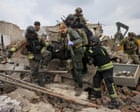
At least 26 civilians died while waiting in line for basic humanitarian supplies after a Russian strike hit an aid distribution centre in eastern Ukraine. Let that sink in for a second. People weren't gathered at a military barracks, an ammunition depot, or a command post—they were standing outside trying to get food, hygiene kits, and medicine to survive another week in a war zone.
Kyiv officials immediately confirmed the death toll following the blast, which tore through the crowd in the Donetsk region, an area that has absorbed the absolute worst of Russia's grinding offensive. Rescue workers spent hours pulling survivors and bodies from the twisted metal and shattered concrete. Dozens more suffered severe shrapnel wounds, burns, and blast trauma, overwhelming local medical facilities that were already stretched thin. If you enjoyed this article, you should read: this related article.
Most news reports give you the casualty count, quote an official condemnation, and move on to the next headline within twelve hours. That's a massive disservice to anyone trying to understand what's actually happening on the ground. This wasn't a freak accident or a stray artillery shell drifting a few hundred meters off course. It's part of a deliberate, documented pattern of Russian aerial bombardment targeting civilian infrastructure and humanitarian gathering points across frontline Ukrainian towns.
How Russian Glide Bombs Changed the Frontline Reality
If you want to understand how a Russian strike on a Ukrainian aid centre can kill dozens of people in a single second, you need to look at the weapon behind these attacks. Over the past two years, Russia completely shifted its aerial tactics. Instead of flying expensive fighter-bombers directly over Ukrainian air defenses—where they get shot down—Russian pilots launch heavy Soviet-era "dumb" bombs fitted with cheap, bolted-on wing kits and satellite guidance systems. For another angle on this story, check out the latest coverage from Al Jazeera.
Military analysts call them KABs or UMPKs. You can think of them as half-ton to three-ton bricks with pop-out wings.
Here is why they're so devastating for civilians waiting at aid centres:
- Massive payloads: A standard 155mm artillery shell carries roughly 10 kilograms of high explosives. A single FAB-500 glide bomb packs over 200 kilograms of explosive filler, while the larger FAB-1500 and FAB-3000 variants carry vastly more destructive power.
- Zero warning time: Unlike Shahed drones, which buzz loudly for hours and trigger air raid sirens across multiple regions, glide bombs are released from Russian aircraft flying 40 to 70 kilometers behind the front lines. They fall silently and strike within minutes.
- Notorious inaccuracy: While the guidance kits turn free-fall bombs into standoff weapons, their circular error probable—basically the radius where the bomb is likely to land—is wide enough that hitting a crowded residential block or an aid hub is virtually guaranteed when aimed near populated towns.
When a weapon like that hits a crowd of people standing in the open for humanitarian relief, the survival rate drops to near zero. Concrete walls don't stop the shockwave. Glass turns into lethal projectiles across a three-block radius.
Why Humanitarian Aid Centres Keep Getting Hit
You might wonder why aid organizations keep operating in towns within range of Russian glide bombs. Honestly, they don't have much of a choice. Millions of people—mostly elderly residents, people with disabilities, and families without the financial means to relocate to western Ukraine or abroad—still live in frontline communities across Donetsk, Kharkiv, Kherson, and Zaporizhzhia.
Local utilities in these towns are almost always destroyed. Water pipes are ruptured, electrical substations are flattened, and commercial grocery stores closed months or years ago. Without humanitarian convoys bringing bread, bottled water, generators, and basic medication, those residents literally starve.
Aid workers know the risks better than anyone. Whenever a humanitarian truck rolls into a frontline settlement, word spreads fast. Even when volunteers try to stagger distribution times or move operations into basements and semi-destroyed schools, a crowd inevitably forms. Russian reconnaissance drones—like the Orlan-10 or Zala—hover constantly at high altitudes over these towns, streaming live video back to Russian artillery and aviation commanders.
When an operator sees a crowd of fifty or a hundred people gathered outside a municipal building or a post office, they don't always wait to verify whether those people are soldiers or pensioners holding plastic shopping bags. In fact, international monitoring groups have repeatedly flagged how predictable civilian gatherings have become prime targets.
The Pattern Across Eastern Ukraine
This strike killing at least 26 people echoes several well-documented tragedies since the full-scale invasion began in February 2022. Think back to the October 2023 missile strike on a café and grocery store in the village of Hroza in the Kharkiv region, which killed 59 civilians attending a wake. Or consider the repeated shelling of humanitarian aid queues in Kherson after Ukrainian forces liberated the city, where residents lined up for bread and water only to be hit by Grad rockets and mortar fire from across the Dnipro River.
The United Nations Human Rights Monitoring Mission in Ukraine (HRMMU) has verified thousands of civilian deaths since 2022, consistently noting that the vast majority of casualties result from explosive weapons with wide-area effects used in populated areas. In its regular reports, the UN has stressed that Russian forces frequently launch strikes into towns where no active military combat is occurring at the moment of impact.
What International Law Actually Says About Aid Strikes
Under the Geneva Conventions and customary international humanitarian law, civilians and humanitarian relief personnel are explicitly protected. Combatants are legally required to follow three core principles before pulling a trigger or releasing a bomb:
- Distinction: Parties to a conflict must at all times distinguish between civilians and combatants, and between civilian objects and military objectives.
- Proportionality: Even if a legitimate military target is nearby, an attack is illegal if the expected civilian loss of life is excessive in relation to the concrete military advantage anticipated.
- Precaution: Commanders must do everything feasible to verify that targets are military objectives and give effective advance warning when attacks may affect the civilian population.
Moscow's standard response whenever a strike wipes out an aid centre, a hospital, or an apartment building is predictable. Russian defense officials either ignore the incident entirely, claim without evidence that Ukrainian air defense missiles caused the damage, or assert that the building was secretly housing "foreign mercenaries" or Ukrainian troops.
Independent open-source intelligence (OSINT) investigators, satellite imagery analysts, and war crimes prosecutors rarely buy those excuses. By cross-referencing crater sizes, shrapnel patterns, local surveillance footage, and drone telemetry, investigators from groups like Bellingcat and Human Rights Watch have repeatedly proved that Russian munitions struck purely civilian gatherings.
The Invisible Toll on Aid Workers and Survivors
When 26 people die in a single attack, the numbers dominate the news cycle. What rarely gets covered is what happens the next morning in that same town.
First, humanitarian operations freeze. Organizations like the Ukrainian Red Cross, World Central Kitchen, and dozens of smaller local volunteer networks have to immediately suspend deliveries in the area to assess security protocols. That means thousands of other residents who weren't at the blast site suddenly lose access to clean water and food.
Second, emergency responders become targets themselves. Russian forces have frequently employed "double-tap" strikes—hitting a location once, waiting 15 to 30 minutes for paramedics, firefighters, and police to arrive, and then striking the exact same coordinates a second time. Ukraine's State Emergency Service (DSNS) has lost dozens of rescue workers to this exact tactic while they were trying to dig civilians out from under rubble.
Third, the psychological trauma ripples outward. Survivors of blast injuries deal with traumatic brain injuries, permanent hearing loss, and severe PTSD, all while living in towns where basic psychiatric care doesn't exist.
What Needs to Happen to Stop These Mass Casualty Events
Condemnations from foreign ministries don't intercept glide bombs. If Western allies and international organizations want to prevent the next mass-casualty strike on a Ukrainian aid centre, the solutions are entirely practical and well within reach:
- Target the launch platforms, not just the bombs: You can't realistically shoot down every cheap glide bomb once it's in the air. The only effective defense is forcing Russian Su-34 fighter-bombers further back from the front lines by providing Ukraine with longer-range air defense systems and lifting restrictions on striking Russian military airfields inside Russian territory.
- Fund decentralized aid delivery: Instead of forcing 100 people to gather at one central distribution point, international donors need to fund smaller, mobile volunteer teams that deliver aid boxes door-to-door in armored vehicles. It costs more in fuel and vehicles, but it eliminates the large crowds that draw Russian reconnaissance drones.
- Accelerate war crimes documentation: Prosecutors at the International Criminal Court and Ukraine's Office of the Prosecutor General rely on immediate forensic evidence. Supporting local investigators with rapid-deployment satellite imagery, acoustic sensors, and digital archiving ensures that commanders who order strikes on civilian aid hubs eventually face arrest warrants and asset seizures.
Every time a Russian glide bomb hits a line of people waiting for groceries, the strategy is clear: make life in frontline Ukrainian towns so unbearable and lethal that entire regions empty out. Recognizing how these weapons work, why aid hubs are vulnerable, and what actually protects civilians is the bare minimum required to hold the perpetrators accountable.