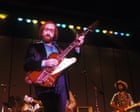
Dave Mason didn't just play in one of the most influential bands of the 1960s. He lived a dozen musical lives, often simultaneously. When news broke that the Traffic co-founder died at age 79 on April 19, 2026, the headlines focused on his "star-studded" solo career. But that's only half the story. Mason was the guy who was everywhere. If you own a classic rock record from the late 60s or 70s, there's a statistical certainty he's on it, whether he's playing the acoustic guitar on Jimi Hendrix’s "All Along the Watchtower" or the shehnai on the Rolling Stones' "Street Fighting Man."
He died peacefully at his home in Gardnerville, Nevada. According to a statement from his family, he'd just cooked a "storybook" dinner with his wife, Winifred, and sat down for a nap. It was a quiet exit for a man whose professional life was defined by loud, creative friction and a restless need to move on to the next thing.
The friction that fueled Traffic
Most people know Dave Mason as the "other guy" in Traffic, the one who wasn't Steve Winwood. That’s a mistake. While Winwood was the soul-drenched prodigy, Mason was the pop architect. He wrote "Hole in My Shoe," which hit number two in the UK and basically defined the psychedelic whimsy of 1967.
The problem was that Mason and Winwood didn't see eye to eye. At all. Winwood wanted the band to be a communal jam session; Mason would show up with a finished song and tell everyone exactly what to play. It’s a classic case of creative clashing. He left the band before their debut album, Mr. Fantasy, was even out. Then he came back. Then he left again. Then he came back for the second album and dropped "Feelin' Alright?"—a song that became a massive hit for Joe Cocker and about a thousand other people.
If you’ve ever felt like you didn’t fit into your own group, Mason is your patron saint. He knew his worth, even when it meant being the "difficult" one. He wasn't interested in being a background player in Winwood's world. He wanted his own.
The guest list of a lifetime
After he left Traffic for good (mostly), Mason became the most sought-after session player in the business. This wasn't just "leveraging" connections—it was about being a monster on the guitar and having an ear for what a song needed.
Look at his 1968-1970 run. It’s insane.
- Jimi Hendrix: That iconic 12-string acoustic opening on "All Along the Watchtower"? That’s Mason. He also sang on "Crosstown Traffic."
- The Rolling Stones: He played the shehnai (an Indian reed instrument) and bass drum on "Street Fighting Man."
- George Harrison: He was part of the massive ensemble that recorded All Things Must Pass.
- Derek and the Dominos: He was briefly in the group with Eric Clapton before they recorded Layla.
- Fleetwood Mac: Much later, in the 90s, he joined the band for the Time album. It wasn't the most peaceful era—Christine McVie later called the relationship "acrimonious"—but Mason didn't care. He showed up, played, and moved on.
Mason’s style was about melody over flash. He didn't need to play a million notes a second to be effective. He understood that a great guitar part is something you can hum.
Breaking big on his own terms
Mason moved to the US in 1969, and that's where his solo career actually took flight. His debut, Alone Together, featured a marble-patterned vinyl and some of the best songwriting of his life. "Only You Know and I Know" became a staple.
But his biggest commercial moment didn't come until 1977 with the album Let It Flow. The song "We Just Disagree" is still a monster on classic rock radio. It’s a perfect song—melancholy, harmony-heavy, and deeply relatable. It peaked at number 12 on the Billboard Hot 100, but its longevity is what’s impressive. It’s one of those tracks that feels like it’s always existed.
Interestingly, Mason wasn't just a music guy. He co-founded RKS Guitars because he thought traditional guitar designs were ergonomically "garbage." He was always looking for a better way to do things, even if it meant disrupting the status quo.
Why you should care about his legacy now
We live in an era where everyone is told to "find their tribe" and stay there. Dave Mason did the opposite. He was a nomad. He’d join a band, realize it wasn't working, and leave. He’d play on a legendary record, take no credit in the common zeitgeist, and just go home.
He announced his retirement from touring in 2025 because of heart issues, but he never really stopped being part of the conversation. His memoir, Only You Know & I Know, released in 2024, gave a brutally honest look at the egos and the madness of the 70s rock scene. He didn't sugarcoat the "acrimony" or the "friction." He just told it like it was.
If you want to honor his memory, don't just put on a "Greatest Hits" playlist. Go deeper. Listen to the acoustic textures on Electric Ladyland. Put on Traffic's self-titled second album and listen to how his pop sensibilities fought against Winwood’s jazz-rock tendencies. That tension is where the magic happened.
The next step is simple: go listen to "Look at You, Look at Me" from Alone Together. It’s six minutes of pure guitar perfection that proves Dave Mason wasn't just a "co-founder"—he was the heartbeat of a specific, gritty kind of rock and roll that doesn't exist anymore.