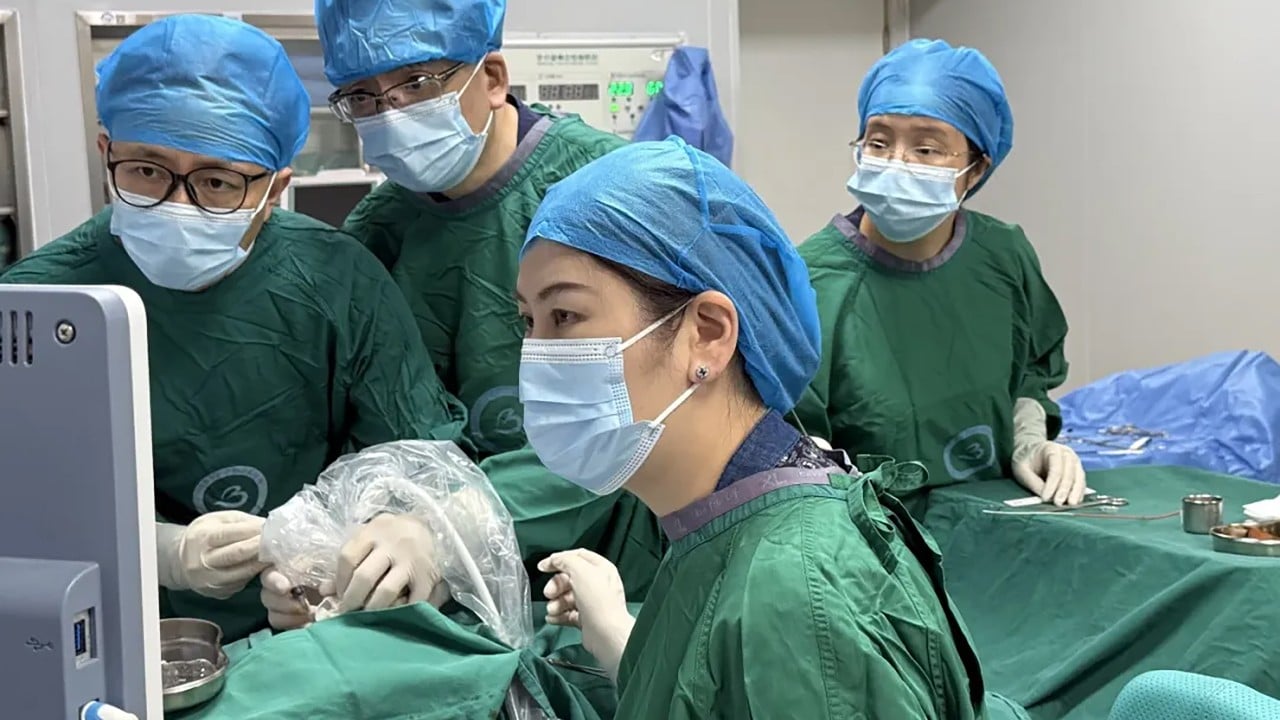
Darkness in a hospital does not arrive slowly. It does not wait for twilight to pool in the corners of the room before creeping across the linoleum. When the fuel runs out, the transition is absolute. One second, the fluorescent tubes overhead hum with a sterile, white insistence, washing out the pain on the faces of the weary. The next, there is only the sudden, hollow silence of dying machinery, followed by the frantic scratch of a match or the pale, trembling beam of a mobile phone screen held aloft by a nurse whose shift should have ended four hours ago.
Yemen does not merely experience power outages. It endures a systematic starvation of current. Meanwhile, you can explore similar developments here: The Whisper in the Laboratory And the Shadows We Forgot to Fear.
To understand what happens when a neonatal ward loses grid electricity in Sanaa or Taiz, you have to abandon the abstract language of infrastructure reports. You have to strip away dry statistics about megawatts, grid failures, and fuel shortages. Instead, you have to stand in a room where the air is thick with humidity and the quiet breathing of a premature infant depends entirely on the rhythmic hiss of a motorized ventilator.
Then, the hum stops. To understand the bigger picture, we recommend the recent analysis by Mayo Clinic.
In that fraction of a second, the invisible architecture keeping a fragile life tethered to this world vanishes. Monitors flatline into silence—not the flatline of a failing heart, but the flatline of a dead screen. The oxygen concentrators wheeze once, twice, and then fall still.
Dr. Amin stands at the nurses' station in the pediatric intensive care unit, his fingers white-knuckled against the edge of the metal desk. He knows the routine by heart now, a tragic choreography born of a decade-long war that has hollowed out the nation's medical spine. There is no diesel for the backup generators. The hospital bought its last drums of fuel three weeks ago on the black market, paying ten times the pre-war price, draining an account that was already empty.
"Get the manual ambu bags," he says. His voice is flat, stripped of panic by sheer repetition. There is no room left for panic when every single night is an emergency room triage of the dark.
A resident physician and two exhausted nurses spring into motion. They do not run; running wastes oxygen and burns through calories they cannot afford to lose in a city where clean water is a luxury and malnutrition haunts every household. They move with the deliberate, agonizing precision of bomb disposal technicians. They approach the incubators. They disconnect the tubes from the silent, useless machines. They begin to squeeze rubber ventilation bags by hand.
In bed number four lies Fatima, a six-day-old girl born weighing barely three pounds. Her lungs are underdeveloped, her skin translucent enough to trace the fragile blue rivers of her veins. She cannot breathe on her own. If Dr. Amin's resident stops squeezing that rubber bag for sixty seconds—just sixty seconds to wipe the sweat from his stinging eyes—Fatima's chest will stop rising. The pink will drain from her lips. The war, which began long before she drew her first breath, will claim her simply because the diesel pumps three hundred miles away in Marib have nothing left to give.
This is the reality of Yemen's health system today. It is a system operating on borrowed time, flickering candles, and the sheer, stubborn muscle memory of doctors and nurses who refuse to abandon posts that no longer pay them.
The numbers tell a staggering story of collapse, yet they fail to capture the human weight. According to health assessments and humanitarian monitoring groups, less than half of all health facilities in Yemen are fully functioning. The rest limp along partially functional or are shuttered entirely, reduced to ghost wards where shattered windowpanes let in the desert dust and stray cats prowl through empty dispensaries.
Behind these percentages lie logistical nightmares that defy simple solutions. The blockade, the fractured political authority, the collapse of the central banking system, and the destruction of roads and bridges have turned the delivery of a single drum of diesel into an odyssey. When fuel tankers do manage to navigate military checkpoints and cratered highways, the cost is often prohibitive. Hospitals that once relied on subsidized state fuel allocations now find themselves at the mercy of speculative traders.
Consider the mathematics of survival for a regional hospital in Al-Hudaydah. To keep the intensive care unit, the operating theaters, and the cold chain for vaccines running for just twenty-four hours, the facility requires hundreds of liters of diesel. When the hospital budget is a blank page and international aid shipments are delayed by bureaucratic wrangling or active combat, administrators face an agonizing calculus. Do they buy fuel to run the incubators, or do they buy saline drips and antibiotics? Do they pay the skeleton crew of surgeons who have not seen a regular salary in years, or do they keep the generator humming for one more night?
There is no correct answer to this equation. There is only a slow, agonizing descent into compromise.
Down the hall from the neonatal unit, in a dimly lit surgical prep room, another kind of battle is being fought against the encroaching dark. Dr. Mariam is scrubbing her hands for her fourth emergency appendectomy of the night. The water from the tap is a rusty brown trickle, loaded with sediment, but it is all they have. She splashes it over her forearms, her eyes fixed on the small, rechargeable LED headlamp strapped securely across her forehead.
The main operating theater lights died an hour ago when the municipal grid gave out with a distant, metallic pop. Now, the room is illuminated by a patchwork of headlamps and the harsh, blue-white glow of three smartphones propped up on IV poles by cooperative nurses.
"Scalpel," Dr. Mariam says quietly.
Her hands are steady, guided by twenty years of muscle memory acquired in better days, when hospitals had backup generators that kicked on automatically and medicine cabinets stocked with imported sutures. Today, she is sewing skin with whatever thread the logistics pipeline managed to smuggle past the latest blockade. She is operating by the light of a cell phone battery that is currently reading fourteen percent.
If the battery dies before the incision is closed, she will have to finish the procedure by the light of a second phone, passed gingerly from a nurse whose hands are already slick with sweat. If that phone dies too, they will rely on flashlights. And if those fail, they will work in a twilight so deep that surgery becomes an act of blind faith, relying entirely on the sensitive tips of sterile-gloved fingers to navigate the hidden geography of the human body.
This is what it means when an entire country's medical infrastructure is starved of energy. Healthcare ceases to be a systemic public service rooted in advanced technology and sterile precision. It regresses into an artisanal craft of survival, practiced by candlelight with scavenged tools and sheer human grit.
The human cost of these power outages extends far beyond the dramatic theater of the emergency room. It ripples out into the community in ways that are harder to track, yet equally lethal.
In the vaccination wards, refrigerators sit dark and warm. The cold chain—that delicate, uninterrupted chain of refrigerated transport and storage required to keep vaccines potent—has been shattered in dozens of districts. Vaccines against polio, measles, and diphtheria require steady refrigeration from the moment they leave the manufacturing plant to the moment they are administered to a child's arm. When the power cuts out for days at a time, and backup generators run out of fuel, expensive shipments of life-saving immunizations spoil in the dark.
A spoiled vaccine looks identical to a potent one. It sits in its glass vial, clear and harmless, but its protective power has evaporated. When a nurse administers that dead vaccine to a toddler in a rural clinic powered by a sputtering solar panel, everyone believes the child is safe. Months later, when a measles outbreak tears through the village, leaving a trail of quiet graves behind, the connection to a power outage three months prior in a municipal warehouse is rarely made. But the causal chain is unbroken. The blackout killed just as surely as a stray shell.
Chronic disease patients face a similar, slow-motion catastrophe. Kidney failure patients who require regular dialysis three times a week find themselves playing a macabre lottery. If the dialysis clinic's generator fails mid-treatment—a common occurrence when spare parts for aging German-made generators are impossible to import due to trade restrictions—the procedure must be aborted. Toxins build up in the blood. Fluid floods the lungs. The patient leaves the clinic not cleansed and renewed, but sicker than when they arrived, their body slowly poisoning itself from the inside out because the electricity flickered off for twenty minutes.
Yet, amid this cascading failure, something extraordinary and tragic happens every single day in Yemen's hospitals. People refuse to stop trying.
It would be easy for Dr. Amin to walk away. Many have. Thousands of doctors, nurses, specialists, and technicians have fled the country over the years, seeking refuge in Oman, Saudi Arabia, Europe, or North America, trading the unbearable weight of an collapsing health system for the quiet stability of a foreign clinic. Those who remain are often called heroes in international press releases, a word that feels uncomfortably lightweight when applied to people who are simply too stubborn, too loyal, or too broke to leave.
They are not heroes in the cinematic sense. They are tired, frightened, and frequently angry. They argue with administrators over empty fuel ledgers. They weep quietly in supply closets when a patient dies because an oxygen tank ran dry ten minutes before the ambulance could navigate a closed checkpoint. They borrow money from relatives to buy groceries because their government salaries have been unpaid for months.
And then, when the sun goes down and the power fails once again, they pick up their manual ventilation bags. They strap on their LED headlamps. They prop their smartphones up on IV poles.
In bed number four, little Fatima begins to stir. The steady, rhythmic pressure of the rubber bag has kept oxygen flowing into her tiny, fragile lungs through the darkest hours of the night. The sky outside the high, grimy windows of the ward is beginning to trade its bruised purple for a pale, watery gray. Somewhere in the distance, the faint, stuttering cough of a municipal generator kicks into life, sending a shudder through the floorboards as a few dim overhead lights flicker, struggle, and finally hold their glow.
Dr. Amin lets out a long, shuddering breath. He lowers his hands, his fingers cramped and trembling from hours of continuous squeezing. He checks Fatima's monitors as the screens boot up, blinking back to life with green lines and steady numeric readouts. Her heart rate is stable. Her oxygen saturation is holding.
For tonight, she has beaten the dark.
Tomorrow, the fuel will run out again. The generators will cough and die. The operating theaters will plunge back into the blue-white glow of smartphone screens, and Dr. Amin and his exhausted nurses will wash their hands in rusty water, step up to the tables, and begin the work all over again.