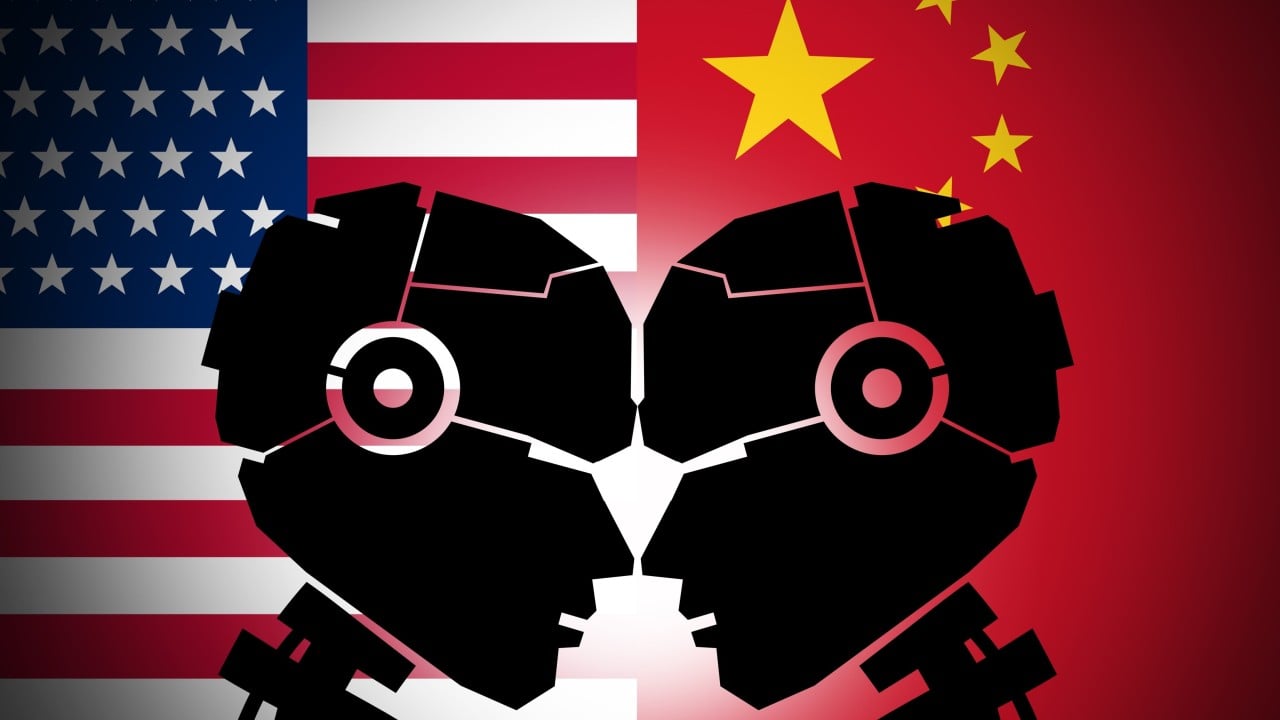
The global tech rivalry is not a battle of identical forces. While the United States dominates headlines with speculative artificial intelligence, venture-backed software, and consumer platforms, China has quietly captured the unglamorous underbelly of global technology: industrial manufacturing, hardware supply chains, and physical infrastructure. This imbalance creates a dangerous illusion of Western dominance built on software code, while the physical hardware that runs that code remains firmly under Eastern control. Wall Street celebrates trillion-dollar market caps, but Beijing is securing the physical choke points of the next century.
The Software Trap
American venture capital has a profound bias. For thirty years, Sand Hill Road has chased software-as-a-service (SaaS) business models because they offer eighty percent gross margins and infinite scalability.
Hardware is hard. It requires factories, permits, raw materials, and blue-collar labor. Because of this, Western investors starved physical innovation of capital, preferring to fund another social media app or food delivery startup.
We built code. But code requires silicon, copper, and factories to exist.
This financial preference created a top-heavy economy. Silicon Valley excels at creating the digital "brain"—the algorithms, the consumer interfaces, and the generative models. Yet, the physical "body" that houses this brain is manufactured almost entirely in Asia. When a country outsources its manufacturing, it eventually loses the engineering capability to design the next generation of physical products.
Silicon Valley executives believed they could forever remain the architects while outsourcing the construction. They underestimated how quickly the builders would learn to design their own structures. Today, Chinese firms do not just assemble iPhones; they design high-end electric vehicles, advanced batteries, and telecommunications infrastructure that Western competitors struggle to match on both cost and quality.
The Silent Rise of the Little Giants
While Washington focused on regulating social media algorithms and debating the ethics of chatbots, Beijing quietly executed a structural pivot. In 2021, the Chinese government launched a massive crackdown on its own consumer internet giants. Companies like Alibaba, Tencent, and Didi were reined in, fined, and forced to restructure.
This was not an attack on technology itself. It was a reallocation of national priorities.
Beijing decided that consumer internet platforms, delivery apps, and video game companies were distractions. They wanted "hard tech." The Chinese Ministry of Industry and Information Technology began identifying and funding thousands of small, highly specialized firms under a program called "Little Giants."
These are not household names. They do not have flashy offices in Shenzhen or Silicon Valley, and they do not pitch to venture capitalists on podcasts. Instead, they make specialized sensors, industrial robotics, advanced materials, and high-purity chemicals.
By focusing on these obscure niches, China has built an unyielding grip on the middle of the global supply chain. If an American company wants to build a advanced medical device, an electric vehicle, or a military drone, they will inevitably find that several critical components can only be sourced from a state-backed Chinese "Little Giant."
The United States has no equivalent program. The American system relies on the market to allocate capital, which means money flows to whatever generates the quickest return. In a system like that, a company making high-purity silicon valves for chemical manufacturing will always lose funding to a speculative cryptocurrency platform or a generative AI startup.
The Hardware Bottleneck
The current obsession with generative artificial intelligence highlights this structural vulnerability. The US leads in large language models, but those models require immense computational power.
This power relies on specialized chips.
While Nvidia designs these chips in California, they are manufactured by TSMC in Taiwan, using specialized chemicals from Japan and lithography machines from the Netherlands. The assembly, packaging, and testing of these chips, however, remain heavily concentrated in mainland China.
Furthermore, the power grids required to run massive AI data centers demand a massive increase in electrical transformers, high-voltage cables, and grid-scale storage batteries.
China controls the supply chains for all of these. They produce over seventy percent of the world’s lithium-ion batteries and refine the vast majority of the rare earth elements required for permanent magnets in wind turbines and electric motors.
The US is building a digital skyscraper on a physical foundation owned by its geopolitical rival.
The Myth of Clean Decoupling
Political rhetoric in Washington frequently centers on "decoupling" or "friend-shoring" supply chains. The idea is simple: move manufacturing out of China to friendly nations like Vietnam, Mexico, or India.
The reality is far more complex.
When a factory moves from Shenzhen to Hanoi or Monterrey, the supply chain does not magically transform. The new factory still imports its sub-assemblies, specialized machinery, and raw materials from China. This is "pseudo-decoupling." It adds a layer of transit, inflates costs, and creates a comforting geopolitical illusion while leaving the underlying dependency unchanged.
To truly decouple, the United States would need to rebuild its entire domestic industrial base.
That requires more than just building factories; it requires a workforce that knows how to run them. Decades of outsourcing have hollowed out American vocational expertise. The US simply lacks the army of industrial engineers, precision machinists, and factory managers required to scale advanced physical production.
The CHIPS and Science Act is a step toward addressing this, but money alone cannot buy expertise overnight. Building a semiconductor fabrication plant in Arizona is proving to be a slow, painful lesson in cultural friction, regulatory delays, and labor shortages. TSMC's struggles to staff its Phoenix facility show that throwing billions of dollars at a problem cannot instantly replicate decades of concentrated industrial ecosystem development.
The West forgot how to make things. It is a mistake that cannot be fixed with a press release or a funding round. The future belongs to those who control the physical world, and right now, that is not Silicon Valley.


