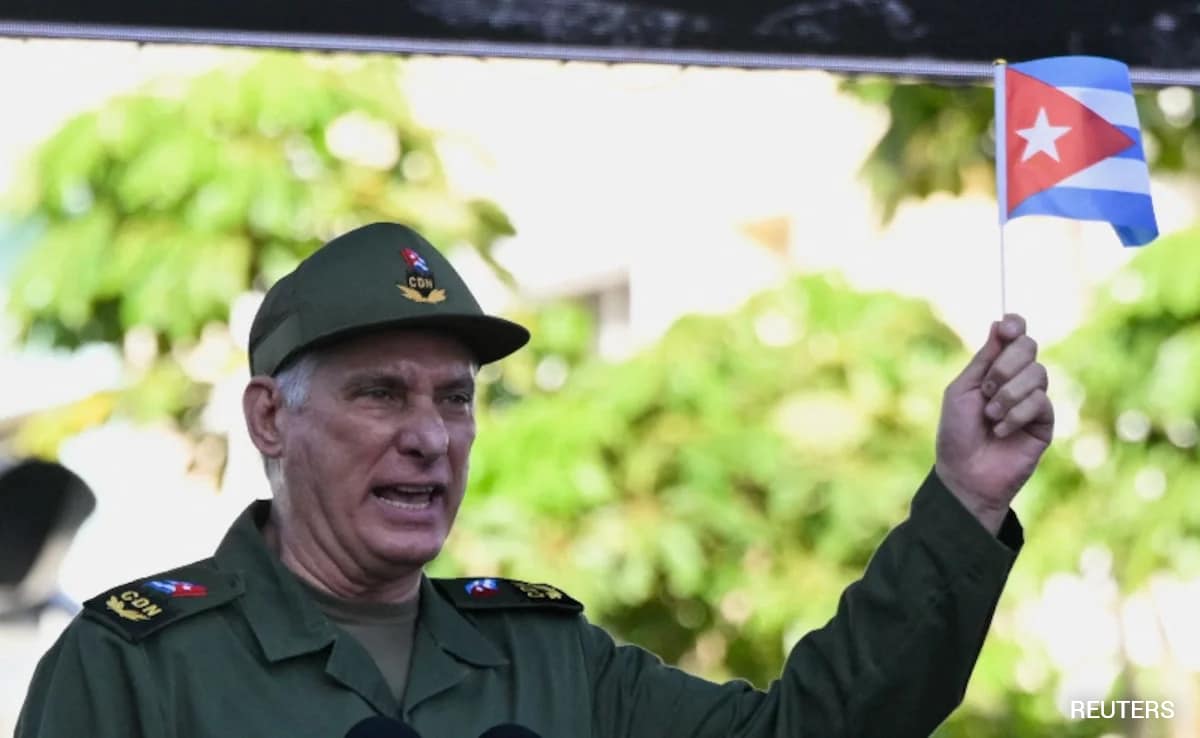
Geopolitical analysts love a good ghost story. Whenever a headline screams about a Caribbean "bloodbath" or imminent superpower clashes, the foreign policy establishment reflexively dusts off its Cold War playbook. They treat a routine, posturing press release from Havana like it is the prelude to the Cuban Missile Crisis.
It is theater. Total theater.
The lazy consensus in modern journalism insists on viewing every diplomatic spat through the lens of high-stakes military brinkmanship. They want you to believe we are constantly one misstep away from a hot war in the straits of Florida. This narrative relies on a fundamental misunderstanding of modern asymmetric deterrence and regional economic realities. The media focuses on the loud, terrifying word—"bloodbath"—while completely ignoring the quiet, structural reasons why an actual military conflict is practically impossible.
I have spent years analyzing regional security frameworks and tracking the actual flow of hardware and capital in Latin America. Let me tell you what the sensationalist reports leave out: rhetoric is the cheapest weapon a regime possesses, and the loudest threats usually come from the weakest positions.
The Logic Of Empty Rhetoric
When a state issues a hyper-dramatic warning about massive casualties in the event of an attack, it is not a sign of impending war. It is a sign that deterrence is working exactly as intended, albeit loudly.
For a smaller nation facing a massive global superpower, the primary goal of defense policy is not to win a war. The goal is to make the political and economic cost of an intervention look prohibitively expensive. In academic circles, this is known as "porcupine deterrence." You do not need to be able to defeat the bear; you just have to make swallowing you look like a painful, miserable proposition.
The mistake mainstream outlets make is treating these defensive deterrent statements as active, offensive provocations. They take the bait every single time. They print the terrifying quote, run a picture of a rusted Soviet-era tank, and imply that a shooting war is on the horizon.
Why Conventional Invasion Plans Are Obsolescent
Let us dismantle the premise of the "imminent attack" narrative using basic military logistics.
- The Cost of Occupation: Modern military history has proven that invading a country is relatively easy; holding it is an economic and political black hole. No administration in Washington is looking to bankroll a protracted stabilization effort ninety miles off the coast when domestic budgets are already strained.
- The Missing Build-Up: True military interventions require months of visible, massive logistical preparation. You cannot hide the movement of amphibious assault ships, supply chains, and tens of thousands of troops. When a headline warns of a sudden attack out of nowhere, it ignores how deployment actually works.
- The Asymmetric Reality: Smaller nations in the region have shifted their doctrines entirely away from conventional warfare. They know they cannot match a superpower in the air or on the sea. Instead, their entire strategy relies on decentralized, irregular defense networks.
When you understand this math, the idea of a sudden, unprovoked conventional assault becomes absurd. The threat of a "bloodbath" is not a prediction. It is a loud reminder of the asymmetric costs, designed specifically to keep the status quo exactly where it is.
The Real Conflict Is Handled In Banks Not On Beaches
While cable news networks try to scare you with visions of troop deployments, they miss the actual arena where this conflict is fought every single day: global finance.
The true lever of power in modern geopolitics is not kinetic force. It is treasury regulations, sanctions, and shipping registries. The modern weapon of choice is the denial of access to the global dollar clearing system.
[Diplomatic Friction]
       │
       ▼
[Financial Sanctions] ──► [Supply Chain Constraints] ──► [Economic Stagnation]
       │
       ▼
[No Kinetic Military Action Required]
Why would any superpower risk lives, billions of dollars in equipment, and massive international condemnation on a physical invasion when they can achieve the exact same strategic containment through financial isolation? They would not. The economic stranglehold is already active, quiet, and highly effective.
By focusing on fictional military scenarios, the media completely ignores the very real, very complex debate over economic statecraft. They skip the nuanced discussion on how sanctions impact civilian populations or alter trade routes with secondary partners like China or Russia, choosing instead to sell you a fantasy version of war.
Dismantling The Conventional Wisdom
Let us look at some of the questions that routinely pop up whenever these geopolitical tensions flare, and answer them without the usual media panic.
Wouldn't an internal collapse force a foreign intervention?
This is the classic "instability trigger" argument. The theory goes that if economic conditions worsen significantly, a humanitarian crisis or internal unrest would force neighboring superpowers to step in militarily.
This view completely misreads history. Regional powers have shown a massive reluctance to intervene militarily in failing states nearby. Look at the protracted crises across various Caribbean and Latin American nations over the last two decades. The preferred response is always containment, maritime interdiction, and diplomatic isolation—never boots on the ground. An internal crisis leads to refugees and regional diplomacy, not an amphibious invasion.
What about the presence of foreign adversaries like Russia or China?
Sensationalist reports love to highlight a Russian naval port call or a Chinese logistics agreement in the Caribbean as proof that a major war is brewing.
This is basic geopolitical posturing, not a military buildup. For Moscow or Beijing, establishing a minor, symbolic presence in the Western Hemisphere is a cheap way to signal to Washington that they can operate in its backyard, just as Western forces operate in the South China Sea or Eastern Europe. It is a chess move, not a battle plan. These foreign powers are not going to risk a global conflict to defend an economic liability thousands of miles away from their own borders.
The Cost Of Buying The Panic
There is a downside to taking my contrarian view. If you accept that these military threats are mostly empty theater, you risk downplaying the very real, grinding human cost of the ongoing economic war. Financial isolation does not create dramatic explosions for the evening news, but it does cause deep, systemic hardship.
But if you continue to buy into the media's "imminent war" narrative, you remain blind to how modern power actually operates. You keep looking at the horizon for warships that are never coming, while completely missing the financial and diplomatic maneuvers happening right in front of you.
Stop reading the sensationalized headlines. Stop waiting for a mid-century military clash that defies all modern logistical and economic logic. The shouting matches and the warnings of carnage are just white noise designed to keep you clicking. The real game is quiet, economic, and already decided.