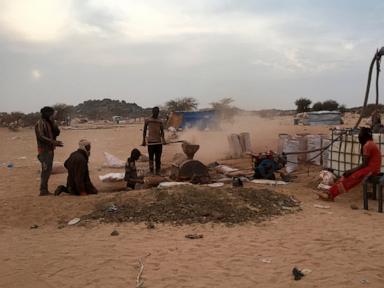
Every few months, a glossy NGO report drops with the same breathless headline. Illicit gold from conflict zones in Sudan, the Democratic Republic of the Congo, or the Sahel is still flowing into the United Arab Emirates despite shiny new due diligence rules. The predictable chorus of Western regulators, compliance consultants, and financial journalists immediately demands tighter paperwork, stricter refinery audits, and heavier sanctions on Dubai.
They are completely wrong. Not just slightly off the mark—fundamentally backwards.
The lazy consensus assumes that illicit gold enters global markets because UAE refineries lack enough compliance officers or checklists. It treats an ancient, liquid, infinitely fungible commodity like a serialized smartphone. That assumption is why multi-million-dollar regulatory frameworks keep failing, why legitimate artisanal miners are getting crushed, and why armed militias are making higher margins than ever before.
If you want to understand why conflict gold keeps bypassing UAE regulations, stop looking at the refineries in Dubai. Start looking at the physics of gold, the economics of informal mining, and the fatal flaw in Western supply chain policing.
The Myth of the Paper Trail
I have watched bullion compliance teams burn through seven-figure budgets building blockchain traceability platforms and supplier onboarding portals that collapse the second they touch dirt in East Africa.
Here is the physical reality that compliance theorists refuse to accept. Gold is chemically identical regardless of where it was dug out of the ground. Once artisanal dore bars are smelted together in a backyard furnace in Kampala, Bamako, or Nairobi, the geological fingerprint is gone. You cannot run a mass spectrometer test on a refined kilo bar in Dubai and tell whether the atoms came from a peaceful cooperative in Tanzania or a militia-controlled pit in South Kivu.
When regulators respond to smuggling reports by demanding stricter "chain of custody" documentation from UAE importers, they do not stop the gold. They simply create a thriving secondary market for forged paperwork.
Consider how the pipeline actually works on the ground:
- The Aggregation Bottleneck: Artisanal and small-scale gold mining (ASGM) accounts for roughly 20 percent of global gold supply and supports tens of millions of livelihoods. These miners operate in cash economies without bank accounts, formal land titles, or corporate registries.
- The Smuggling Arbitrage: When governments impose high export taxes or complex licensing regimes to satisfy international watchdogs, smuggling becomes pure financial survival for local traders. Moving gold across a porous border in a backpack avoids a 5 to 10 percent export levy.
- The Paperwork Laundromat: By the time that gold reaches an international transit hub, it carries pristine export declarations from a neighboring, non-conflict country. To a compliance officer sitting in an air-conditioned office, the documents check out. The origin is legally sanitized before the plane even lands at Dubai International Airport.
Demanding more paperwork from the final buyer does not fix broken governance at the mine site. It just rewards the best forgers.
Why Exclusion Policies Backfire Spectacularly
The dominant playbook pushed by the Organisation for Economic Co-operation and Development (OECD) and major bullion associations like the London Bullion Market Association (LBMA) relies on risk avoidance. When a region gets flagged for conflict financing, institutional buyers are pressured to cut ties immediately.
In theory, starving the market of buyers should dry up funding for armed groups. In practice, it hands those armed groups a monopoly.
Imagine a scenario where a legitimate, international buyer pulls out of a high-risk province because the compliance costs and reputational risks outweigh the thin margins of gold refining. The artisanal miners do not pack up their shovels and go home. They still have to feed their families. The local buyers who remain in the market are the ones who do not care about OECD guidelines, Western banking access, or NGO press releases.
Because legitimate buyers have fled, those illicit traders can now dictate the price. They buy the gold from miners at a steep discount, pocket the spread, and route it through shadow networks to refineries willing to look the other way—or through shell companies that launder the provenance into the formal system.
De-risking does not eliminate conflict gold. It lowers the price at the mine head, increases the profit margin for smugglers, and pushes the entire supply chain deeper into the dark.
The UAE Scapegoat Routine
Let us be brutally honest about why the UAE takes the brunt of the media heat.
Dubai transformed itself over two decades into one of the world’s largest physical gold trading hubs, bridging African production with Asian and Middle Eastern consumer demand. Historically, weak customs oversight and cash-based trading at the Dubai Gold Souk made it an easy target for illicit flows. The criticism was earned.
Since 2022, however, the UAE has aggressively overhauled its regulatory architecture. The Ministry of Economy implemented mandatory due diligence regulations aligned with OECD standards for all refineries. The UAE Good Delivery Standard was tightened, independent third-party audits became mandatory, and customs authorities began requiring digital provenance declarations and bank-to-bank transfers for large transactions.
Yet the smuggling reports keep coming. Why? Because critics are measuring success by the wrong metric.
Comparing Regulatory Reality vs. NGO Expectations
| Dimension | What Critics Expect | How Physical Gold Markets Work |
|---|---|---|
| Origin Verification | Mine-to-market digital tracking for every gram. | Dore bars are melted and blended multiple times before export. |
| Customs Enforcement | Total interception of undeclared gold at borders. | High-value, low-volume metal easily moves in carry-on luggage. |
| Refinery Audits | Zero exposure to high-risk jurisdictions. | Audits verify paperwork and financial controls, not atomic history. |
| Market Impact | Stricter rules stop militia financing. | Stricter rules drive artisanal supply into unregulated shadow hubs. |
When an NGO tracks gold leaving a conflict zone, crossing into a neighboring state, and eventually landing in Dubai, they frame it as a failure of UAE refinery regulation. In reality, it is a failure of customs enforcement in the exporting and transit countries, combined with the structural impossibility of auditing informal supply chains from three thousand miles away.
Blaming the refinery at the end of the chain for smuggling that happened four borders earlier is like blaming a currency exchange in Zurich because a tourist paid with cash stolen in Rome.
What People Actually Get Wrong About Conflict Gold
If you look at the questions executives, policymakers, and investors ask about gold supply chains, almost every premise is flawed.
Can blockchain or forensic science solve gold smuggling?
No. Both technologies fail at the exact same choke point: the first melt. Forensic gold profiling—analyzing trace elements and isotopes—works brilliantly for large-scale industrial mines that pour consistent dore from a single ore body. Artisanal gold is a cocktail of dozens of alluvial pits melted together with scrap jewelry and mercury. Once blended, the chemical signature is noise. Blockchain is even worse. Garbage data entered at the mine gate simply becomes immutable garbage data on a distributed ledger.
Why don't refineries just buy exclusively from industrial mines?
They try, and that is precisely the problem. Major Western-aligned refineries have largely abandoned artisanal supply altogether to protect their LBMA accreditation. That leaves millions of artisanal miners reliant on a shrinking pool of buyers. Pushing all artisanal gold out of the formal financial system does not shrink the sector; it guarantees that the fastest-growing segment of global gold production operates entirely outside international oversight.
Is the UAE actually enforcing its new rules?
Yes, on paper and inside the major refineries—which is exactly why the trade is shifting. When Dubai tightens the screws on formal refinery imports, illicit gold does not magically stay in the ground. It diverts to smaller trading hubs with looser enforcement, gets processed into semi-manufactured jewelry to bypass raw bullion rules, or enters the UAE through hand-carried passenger allowances that exploit customs loopholes between commercial cargo and personal effects.
The Uncomfortable Trade-Off Nobody Admits
There is a massive catch to fixing this problem, and most compliance advocates refuse to acknowledge it because it ruins their neat moral narrative.
To actually clean up the gold trade, major bullion hubs like the UAE have to accept higher risk, not run away from it.
If Dubai refineries want to stop conflict gold from infiltrating their supply chains, they cannot rely on third-party audit firms ticking boxes in corporate boardrooms. They have to engage directly with high-risk artisanal sourcing regions, fund formalization programs on the ground, and buy directly from vetted cooperatives before smugglers get their hands on the metal.
That approach carries enormous downside risk. The moment a refinery buys directly from an artisanal zone in East or West Africa, it exposes itself to inevitable supply chain contamination. Someone, somewhere in that cooperative will inevitably buy gold from an unvetted pit down the road. When an investigative journalist uncovers that single contaminated shipment, the refinery gets crucified in the press, loses its banking lines, and gets slapped with sanctions.
So refineries do the rational thing. They hide behind paperwork, demand impossible guarantees from mid-stream aggregators, and pretend the gold originated in a peaceful transit country. Everyone gets to keep their compliance certificates, the NGOs get to write another outraged report next year, and the militias keep getting paid.
How to Actually Disrupt Illicit Gold Flows
If policymakers and industry leaders actually want to choke off conflict financing rather than just publish press releases, the playbook needs to be inverted from top to bottom.
- Tax the transit, not the miner. Stop pressuring developing nations to slap heavy export royalties on raw artisanal gold. Every percentage point of export tax is a direct subsidy to smugglers. When legal export is cheaper than bribing a border guard, gold moves through official customs channels where it can actually be tracked.
- Close the jewelry loophole. Smugglers routinely bypass bullion import controls by casting raw gold into crude, heavy bracelets and chains, declaring them as personal jewelry or low-scrutiny commercial goods, and melting them back into bars once inside the destination country. Customs authorities need to treat high-karat, unbranded gold castings identically to raw dore.
- Audit the banks, not just the smelters. Physical gold can be hidden in a suitcase; multi-million-dollar settlements cannot. Illicit gold networks rely on trade-based money laundering and informal value transfer systems to repatriate profits. Following the wire transfers and cash-to-gold clearing houses in regional hubs yields far better intelligence than inspecting refinery vaults.
- Create safe harbors for direct sourcing. Regulators must stop punishing refineries that actively work to formalize high-risk artisanal zones when minor infractions occur. Without a clear regulatory safe harbor for transitional sourcing, legitimate capital will never enter the regions that need it most.
Until the global bullion industry stops pretending that compliance checklists can defeat basic economics, smuggling will remain the most profitable business model in the gold market. You cannot regulate away a market distortion that your own regulations created.