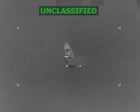
Five people are dead in international waters, and the official press release reads like a routine traffic stop.
When the US military announced a lethal strike on an alleged drug vessel in the eastern Pacific Ocean, most news outlets simply copied the government's talking points and moved on. That's a massive mistake. Because if you look closer at how maritime counter-narcotics operations actually work, a deadly kinetic strike on a smuggling boat isn't standard procedure at all. It's an extraordinary escalation that raises serious questions about rules of engagement, intelligence accuracy, and what's really happening out in the open ocean.
Let's strip away the Pentagon jargon and look at what actually happens when the US military intercepts suspected traffickers—and why this particular strike stands out.
How US Military Interdictions Usually Work in the Eastern Pacific
To understand why a strike killing five people is so unusual, you have to know the baseline playbook. Normally, the US doesn't blow smuggling vessels out of the water.
In the eastern Pacific—a massive stretch of ocean running from the coast of Mexico down past Colombia and Peru—counter-drug operations fall primarily under Joint Interagency Task Force South (JIATF-South), based in Key West, Florida. Their entire mission is detection and monitoring. When a surveillance aircraft spots a suspicious vessel, they don't immediately call in an airstrike. They vector in a US Coast Guard cutter or a Navy ship with a Coast Guard Law Enforcement Detachment (LEDET) on board.
Why the Coast Guard? Because the US Navy doesn't have arrest authority under federal law, thanks to the Posse Comitatus Act and related Department of Defense policies. The Coast Guard does.
Under normal circumstances, the sequence looks like this:
- Maritime patrol aircraft track the target from high altitude.
- A surface ship closes the distance and launches high-speed rigid-hull inflatable boats (RHIBs).
- Coast Guard boarding teams approach, fire warning shots across the bow if the boat refuses to stop, and—if necessary—use precision sniper fire from a helicopter to disable the outboard engines.
- Once the boat is dead in the water, the crew is arrested, the cocaine is seized as evidence, and everyone goes to a federal courtroom in Miami or San Diego.
Deadly force against the crew itself is strictly a last resort, authorized only in self-defense when smugglers open fire first. A strike that kills five people aboard an alleged drug vessel means something went drastically outside the normal law enforcement framework. Either the vessel engaged military forces directly, or the operation was conducted under entirely different military authorities that treat cartel operators as hostile combatants rather than criminal suspects.
Why the Eastern Pacific Is the Main Battleground for Cartel Smuggling
If you're wondering why US forces are even operating thousands of miles from the American coastline, look at the geography of the global cocaine trade. Roughly 80% to 90% of the cocaine heading to the United States moves through the eastern Pacific corridor rather than the Caribbean.
The Caribbean gets all the Hollywood attention, sure. Fast boats racing past Miami is a classic trope. But in reality, heavy radar coverage and tight island chokepoints made the Caribbean too risky for major cartels years ago.
The eastern Pacific is the exact opposite. It's a vast, empty expanse of water roughly the size of the continental United States, with almost no commercial shipping lanes in the outer transit zones and virtually zero radar coverage from coastal nations. Once a boat leaves the mangrove swamps of Colombia or Ecuador, it can swing hundreds of miles west into international waters—sometimes past the Galapagos Islands—before turning north toward Guatemala, Mexico, or even directly toward California.
Smugglers exploit this emptiness using specific, purpose-built vessels:
Go-Fast Boats (Pangas)
These are open-hull fiberglass skiffs, usually 30 to 40 feet long, painted blue or gray to blend into the ocean swells. They strap three or four massive outboard engines to the back, pack the hull with fuel drums and one to two metric tons of cocaine, and run at 40 knots through the night. A crew of three to five men typically operates them.
Low-Profile Vessels (LPVs)
Often mislabeled as "narco-submarines" in sensational headlines, most of these don't actually fully submerge. They're custom-built fiberglass and wood hulls designed to sit almost entirely underwater, leaving just a tiny cockpit and an exhaust pipe exposed above the waves. From a distance, they look like a floating log. Spotting one without infrared sensors or synthetic aperture radar is nearly impossible.
Fishing Trawlers and Mother Ships
To keep go-fast boats supplied on multi-week journeys, cartels use rusted commercial fishing boats as floating gas stations. They loiter in international waters, refuel the smaller speedboats, and transfer cargo out of sight of coastal patrols.
Given that a typical go-fast crew consists of three to five people, the fact that five individuals were killed in this strike strongly points toward a standard smuggling skiff or a small transfer vessel rather than a large commercial freighter.
The Fog of Information Around Pentagon Strike Announcements
Here's where you need to read military statements with a healthy dose of skepticism. Notice the exact phrasing used in official releases: an "alleged drug vessel."
When the military uses the word "alleged" after a fatal engagement, it tells you two critical things. First, the intelligence pointing to narcotics trafficking was strong enough to trigger an intercept, likely derived from signals intelligence, aerial surveillance, or tips from regional partners like Colombia or Ecuador. Second, if the vessel was destroyed or sunk in deep water, physical confirmation of the cargo becomes wildly complicated.
In the eastern Pacific, water depths routinely exceed 10,000 feet. If a strike hits a fiberglass boat loaded with hundreds of gallons of high-octane gasoline—which every smuggling skiff carries for long-range transits—the resulting explosion doesn't leave much behind. Floating bales of wrapped cocaine might bob to the surface, allowing recovery crews to confirm the payload. Or the entire wreck sinks to the abyssal plain within minutes, taking the evidence and the bodies with it.
History shows us that maritime intelligence isn't infallible. Over the past two decades, there have been documented incidents where fishing boats experiencing engine trouble, migrant vessels drifting off course, or legitimate commercial skiffs were misidentified by aerial surveillance before boarding teams realized the mistake. When a vessel is boarded, an error results in an apology and maybe a fuel transfer. When a vessel is struck with lethal force, there is no margin for error.
Legal and Geopolitical Fallout Nobody Talks About
Killing five people in international waters doesn't happen in a vacuum. It triggers immediate legal and diplomatic headaches that rarely make the evening news.
Under the United Nations Convention on the Law of the Sea (UNCLOS), vessels on the high seas are subject to the exclusive jurisdiction of the country whose flag they fly. To legally stop, board, or use force against a foreign vessel—or a stateless vessel with no nationality—the US relies on bilateral maritime counter-narcotics agreements with countries like Colombia, Panama, Costa Rica, and Ecuador.
Those agreements are built around law enforcement, not warfare. They authorize boarding, search, seizure, and arrest. They do not give the US military a blank check to execute suspected smugglers on sight without a trial.
When a lethal strike happens, several things immediately go into motion behind closed doors:
- Nationality verification: If the five dead individuals turn out to be citizens of Ecuador, Colombia, or Mexico, those governments face intense domestic political pressure. Even nations that cooperate closely with Washington on drug enforcement take a dim view of their citizens being killed in international waters without due process.
- Rules of Engagement (ROE) reviews: Every fatal use of force by US personnel triggers an automatic investigation to determine whether the commanders on scene followed the standing ROE. Investigators will examine every second of aerial video and radio traffic to verify whether the target posed an imminent threat.
- Cartel adaptation: Smuggling networks watch these incidents closely. If cartels believe US forces are shifting from interdiction to lethal strikes, they don't stop moving product. Instead, they change tactics—forcing impoverished fishermen to act as decoys, hiding contraband inside legitimate commercial cargo containers, or moving more product overland through the Darién Gap.
What to Watch for Next in Official Disclosures
Because initial military statements are intentionally brief, the real story usually emerges weeks or months later—if you know where to look. Initial wire reports rarely follow up once the news cycle moves on, leaving readers with half the picture.
If you want to understand what actually happened during this eastern Pacific strike, pay attention to three specific details in upcoming Defense Department briefings and regional news outlets:
- The specific unit involved: Watch whether the Pentagon clarifies if this was a US Navy warship, a Coast Guard cutter, an unmanned aerial drone, or a partnered foreign naval vessel operating under US command. That single detail tells you whether this was a law enforcement escalation or a purely military action.
- Evidence recovery: Look for confirmation of recovered contraband. If US forces recovered floating packages of cocaine or wreckage from the site, they will almost certainly release photos of the seizure to validate the strike publicly. Silence on recovered cargo usually means the vessel sank before anything could be retrieved.
- Statements from Latin American ministries: Monitor local press in Bogotá, Quito, and Mexico City. Often, the families of missing fishermen or boat crewmen go to local media long before Washington releases the identities of those killed at sea.
Treating a fatal maritime strike as a routine crime blotter item misses the bigger picture. Whether this incident represents a justifiable act of self-defense during a high-stakes boarding or a troubling expansion of lethal military force in counter-narcotics operations depends entirely on the details the Pentagon hasn't shared yet. Keep your eyes on the follow-up reports, demand clarity on the rules of engagement, and never take an initial military summary at face value.