Initial headlines called it a freak fog accident. That's only half the truth.
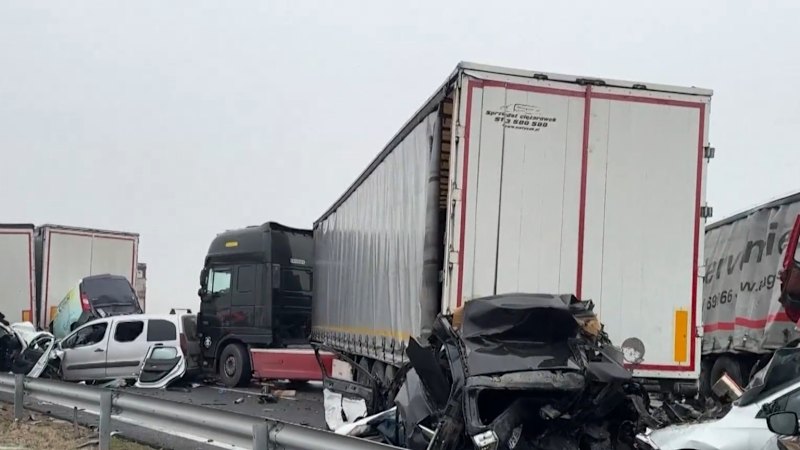
On the morning of November 10, 2026, two massive chain-reaction pileups tore through the Trakia Motorway near Yambol in southeastern Bulgaria, involving 86 vehicles across both carriageways. By the time hospital updates settled days later, the death toll had climbed from initial counts of 11 and 12 to 13 people dead, with 51 injured. News wires treated the tragedy like an unavoidable weather disaster. They focused on the blinding wall of fog and moved on. Meanwhile, you can find other events here: Why Challenging Los Angeles City Hall Is Getting Pricier For Residents.
If you've ever driven the main east-west artery linking Sofia to the Black Sea port of Burgas, you know weather isn't the real culprit here. Fog happens across Europe every November. Yet Bulgaria continues to record the highest road fatality rate in the entire European Union, sitting at 71 deaths per million inhabitants in 2025 according to European Commission data. When 86 cars, lorries, and buses smash into each other within seconds, fog is just the match. Years of missing highway tech, aggressive speed habits, and broken infrastructure are the gasoline.
How the Trakia Motorway Pileup Unfolded
The timeline of the crash reveals just how fast visibility vanished on that flat stretch of highway between the Zimnitsa and Kabile junctions. To understand the complete picture, we recommend the recent analysis by BBC News.
Emergency dispatchers received the first automated distress alert at 7:01 a.m. local time, followed minutes later by frantic 112 calls from trapped motorists. Eyewitnesses told Bulgarian National Television (BNT) and Nova TV that visibility dropped from roughly 70 or 80 meters down to barely 10 to 30 meters in a matter of moments. You don't get time to ease off the gas when a whiteout hits like a curtain.
Two Carriageways, One Trap
Most people assume a pileup happens in one direction. Not here. Law enforcement officials confirmed that 63 vehicles crashed on the eastbound lanes heading toward Burgas, while another 23 collided on the westbound side heading back toward Sofia.
Drivers who managed to stop in time couldn't escape. One motorist told Nova reporters he heard a red lorry braking hard behind him seconds before it slammed into his car, launching him into the guardrail. Moments later, vehicles were still plowing into the wreckage at highway speeds because nobody behind them could see the brake lights. A passenger trapped inside a damaged bus described grain pouring through shattered windows from a ruptured cargo truck alongside them while glass rained down on injured travelers.
- Ten victims died instantly at the scene.
- Two more succumbed during emergency transport.
- A 42-year-old man admitted in critical condition died days later at a hospital in Burgas, bringing the toll to 13.
- Ambulances rushed 51 survivors to regional hospitals in Sliven, Yambol, and Burgas, including 13 patients with severe trauma.
Prime Minister Rumen Radev placed military transport aircraft on standby to evacuate critical cases to Sofia and declared November 11 a national day of mourning. The highway stayed shut in both directions well into the next day while nearly 100 recovery vehicles and heavy cranes untangled twisted steel and hauled away burned-out lorries.
Why Fog Wasn't the Only Villain
Blaming weather lets institutions off the hook. It's the easiest excuse in politics.
Investigators with Bulgaria's National Investigation Service quickly zeroed in on the chain of events leading up to the primary impact. Acting Director Marian Marinov noted that detectives were examining a Romanian lorry whose driver claimed he had slowed to 50 km/h because of a broken-down vehicle ahead. Whether that specific slowdown triggered the eastbound collapse or not, the underlying failure is obvious to anyone who studies European transport safety.
Zero Real-Time Warning Systems
On modern European motorways in Germany, Austria, or France, dense fog triggers automated overhead gantry signs miles ahead of the danger zone. Dynamic speed limits drop from 130 km/h to 60 km/h. Amber strobes flash. Drivers know what's waiting before they enter the cloud.
That stretch of the Trakia Motorway had no electronic warning signs. Even more damning, reports following the crash revealed that no active fog warning had been logged on the emergency dispatch line before the first vehicles collided. Bulgaria's Road Infrastructure Agency issued a public fog advisory for the Burgas region later that morning—hours after the wreck had already happened.
Following the public outrage, Prime Minister Radev admitted the gap and announced plans for a round-the-clock national road information center alongside electronic motorway warning signs starting in 2027. That's a welcome promise. It's also roughly a decade overdue for a primary EU transit corridor.
The Bigger Crisis on Bulgarian Roads
If this were an isolated tragedy, you could chalk it up to bad luck. It isn't.
Data published by the European Commission in October 2026 confirmed that Bulgaria had the deadliest roads in the 27-nation bloc during 2025, with 71 fatalities per million residents. Compare that to the EU average, which sits around 45 deaths per million, or safer nations like Sweden and Denmark that hover closer to 20.
Look closer at European Road Safety Observatory country profiles for Bulgaria and three structural flaws jump right off the page:
- Chronic speeding on rural and high-speed corridors. Regional road administration chief Galin Kostov pointed directly to wet pavement combined with drivers traveling far too fast for conditions during the Yambol pileup. Drivers treat the 140 km/h motorway limit as a minimum floor rather than a fair-weather ceiling.
- Aging vehicle fleets and heavy transit pressure. Bulgaria sits at the crossroads between Central Europe and Turkey. Thousands of heavy goods vehicles thunder down the Trakia Motorway daily, sharing worn asphalt with older passenger cars that lack modern automatic emergency braking or radar collision sensors.
- Low restraint compliance. European safety audits consistently show that seatbelt usage rates in Bulgaria—especially in rear seats and on intercity buses—lag behind Western European averages, turning survivable secondary impacts into fatal ejections.
Interior Minister officials openly acknowledged after the November 10 crash that decades of neglected road infrastructure played a direct role in the disaster. When a country builds high-speed highways without modern telemetry, weather sensors, or active traffic enforcement, high-casualty pileups aren't anomalies. They're mathematical certainties.
What You Need to Do When Driving Into Sudden Fog
You can't wait until 2027 for Bulgaria—or any other country with patchy highway infrastructure—to install smart road signs. If you drive in Eastern Europe or any region prone to autumn river and valley fog, your survival depends on breaking bad instincts before visibility drops.
Most drivers make the exact same fatal mistake when fog rolls in. They keep staring at the taillights ahead of them and maintain speed so nobody rear-ends them. That's backwards. In dense fog, taillights create an optical illusion that makes vehicles look farther away than they really are.
Follow these rules the second visibility tightens:
- Drop your speed immediately and smoothly. Don't slam the brakes, which invites a rear-end hit from behind. Ease off the accelerator and tap your brake pedal lightly several times so your brake lights flash a clear warning to trailing drivers.
- Switch on low beams and rear fog lights. Never use high beams. High-intensity light bounces straight back off water droplets in the air, creating a blinding white wall right in front of your windshield. Remember to turn your rear fog lamp off once traffic stacks up behind you so you don't dazzle the driver on your bumper.
- Track the right-hand road edge line. Stop locking your eyes onto the car ahead. If that driver drifts off the shoulder or crashes, you'll follow them right into the ditch. Use the solid white edge marking to guide your lane position.
- Kill cabin distractions. Turn off the radio, stop talking, and crack your driver-side window by an inch. When visibility drops below 30 meters, your ears become your early warning system. You will often hear screeching tires or metal crunching ahead long before you see brake lights through the mist.
If a pileup happens in front of you and your car is pinned or disabled in low visibility, make a fast judgment call. Staying buckled inside a modern steel cabin is usually safer than wandering blindly across active traffic lanes in the dark—unless your vehicle is leaking fuel, catching fire, or sitting directly in the path of oncoming heavy lorries. If you must exit, get over the metal guardrail immediately and move well away from the shoulder. Never stand between two stopped cars.
Check regional road agency alerts before departing on early morning autumn drives, leave double the stopping distance you think you need, and treat sudden fog like black ice.