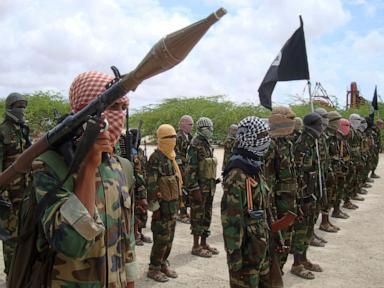
Another ambush. Another body count. Another sterile wire report telling you that "Islamic militants" killed at least twenty Somali soldiers.
If you read standard foreign desk journalism, you would think the war in the Horn of Africa is a simple tug-of-war measured in casualty tallies and captured dirt crossroads. You would be wrong. That kind of reporting is the lazy consensus of modern conflict coverage—a stenography of violence that mistakes tactical noise for strategic reality.
I have spent years tracking insurgencies from the Sahel to the Horn, watching Western analysts and defense contractors burn through billions of dollars chasing metrics that do not matter. They count cleared villages. They count dead fighters. They celebrate kinetic strikes. Meanwhile, the actual war is being fought in ledger books, clan assemblies, and shadow courtrooms where the central government in Mogadishu barely exists.
When al-Shabaab ambushes a Somali National Army (SNA) convoy, the headline focuses on the twenty dead men. The real story is why those men were sitting ducks on a predictable supply route, why their logistics chain collapsed three weeks prior, and why the local population handed the insurgents the exact coordinates of the patrol.
The Body Count Fallacy
Military history is littered with empires that won every firefight and lost the war. The obsession with casualty figures—whether twenty soldiers or two hundred militants—is an accounting trick designed to simulate progress in a conflict that is fundamentally political and administrative.
In Somalia, an ambush is rarely a random stroke of luck for al-Shabaab. It is the end result of superior intelligence gathering and total administrative penetration. Let us define what we are actually looking at here. Al-Shabaab is not merely a roving band of religious zealots with AK-47s; it is a parallel state apparatus.
While international headlines track the kinetic clashes—the car bombs, the base overruns, the drone strikes—al-Shabaab operates an efficient, ruthless shadow governance system. They collect taxes (which they frame as zakat) from major telecommunications firms, import-export businesses in the Port of Mogadishu, and local farmers. In many areas, residents actually prefer al-Shabaab’s Sharia courts over the state judiciary because the insurgents' rulings are fast, predictable, and free of the rampant bribery that plagues government courts.
Think about that. You do not beat a shadow government by winning a skirmish on a dusty highway. And you certainly do not understand the conflict by reading a 300-word wire dispatch that treats a complex asymmetric campaign like a sports score.
Why Conventional Counterinsurgency Keeps Failing
If you ask traditional defense pundits how to stop these ambushes, they will give you the standard textbook answer: train more local troops, buy better armored vehicles, and conduct more airstrikes.
We have tried that for nearly two decades. Billions in security assistance from the United States, the European Union, Turkey, and the African Union have poured into Mogadishu. Yet, Somali soldiers are still getting wiped out in textbook ambushes. Why?
Because you cannot outsource the political legitimacy of a state to a foreign-trained infantry battalion.
Here is the operational reality on the ground that polite diplomatic cables leave out:
- The Ghost Soldier Problem: Corruption within the security sector means units on paper often have half their stated strength in the field. When a patrol of forty men is actually twenty under-supplied, unpaid teenagers, an ambush is not a battle; it is an execution.
- Clan Politics Over National Flag: The Somali National Army is not a monolithic national force; it is an uneasy patchwork of clan militias wearing matching uniforms. If a battalion is deployed into the territory of a rival sub-clan, the locals view them not as liberators, but as an occupying force. They will immediately tip off al-Shabaab.
- The Hold-and-Leave Trap: International forces and elite Somali units (like the US-trained Danab brigade) are very good at clearing a town. They are terrible at holding it. Once the elite units move on to the next offensive, regular army units are left behind without adequate resupply, medical evacuation, or air cover. Al-Shabaab simply waits in the bush, cuts the supply lines, and picks them off at leisure.
Imagine a scenario where a foreign tech company builds a state-of-the-art digital banking app for a town with no electricity and no internet. That is what Western military planners are doing when they build elite strike forces for a government that cannot pay its regular troops on time or deliver basic municipal services to recaptured towns.
Dismantling the Common Questions
When news of another deadly ambush breaks, casual observers usually ask the same tired questions. Every single one of them is built on a flawed premise.
Is al-Shabaab winning the war?
Asking who is "winning" assumes both sides are playing the same game. Mogadishu and its international backers are trying to build a centralized, Westphalian nation-state from the top down. Al-Shabaab is simply trying to prove that the central government cannot protect its citizens or control its territory. By that metric, every ambush is a strategic victory for the insurgents, regardless of how many fighters they lose in the process. They do not need to conquer Mogadishu to win; they just need to make Mogadishu irrelevant outside the capital's green zone.
Why doesn't the African Union stop them?
The African Union Transition Mission in Somalia (ATMIS)—and its predecessor, AMISOM—has been in the country since 2007. Expecting a multinational peacekeeping force with fractured command structures, chronic funding shortages, and competing national agendas to defeat a deeply embedded local insurgency is pure fantasy. Foreign troops, no matter how well-intentioned, are an immune-system trigger in Somali society. Al-Shabaab’s most effective recruitment tool is not radical theology; it is Somali nationalism weaponized against the presence of foreign soldiers on Somali soil.
Will more drone strikes solve the problem?
Airstrikes are tactical sedatives. They eliminate high-value targets and disrupt immediate attack plots, giving policymakers in Washington the illusion of control. But killing a mid-level field commander in the Juba Valley does nothing to fix the broken judicial system in Mogadishu or stop a local businessman from paying protection money to the insurgents. You cannot bomb an administrative monopoly out of existence.
The Uncomfortable Truth About The Clan Factor
To understand why those twenty soldiers died, you have to understand xeer—the traditional Somali clan-based legal and social system—and how al-Shabaab manipulates it.
Mainstream reporting treats the conflict as a binary clash: the secular, internationally recognized government versus radical Islamist terrorists. That framing is dangerously simplistic. In reality, Somalia is a hyper-localized marketplace of clan allegiances.
Al-Shabaab survives because it acts as a disciplined, above-clan mediator in a society fractured by blood feuds. While government officials in Mogadishu often use state power to enrich their own sub-clans at the expense of others, al-Shabaab recruits from marginalized clans, offering them protection, status, and revenge against dominant rivals.
Look at the 2022–2023 offensive in central Somalia. The only reason the government made massive territorial gains during that period was not because the army suddenly became tactically brilliant. It was because the Macawisley—local clan militias fed up with al-Shabaab’s brutal taxation and forced child recruitment—rose up and fought alongside the army.
The moment the government failed to follow up those clan victories with real governance, clean water, and political inclusion, the momentum stalled. Al-Shabaab regrouped, exploited old clan rivalries, and went right back to ambushing isolated military outposts.
What Actually Works (And Why Nobody Wants to Do It)
If you want to stop reading headlines about slaughtered Somali patrols, the strategy has to flip completely. Kinetic military operations must become secondary to political and economic warfare.
- Starve the Shadow State, Not Just the Fighters: Stop focusing exclusively on weapons smuggling and start dismantling al-Shabaab’s domestic revenue network. That means radical transparency in Mogadishu’s banking and telecom sectors, backed by aggressive financial sanctions on business elites who launder insurgent tax revenues—even if those elites are politically connected to the sitting president.
- Decentralize Security: Abandon the obsession with a massive, centralized national army that constantly fractures along clan lines. Instead, formalize, fund, and regulate local clan defense forces under strict accountability frameworks. People fight infinitely harder to defend their own homes and wells than they do for a distant capital they do not trust.
- Compete on Justice: If people go to al-Shabaab courts because government courts are corrupt and slow, the most potent counterinsurgency weapon is not a new armored personnel carrier—it is a mobile, incorruptible circuit court that settles land disputes in forty-eight hours.
The Downside of Realism
I will be the first to admit the flaw in this decentralized, governance-first approach: it is agonizingly slow, deeply messy, and offers zero photo opportunities for visiting diplomats.
Empowering local clan structures risks creating warlord fiefdoms if not managed with extreme care. Cracking down on corrupt business elites in Mogadishu could trigger political paralysis or even civil unrest inside the capital. There is no clean, risk-free exit ramp in Somalia. Every policy choice is a trade-off between two bad outcomes.
But pretending that the current strategy is working because we occasionally kill a terrorist leader while losing twenty soldiers in a roadside ambush is willful blindness.
The next time a wire service publishes a three-paragraph blurb about another deadly attack in Somalia, do not look at the casualty count. Look at the map. Ask yourself who collects the taxes in that district, who settles the land disputes, and who the locals actually fear more when the sun goes down. Until those answers change, the body count will just keep climbing.