Rust does not sleep. It eats.
For decades, behind the heavy iron bars of a shuttered facility in Argentina, time measured itself in flakes of oxidized orange falling onto cracked concrete. The air smelled of stale water and old dread. In the corner of a rusting enclosure, a shadow shifted. A lion, heavy-boned and weary, blinked against a sky he had forgotten how to look at. His world was a box. Four walls. A floor that never changed temperature.
Then came the sounds of change. Not the sharp, terrifying crack of a whip or the roar of tourist engines that once defined existence. Instead, it was the rhythmic clatter of heavy-duty transport crates rolling across asphalt. Human voices murmured in the damp morning chill.
Doors opened.
We talk about wildlife conservation as if it were a spreadsheet. We tally numbers, calculate carbon footprints, and debate policy in air-conditioned rooms thousands of miles away from the dust. We treat endangered species like data points waiting for an update. But freedom is not an abstract concept. It is physical. It is the sudden, terrifying rush of wind hitting a face that has only ever known stagnant enclosure air. It is the first step onto soft earth instead of cold stone.
Consider what happens next.
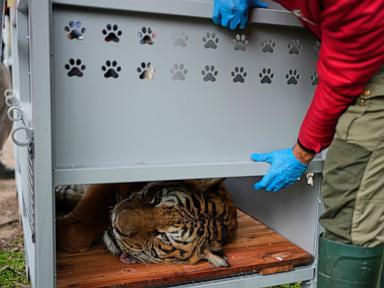
Teams of veterinarians, animal behaviorists, and logistics experts move with quiet precision. Every movement is calculated. Every second is monitored. To transfer a full-grown lion or a Bengal tiger across continents requires an orchestration of medicine and muscle that borders on the miraculous. You cannot simply ask a predator to walk into a box. You must earn compliance through patience, sedatives when necessary, and an absolute respect for raw power.
Imagine the sensory overload. For animals born in captivity or rescued from the squalor of neglected roadside attractions, the wild is an assault. The scent of open grass. The shifting sounds of insects and distant weather. The sheer scale of a horizon that goes on forever. When the doors of the transport crates finally lifted at sanctuaries in places like South Africa, hesitation was the universal first reaction.
Fear keeps you alive. They knew that instinctively.
One lioness stepped forward. Just an inch. Her paw hovered over the grass, testing a texture older than memory. The earth gave slightly beneath her weight. No concrete. No hard edges. She took a breath, her nostrils flaring as she tasted a wind carrying moisture and distance.
This rescue operation, rescuing lions and tigers from the notorious facilities of Argentina, marks a definitive closing chapter on an era of casual cruelty. For years, these animals suffered under the weight of poor regulation, economic collapse, and institutional neglect. Private zoos closed. Funding vanished. The animals remained, ghosts rattling their cages while the world moved on.
We looked away because looking at cages is uncomfortable. It forces us to confront our own dominion over the earth. It makes us ask difficult questions about what we owe to the creatures we domesticate, display, and discard.
The logistics of moving apex predators thousands of miles are staggering. Cargo holds must be temperature-controlled. Medical teams must be on standby every hour of the journey. Costs run into hundreds of thousands of dollars, funded by global wildlife charities and relentless human stubbornness. People who refused to accept that these animals were destined to rot in silence spent years untangling bureaucratic red tape, cutting through corruption, and securing permits across international borders.
Why do we care? Why spend resources on a handful of aging big cats when human problems crowd every daily headline?
Because mercy is the measure of civilization. When we look at a tiger stepping out of a crate into a sanctuary where it can finally run, we are not just saving an animal. We are correcting a mistake. We are acknowledging that the world belongs to more than just us.
The journey from a concrete cell to a sanctuary paddock changes everything. It changes the rhythm of their days. No longer do they pace in tight, obsessive circles, wearing grooves into the stone floor. Now they hunt. They stalk shadows in tall grass. They sleep under the open sun, unbothered by iron bars.
The trucks are empty now back in Argentina. The gates are rusted shut for good. In the distance, across an ocean and a continent, a low, resonant rumble vibrates through the African soil.
It is the sound of an ending that feels like a beginning.