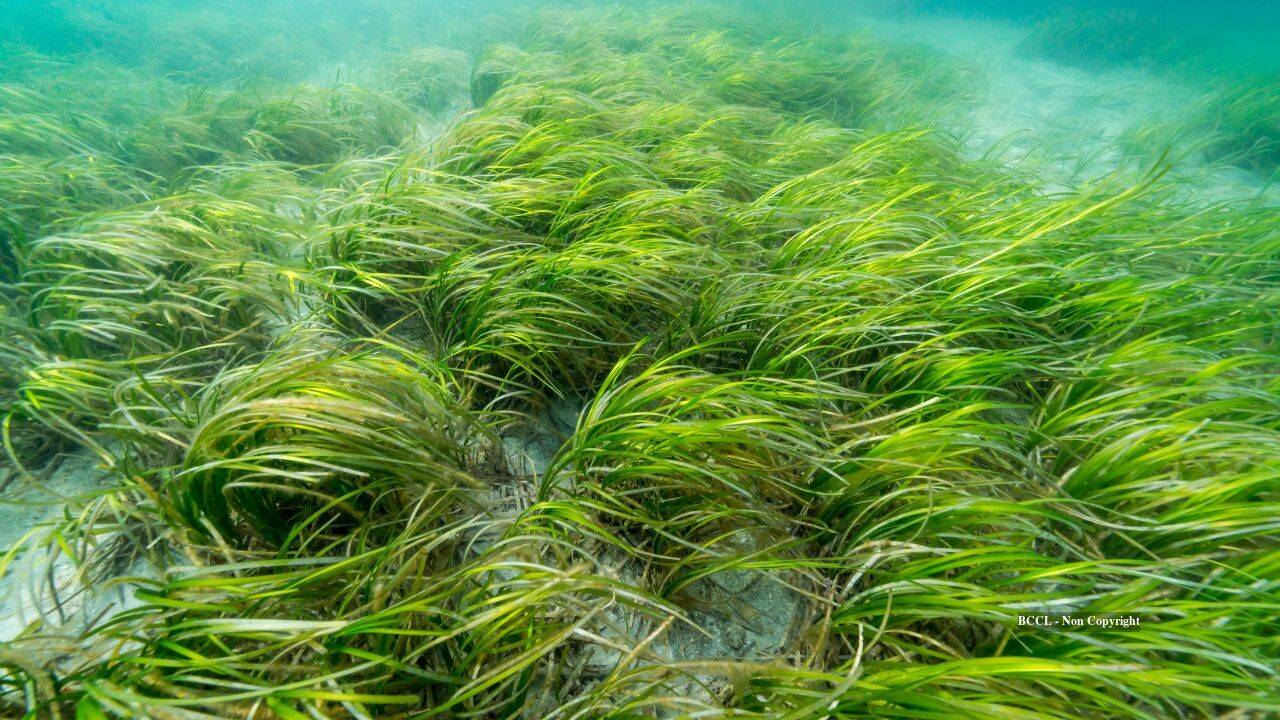
Restoring Zostera marina (eelgrass) across Long Island Sound requires solving a coupled biological and physical feedback loop rather than simply replanting shoots into degraded sediment. Following a roughly 90% decline in eelgrass coverage since the early twentieth century, coastal restoration teams in Connecticut are deploying hard clams (Mercenaria mercenaria) alongside seagrass transplants to engineer the benthic environment before root systems fail. This co-restoration model treats bivalves as biological water-treatment infrastructure and sediment stabilizers, directly targeting the primary failure modes—light attenuation, sulfide toxicity, and hydrodynamic uprooting—that doom monoculture seagrass plantings.
The Failure Mechanics of Traditional Seagrass Replanting
Historical eelgrass losses in Connecticut waters stem from a sequence of compounding stressors: the 1930s wasting disease outbreak caused by the slime mold Labyrinthula zosterae, chronic nitrogen loading from coastal watersheds, rising summer sea surface temperatures, and physical disturbance from dredging and mooring chains. When an eelgrass meadow disappears, the seabed undergoes a phase shift that actively resists recolonization.
Without dense canopies to baffle wave energy, bottom currents resuspend fine silts and organic matter. This turbidity reduces photosynthetically active radiation (PAR) reaching the seafloor. Eelgrass requires high light levels—typically 15% to 25% of surface irradiance—to maintain a positive carbon balance down to its non-photosynthetic rhizomes. When light drops below this compensation point, the plant cannot pump sufficient oxygen from its leaves down to its roots.
In anoxic marine sediments, sulfate-reducing bacteria metabolize organic matter and produce hydrogen sulfide ($\text{H}_2\text{S}$). Without radial oxygen loss from healthy eelgrass roots to oxidize the rhizosphere, hydrogen sulfide intrudes into plant tissues, poisoning cytochrome c oxidase and halting cellular respiration. Standard restoration projects that plant bare shoots into turbid, sulfidic mud fail because the plants suffocate before they can re-establish the canopy needed to clear the water.
The Bivalve Engineering Mechanism
Integrating Mercenaria mercenaria into restoration plots introduces three distinct ecological functions that alter the physical chemistry of the benthic boundary layer.
1. Filtration-Driven Light Transmission
Adult hard clams are active suspension feeders capable of filtering several liters of seawater per hour depending on water temperature, salinity, and seston concentration. By removing suspended phytoplankton, detritus, and inorganic particulates from the water column immediately above the seabed, dense clam aggregations increase localized light penetration. Higher light availability drives higher photosynthetic rates in adjacent eelgrass blades, accelerating leaf elongation and rhizome branching.
2. Benthic-Pelagic Nutrient Coupling
Clams repackage suspended organic matter into mucus-bound feces and pseudofeces that settle rapidly onto the sediment surface. This biodeposition transfers nitrogen and phosphorus directly from the water column into the root zone of the eelgrass. Unlike water-column nutrients that fuel light-blocking phytoplankton blooms and epiphytic algae on eelgrass leaves, sediment-bound nutrients are absorbed directly by eelgrass roots, giving the vascular plant a competitive advantage over opportunistic macroalgae.
3. Physical Sediment Armoring and Bioturbation
Burrowing bivalves modify sediment mechanics in two opposing but complementary ways. First, their shells add physical roughness to the seabed, disrupting laminar shear stress and reducing sediment resuspension during tidal exchanges. Second, their vertical burrowing and siphon pumping oxygenate the upper few centimeters of sediment. This bioturbation stimulates coupled nitrification-denitrification pathways and oxidizes free sulfides, lowering the chemical toxicity of the porewater before eelgrass roots expand into new territory.
Operational Protocol for Volunteer Co-Restoration
Executing a co-restoration deployment in tidal estuaries like Niantic Bay, Fishers Island Sound, or the Mystic River requires strict adherence to site-selection thresholds and staggered biological staging. Volunteer labor scales the manual labor of seed collection, weaving, and planting, provided technical leads enforce strict quality controls.
- Bathymetric and Light Profiling: Map target plots along the shallow subtidal fringe (typically 1 to 3 meters mean low water). Measure PAR attenuation coefficients across a full tidal cycle to confirm that baseline light availability sits within striking distance of the eelgrass compensation threshold once filtration is added.
- Donor Meadow Harvesting: Collect reproductive shoots (spathes) or vegetative turions from genetically diverse, stable donor beds in eastern Long Island Sound—where cooler, better-flushed waters from Block Island Sound maintain healthier populations. Limit harvest density to prevent fragmentation of the donor site.
- Frame and Burlap Assembly: Volunteers secure eelgrass shoots onto biodegradable burlap discs or weighted mesh frames using untreated twine. Weighted frames prevent buoyancy from lifting transplants out of the sediment during spring tides before anchor roots develop.
- Staggered Bivalve Seeding: Deploy hatchery-reared Mercenaria mercenaria seed or juvenile clams into the plot prior to or concurrent with eelgrass frame placement. Clam density must be calibrated to local current speeds; excessive density in low-flow areas risks localized organic overloading from biodeposition, which can spike sediment oxygen demand.
- Predator Exclusion: Newly seeded clams and disturbed sediment attract blue crabs (Callinectes sapidus), green crabs (Carcinus maenas), cownose rays, and whelks. Deploy temporary predator-exclusion netting pinned flush to the substrate until clams burrow past the reach of crushing predators and eelgrass rhizomes interlock.
- Benthic Monitoring: Track shoot density, blade length, epiphyte load, and clam survival at 30-, 90-, and 365-day intervals. Measure sediment porewater sulfide levels and canopy-level PAR to verify that the positive feedback loop has engaged.
Structural Constraints and Failure Modes
Co-restoration is not a universal fix for degraded estuaries. Three hard ecological boundaries dictate where this model succeeds and where it fails.
- Thermal Ceilings: Zostera marina is a boreal-temperate species operating near the southern limit of its thermal tolerance in Long Island Sound. When summer water temperatures exceed 25°C for extended periods, respiration outpaces photosynthesis regardless of water clarity. If regional warming pushes shallow embayments past this thermal threshold, clam filtration cannot prevent summer die-offs.
- Watershed Nitrogen Loading: Bivalve filtration operates at the local plot scale, whereas nitrogen pollution operates at the watershed scale. In western Long Island Sound, where treated wastewater and septic runoff drive persistent hypoxia and dense macroalgal mats (Ulva lactuca), a localized clam bed will be overwhelmed by external nutrient loads and smothered by drifting macroalgae.
- Poaching and Shellfish Harvest Conflicts: Hard clams are a high-value commercial and recreational fishery resource. Restored plots situated in waters certified for shellfishing risk premature harvest by clammers, which removes the filtration infrastructure and physically tears up fragile eelgrass rhizomes with rakes and tongs.
Strategic Deployment Framework
Coastal managers and restoration groups in Connecticut must treat clam-eelgrass co-cultivation as a targeted bridge technology rather than a broad-acreage solution. Restoration capital should be concentrated exclusively in eastern and central Long Island Sound embayments where flushing rates keep summer temperatures below 25°C and watershed nitrogen loads have already been reduced through municipal sewage upgrades. Every co-restoration site must be legally designated as a closed conservation sanctuary—prohibiting mechanical and hand-rake shellfishing—before a single shoot or clam is deployed, ensuring the biological filtration engine remains intact long enough for the eelgrass meadow to become self-sustaining.