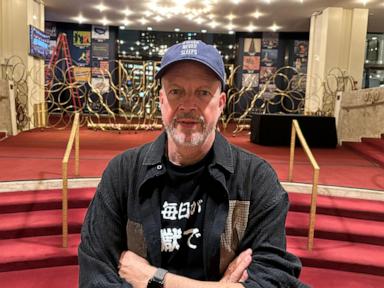
Claus Guth became one of the most sought-after opera directors in the world precisely because he never wanted the job in the first place. When he enrolled at the Ludwig Maximilian University of Munich in the 1980s, his sights were set on philosophy and German literature, not the cavernous, tradition-bound stages of Bayreuth, Salzburg, and La Scala. That academic detour is the exact mechanism behind his dominance today. While career stage directors treat an opera score as a blueprint for visual spectacle or historical reenactment, Guth approaches it like a clinical autopsy—stripping away 19th-century melodrama to expose the repressed trauma, fractured memory, and claustrophobic guilt operating underneath the music.
Walk into a major European opera house today, and you will immediately recognize the Guth signature before a single note is sung. There is usually a rotating set—an architectural labyrinth of decaying grand hotels, sterile hospital wards, or mid-century bourgeois living rooms—designed alongside his longtime collaborator Christian Schmidt. Inside those walls, characters rarely look at each other when they sing. Instead, they are shadowed by silent doppelgängers, haunted by younger or older versions of themselves, and trapped in a state of perpetual psychological paralysis. If you liked this article, you might want to look at: this related article.
The Reluctant Architect of Modern Opera
To understand why general managers from Paris to Vienna hand Guth their biggest budgets, you have to understand the crisis that gripped European opera at the turn of the 21st century. For decades, the industry was locked in a cold war between museum-piece traditionalists and the shock-value excess of early Regietheater—a German theatrical movement that prioritized radical directorial concepts over the original libretto. Audiences were growing exhausted by arbitrary provocations that ignored what was actually happening in the orchestra pit.
Guth offered a third way, born directly out of his dual education. After studying philosophy and literature in Munich, he pivoted to theater directing at the Otto Falckenberg School of the Performing Arts. Because he did not grow up inside the insular conservatory system, he lacked the reflexes of a conventional opera insider. He did not care about making an aria look pretty, nor did he care about updating a 17th-century plot to a modern boardroom just to score cheap political points. For another look on this development, check out the latest update from Deadline.
His question was always structural. Why is this character singing at this exact moment? In spoken theater, an actor speaks because they want to change another person’s mind. In opera, time stops. A singer stands still for six minutes to dissect a single emotion. Most directors panic during these stretches and invent busywork for the chorus. Guth leans into the stasis. He treats the aria not as a musical number, but as an internal monologue happening inside a fractured mind.
The Forensic Method Behind a Claus Guth Production
If you watch rehearsals for a Claus Guth production, you will notice he spends an unusual amount of time on silence. Before singers even begin blocking their movements, Guth dissects the subtext of the score—looking for the gaps between what a character claims to feel and what the orchestration reveals they actually feel.
Take his landmark 2006 production of Mozart’s Le nozze di Figaro at the Salzburg Festival. On paper, Figaro is a brisk, sunlit comedy about clever servants outsmarting an aristocratic philanderer. Guth looked at the same score and saw a house suffocating under sexual tension and emotional exhaustion. He introduced a silent, winged figure—a dark, fallen Cherub—who moved through the rooms of the Almaviva estate, physically manipulating the characters like puppets driven by compulsive desire. The comedy didn't vanish, but it turned brittle and desperate. When Susanna and the Countess sang their famous "Letter Duet," it wasn't a charming moment of female solidarity; it was an act of survival inside a cold, echoing mansion.
This forensic approach relies on three specific dramaturgical tools that Guth has refined over thirty years:
- The Split Protagonist: Guth frequently casts actors or dancers to shadow the principal singers. In his 2008 Salzburg Don Giovanni, set in a dark, nocturnal forest rather than a Spanish courtyard, Giovanni is mortally wounded in the very first scene. The rest of the opera unfolds as a fever dream experienced by a dying man, allowing Guth to externalize the character's denial and panic.
- Acoustic Architecture: Working closely with set designer Christian Schmidt, Guth builds enclosed spaces that reflect the psychological trap of the narrative. Whether it is the revolving, multi-room bourgeois apartment in his 2015 La bohème in Paris—which transformed Puccini’s romantic poverty into a bleak meditation on isolation inside a space capsule—or the oppressive, wood-paneled corridors of his Wagner productions, the set functions as a physical manifestation of the protagonist's brain.
- Musical Pacing Over Stage Business: Because Guth reads scores with the precision of a conductor, he rarely introduces visual movement that contradicts the harmonic rhythm. When the music accelerates, the physical tension tightens; when the orchestra drops to a whisper, the stage freezes.
Why His Approach Divides Audiences and Critics
No director reaches the top tier of international opera without leaving a trail of vocal detractors, and Guth’s uncompromising psychological lens regularly triggers fierce pushback. The core criticism leveled against his work is straightforward: by turning every opera into a psychoanalytic case study, he occasionally suffocates the raw, immediate joy or visceral tragedy that the composer intended.
When Guth staged Puccini’s La bohème at the Opéra Bastille in 2017, setting the story aboard a failing spacecraft where the young bohemians hallucinate their Parisian memories as oxygen runs out, parts of the audience erupted in furious boos. Critics argued that Puccini’s score—written to celebrate the fleeting, earthy warmth of youth against the backdrop of real poverty—was crushed under a heavy, science-fiction metaphor. A similar debate surrounded his 2014 Rigoletto in Paris, which placed Verdi’s court jester inside a cardboard box in a sterile modern rehearsal room, framing the entire tragedy as a broken man reliving his memories from a mental institution.
There is also a valid industry critique regarding repetition. When a director relies heavily on specific visual tropes—revolving rooms, silent alter egos, muted color palettes of gray, black, and washed-out beige—different composers can start to look remarkably similar. A casual observer walking into a Guth production of Handel’s Saul and a Guth production of Strauss’s Salome might notice that both worlds feel governed by the exact same clinical melancholy, even though the musical idioms are separated by nearly two centuries.
The Rehearsal Room Reality for Singers
Despite the polarizing reception from traditionalist subscribers, the biggest stars in the opera world routinely clear their calendars to work with Guth. Sopranos like Anna Netrebko, Asmik Grigorian, and Diana Damrau, alongside baritones like Gerald Finley and Christian Gerhaher, have delivered some of the most acclaimed performances of their careers under his direction.
The reason comes down to how he treats the physical reality of singing. Many theater directors who cross over into opera treat vocalists like spoken-word actors, forcing them to sing difficult passages while lying flat on their backs, hanging from harnesses, or running up steep raked stages. That approach ruins vocal projection and breeds resentment in the rehearsal room.
Guth understands the mechanics of the human voice. He demands extreme emotional vulnerability and minute facial acting—something high-definition cinema broadcasts have made mandatory—but he positions singers where their voices can carry naturally into the auditorium. Instead of forcing a tenor to sprint across the stage during a high C, Guth will strip away all external movement, focusing the lighting and the surrounding cast’s stillness onto the singer so that the vocal effort itself becomes the dramatic climax. Singers trust him because he gives them a concrete psychological motivation for every phrase without sabotaging their instrument.
From Fringe Experiments to Institutional Power
Guth’s trajectory from a hesitant literature student to an institutional powerhouse followed a deliberate, unhurried climb through the German-speaking theater system. Unlike directors who explode onto the scene with a single viral scandal, he spent the 1990s grinding through smaller regional houses in Munich, Coburg, and Nuremberg, learning the unglamorous mechanics of stagecraft, lighting cues, and union schedules.
His breakthrough arrived in 2000 at the Munich Biennale with Pnima... ins Innere, a chamber opera by Chaya Czernowin exploring the unspoken trauma of the Holocaust without a single intelligible word of text. That production proved Guth could sustain ninety minutes of gripping theater using nothing more than breath, gesture, and spatial tension. Three years later, he made his debut at the Bayreuth Festival with Der fliegende Holländer, transforming Wagner’s ghost ship into a claustrophobic bourgeois parlor where Senta’s obsession with the Dutchman played out as a domestic psychosis.
From that point forward, the major houses lined up. His Mozart-Da Ponte cycle at the Salzburg Festival between 2006 and 2009—Le nozze di Figaro, Don Giovanni, and Così fan tutte—redefined how 18th-century repertoire is staged in the modern era. In Così fan tutte, he dismantled the artificial symmetry of the plot by placing the characters inside a sprawling, sun-drenched modernist house that gradually darkened as the emotional cruelty of the wager destroyed their relationships.
How Guth Changed the Economics of Prestige Opera
Behind the artistic acclaim lies a shrewd industrial reality. International opera houses face a shrinking subscription base and soaring production costs. General managers cannot afford to mount a new staging of Carmen or Tosca that only works in one city for ten performances. They need co-productions—stagings built to travel seamlessly between houses like the Royal Opera House in London, the Teatro Real in Madrid, and the Metropolitan Opera in New York.
Guth’s visual vocabulary fits the modern co-production model like a custom glove. Because his sets rely on architectural interiors and precise lighting rather than sprawling, hyper-specific historical backdrops or casts of hundreds, they are technically adaptable to different stage dimensions. More importantly, a Claus Guth production carries an immediate intellectual prestige that satisfies both state funding boards in Europe and wealthy donors in North America. It signals that an opera house is serious, contemporary, and intellectually rigorous without crossing into the kind of explicit gratuitousness that triggers boardroom revolts.
In a hypothetical scenario where an artistic director has to choose between a safe, painted-backdrop revival that sells tickets only to tourists and a chaotic experimental staging that alienates core donors, Guth represents the highest-yield middle ground in the business. He guarantees critical debate, attracts top-tier vocal talent, and delivers a visual product that translates powerfully onto streaming platforms and cinema screens.
The Lasting Shift in How Opera Tells Stories
Claus Guth never set out to reform an art form he initially viewed from an academic distance, yet his outsider skepticism ended up dismantling one of opera’s oldest habits. For generations, stage direction in opera was treated as decoration—an expensive frame built around a musical performance. By applying the analytical rigor of philosophy and spoken theater to the architecture of the musical score, Guth proved that psychological realism and grand operatic vocalism do not cancel each other out. Even when his concepts misfire or bend a libretto past its breaking point, he forces every performer on stage and every listener in the dark to confront a simple, uncomfortable question: what is the music hiding that the words refuse to say?