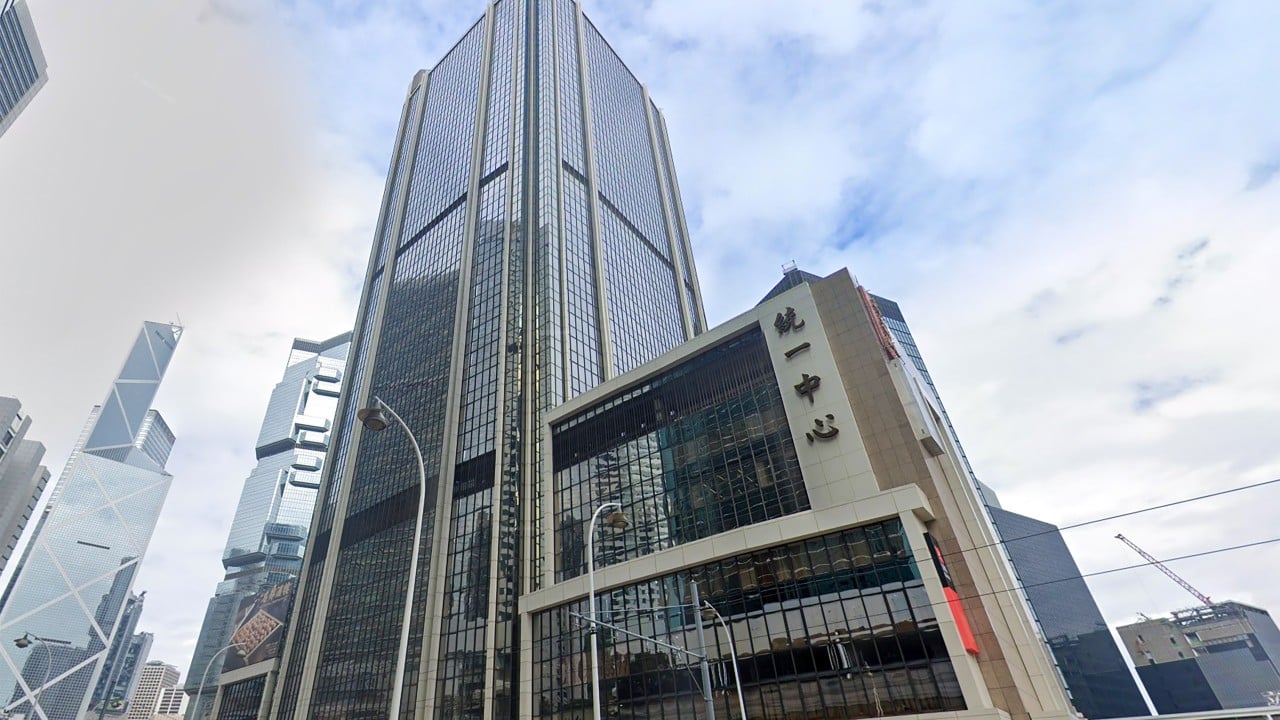
The afternoon sun hits the glass facade of a high-rise in Causeway Bay, reflecting a blinding sheet of light onto the crowded pavement below. Inside, on the eleventh floor, the air smells faintly of fresh paint and industrial carpet cleaner. A worker carries a whiteboard across a room that, just six months ago, housed the showroom of a luxury Italian fashion brand.
This is no longer a place for high-end retail. It is a lecture hall.
For decades, the boundaries of higher education in Hong Kong were clearly defined. You studied on sprawling, hillside campuses in the New Territories, or within the historic brick-and-mortar enclaves of Pok Fu Lam. Today, those boundaries are dissolving. Driven by an unprecedented influx of non-local students, the city’s universities are spilling out of their campuses and into the commercial heart of one of the world's most expensive real estate markets. They are buying up office towers, renting out vacant shopping malls, and converting retail spaces into seminar rooms.
It is a desperate scramble for square footage. And it is quietly rewriting the rules of the city.
The Human Cost of Zero Square Feet
Consider the daily routine of a student we will call Lin. She moved from Hangzhou to pursue a master’s degree in data science. In her mind, university life would look like the brochures: vibrant student unions, late-night library sessions, and a sense of belonging to a physical community.
Instead, Lin lives in a shared apartment in Mong Kok and attends her 9:00 AM finance seminar on the fifth floor of a commercial building, squeezed between a corporate logistics firm and a private dental clinic.
When the seminar ends, there is no campus quad to sit in. There is no student lounge. There is only a crowded elevator bank, a brisk walk past a jewelry store, and the relentless hum of the city. Lin is getting a world-class education on paper, but her physical reality is entirely transactional. She enters the building, consumes the lecture, and is pushed back out onto the street.
This is the classroom crunch in its human form.
Hong Kong's public universities have become victims of their own global prestige. As international and mainland enrollment surges, the physical infrastructure of these institutions is buckling. There are not enough lecture halls. There are not enough laboratories. Most critically, there are not enough beds.
When a university runs out of space, it cannot simply build upward. The city's unforgiving geography and strict zoning laws make campus expansion a bureaucratic nightmare that takes years, if not decades. But the students are arriving now.
The Great Real Estate Pivot
The solution chosen by university administrators is swift, expensive, and radically pragmatic. They are entering the commercial property market as aggressive buyers and tenants.
To understand why this is happening now, one must look at the shifting tides of Hong Kong’s economy. The commercial real estate market has faced prolonged headwinds. Office vacancy rates in premium districts like Central and Kowloon East have lingered near historic highs. Retail spaces, once fiercely contested by international luxury brands, have sat empty as tourism patterns shifted.
Where corporate tenants saw a downturn, university boards saw a lifeline.
The math is simple, even if the execution is jarring. A vacant floor in a Grade-A office tower represents a ready-made shell. It has central air conditioning, fire safety compliance, and robust electrical grids. With a relatively quick interior fit-out, a corporate boardroom can become a seminar room for forty students.
This is a massive financial pivot. Institutions are committing billions of Hong Kong dollars to acquire these spaces. They are no longer just centers of learning; they are major institutional property players, competing directly with real estate investment trusts and multinational corporations for premium urban footprints.
When the Campus Becomes a High-Rise
But a university is more than a collection of desks and screens. It is an ecosystem. When you fragment that ecosystem across a metropolis, something vital changes.
Think about the traditional chemistry of a university. It relies on accidental encounters. A physics major bumps into a philosophy student at a campus coffee cart. A professor strikes up a conversation with a researcher from a completely different faculty while walking across a courtyard. These micro-interactions are where cross-disciplinary ideas are born.
When a university occupies floors 12 through 15 of a commercial high-rise, those accidental encounters vanish.
The student experience becomes vertical, hyper-efficient, and sterile. You tap your student ID card at a turnstile in a corporate lobby, ride the high-speed lift to your designated floor, attend your session, and leave. The traditional "campus culture" is replaced by a corporate commuter culture.
Even the faculty feels the strain. Professors find themselves traveling between the main campus and various satellite offices scattered across different districts, treating their teaching schedule like a series of business flights. The university ceases to be a destination. It becomes a network of outposts.
The Invisible Stakes
Why does this matter to someone who isn't a student or a professor? Because it fundamentally alters the fabric of Hong Kong itself.
For decades, the city has maintained a stark separation between its commercial engine rooms and its civic institutions. The business districts were for commerce; the outer ring was for living and learning. By injecting thousands of students directly into the commercial core, the daily rhythm of these neighborhoods is shifting.
Local eateries that once catered exclusively to office workers wearing tailored suits are now seeing lines of twenty-somethings in hoodies and sneakers. The demand for affordable housing in and around these commercial hubs is intensifying, putting further pressure on an already strained residential rental market.
There is also a deeper, more philosophical question at play. What happens to the identity of higher education when it looks indistinguishable from a corporate enterprise?
If a student sits in an office building, looks out at a skyline of banks, and learns from a professor who just commuted from a different office building, the boundary between preparation for life and the machinery of commerce dissolves entirely. The university is no longer a sanctuary to think, question, and fail safely. It is merely a pre-corporate waiting room.
The night falls over Causeway Bay. The lights in the eleventh-floor lecture hall remain on. Inside, a professor is drawing a complex econometric model on the whiteboard, her voice competing slightly with the distant rattle of the tram on the street below.
Outside the window, neon signs for banks, watchmakers, and department stores blink in the dark. The students take notes, their faces illuminated by the glow of their laptops. They are part of an ambitious global experiment, living the reality of a city that refuses to stop growing, even when it has completely run out of room.


