Walk into an overcrowded animal shelter on a Tuesday morning in late October, and the first thing that hits you is not the barking. It is the silence of the animals that have stopped trying.
I spent three autumn seasons volunteering at a municipal intake facility in the Midwest, scrubbing stainless steel runs and logging intake sheets until the smell of industrial bleach permanently etched itself into my winter coat. You learn quickly in those hallways that stray dogs and abandoned cats rarely suffer from a lack of compassion. People love animals. People cry over commercials with sad acoustic guitars. What shelters suffer from is a crisis of friction—the wide, exhausting gap between feeling sorry for a homeless pet and actually moving the needle on veterinary bills, kibble pallets, and heating costs.
Adults complicate this math. We form committees. We draft five-year strategic plans. We wait for grants that take nine months to clear while a litter of underweight kittens needs warm formula tonight.
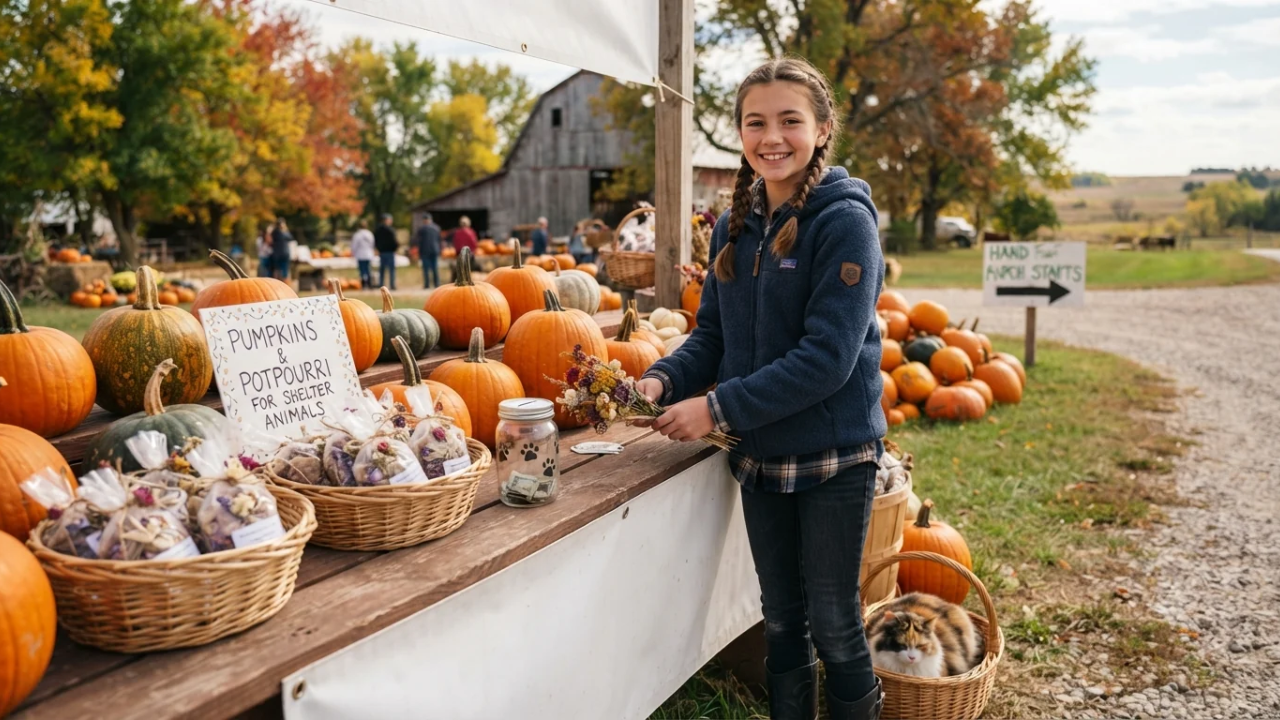
Then there is the approach of a twelve-year-old armed with pumpkins, dried citrus, and whole cloves.
The Architecture of Small Things
Consider the mechanics of an autumn front porch. On one side of the equation, you have seasonal excess—ornamental gourds, bruised apples, fallen pine cones, and spice jars sitting half-empty in kitchen pantries. On the other side, you have a local animal rescue quietly bleeding cash because intake numbers spike every time the temperature drops below freezing.
Most adults look at those two realities and see zero connection. A twelve-year-old looks at them and sees an assembly line.
To understand why a kid selling handmade potpourri and painted pumpkins for shelter animals works better than most corporate charity drives, you have to understand how human generosity actually functions. Behavioral economists have studied charitable giving for decades, and their findings boil down to an uncomfortable truth. Humans are terrible at responding to massive, abstract suffering. Show us a spreadsheet detailing the 6.3 million companion animals entering shelters nationwide every year, and our brains quietly shut down to protect us from helplessness. Psychologists call this psychic numbing.
Hand a neighbor a mason jar packed with dried orange slices, cinnamon sticks, and star anise, tell them it costs eight dollars, and explain that every cent buys vaccines for shelter puppies? Now the brain wakes up.
The transaction removes the paralysis. The buyer isn't being asked to solve the national pet overpopulation crisis; they are being asked to make their kitchen smell like November while keeping one specific hound dog fed through the week.
Inside the Kitchen Table Economy
Let us build a hypothetical picture of what this actually looks like on a Saturday afternoon, grounded in the real grassroots youth fundraisers that pop up across suburban neighborhoods every fall.
Picture a dining table covered in old newspaper. On the left sit two dozen sugar pumpkins sourced from a local farm stand that donated the slightly lopsided ones nobody wanted for centerpieces. On the right sits a dehydrator humming through its sixth batch of blood oranges and Honeycrisp apple rings. The air in the house is thick, sweet, and sharp with cloves.
A twelve-year-old sits at the center of this operation, fingers stained orange from acrylic paint and turmeric. There is no marketing agency here. No overhead. No administrative fee slicing thirty percent off the top before a dime reaches an animal bowl.
Look closely at the economics of this kitchen-table enterprise, because the numbers tell a story most nonprofits miss:
- Zero-waste inventory: By turning imperfect pumpkins into hand-painted porch decor and simmering leftover citrus peels with bulk spices, raw material costs stay near pennies on the dollar.
- Tactile proof of effort: People instinctively trust sweat equity. When a neighbor sees a child who spent twelve hours dehydrating fruit and tying twine around cellophane bags, skepticism evaporates.
- Hyper-local accountability: The money doesn't vanish into a national headquarters three states away. It walks through the front door of the county shelter down the road, usually in the form of a crumpled envelope of cash or a trunk full of high-protein puppy chow.
It sounds quaint. Almost too simple.
Yet when you compare this model against traditional charity fundraising, the efficiency is staggering. Large-scale charity galas routinely spend forty to sixty cents of every dollar just to throw the party—renting ballrooms, printing embossed invitations, hiring caterers. A twelve-year-old with a folding table at the end of a driveway operates at nearly a ninety-five percent net margin.
Why Autumn Hits Shelters Hardest
To feel the real weight of what those pumpkin sales accomplish, you have to look at what happens behind the intake desk between October and December.
Many people assume summer is the hardest season for animal welfare. Warm weather brings "kitten season," when unspayed outdoor cats produce wave after wave of litters. That part is true. What people miss is the autumn bottleneck.
By October, those spring and summer kittens are no longer tiny, irresistibly cute fuzzballs. They are lanky, awkward adolescents sitting in cages alongside adult dogs surrendered by families facing seasonal layoffs, heating bills, or holiday travel plans. Adoption foot traffic slows down right as utility costs for the shelter skyrocket.
I remember one November night at the facility where I volunteered when the furnace gave out in the isolation ward. We had eleven dogs recovering from kennel cough and two senior retrievers with arthritis. We spent four hours hauling space heaters from our own living rooms and piling donated fleece blankets into every kennel. That single emergency repair bill wiped out our discretionary medical fund for the entire month.
That is the invisible reality behind a kid selling potpourri on a sidewalk.
A single bag of simmer-pot spices might sell for six or eight dollars. In isolation, eight dollars feels trivial. You cannot even buy a fancy lunch for eight dollars anymore.
In an animal shelter, eight dollars buys a dose of broad-spectrum dewormer. Two bags cover a microchip that ensures a lost dog goes home instead of entering the intake system in the first place. Five painted pumpkins pay for a complete round of core vaccinations—distemper, parvovirus, adenovirus—that keeps a contagious outbreak from tearing through an entire kennel wing.
The Myth of Being Too Young to Matter
We have a habit of patting kids on the head when they start small charity projects. We call them sweet. We snap a photo for the local newspaper, buy a pumpkin out of politeness, and move on with our day, secretly assuming the effort is mostly symbolic.
That condescension misses the point entirely.
History shows that young people frequently outperform adults in grassroots mobilization precisely because they have not yet learned all the reasons why something is supposed to fail. They do not know that retail foot traffic is down. They do not know that donor fatigue is a documented phenomenon. They simply see a problem—animals without homes—and reach for the tools sitting right in front of them.
There is also a quiet psychological shift that happens inside a twelve-year-old who pulls this off.
When you are twelve, almost every aspect of your life is dictated by someone else. Bells tell you when to eat, when to speak, and when to move from room to room. Your agency is theoretical. You are constantly told you are preparing for the real world, as if the present moment doesn't quite count yet.
Standing behind a table of handmade goods and converting your own labor into tangible relief for another living creature shatters that waiting room mentality. It proves, in real currency, that your hands can alter the physical world. You are no longer a spectator watching sad things happen on a screen. You are an active participant in the rescue.
The Sensory Memory of Generosity
Think about the last time you donated money online. You typed sixteen digits into a form, clicked a blue button, received an automated tax receipt in your inbox, and forgot about it forty seconds later. The generosity was real, and the money still helped, yet the human nervous system barely registered the event.
Now compare that to buying a jar of spiced potpourri from a kid in a driveway.
You walk into your house. You dump the dried oranges, cloves, and cinnamon bark into a small saucepan with water and turn the burner to low. Twenty minutes later, warm, spiced steam drifts down the hallway. Every time you walk through the kitchen for the next three days, that scent triggers a memory. You remember the kid's earnest pitch about the beagle mix waiting for a foster home. You remember the cold air on your face at the end of the driveway.
That sensory loop matters more than we give it credit for.
Generosity is not a finite resource that gets used up like battery power; it is a muscle that strengthens through repetition and emotional connection. When a community rallies around a young fundraiser, neighbors talk to each other. Someone brings over extra mason jars. Another neighbor drops off a sack of whole nutmeg they bought in bulk. A local hardware store donates three cans of outdoor spray paint.
Suddenly, a solitary twelve-year-old's weekend project has quietly stitched an entire neighborhood together around a shared goal.
What Adults Get Wrong About Helping
If there is a flaw in how we celebrate stories like this, it is that we treat them as rare anomalies—charming human-interest fluff meant to cleanse the palate after twenty minutes of grim evening news. We admire the kid, feel a warm glow for thirty seconds, and go right back to waiting for someone else to fix the problems in our own zip codes.
I used to fall into that exact trap. Before I started volunteering at the shelter, I believed helping animals required either massive wealth or forty free hours a week. Since I had neither, I did nothing.
It took watching kids haul twenty-pound bags of donated cat litter through the shelter lobby on Saturday mornings to cure me of that excuse.
You do not need a foundation. You do not need permission. You do not even need an original idea. Pumpkins and potpourri work because they meet people right where they already are, offering something warm and useful in exchange for a small act of mercy.
Walk past a crowded kennel run on a cold night, and you quickly realize the animals inside do not care whether their food came from a corporate endowment or a twelve-year-old's spice jars. They only know that the bowl is full, the blanket is dry, and somebody on the outside refused to look away.