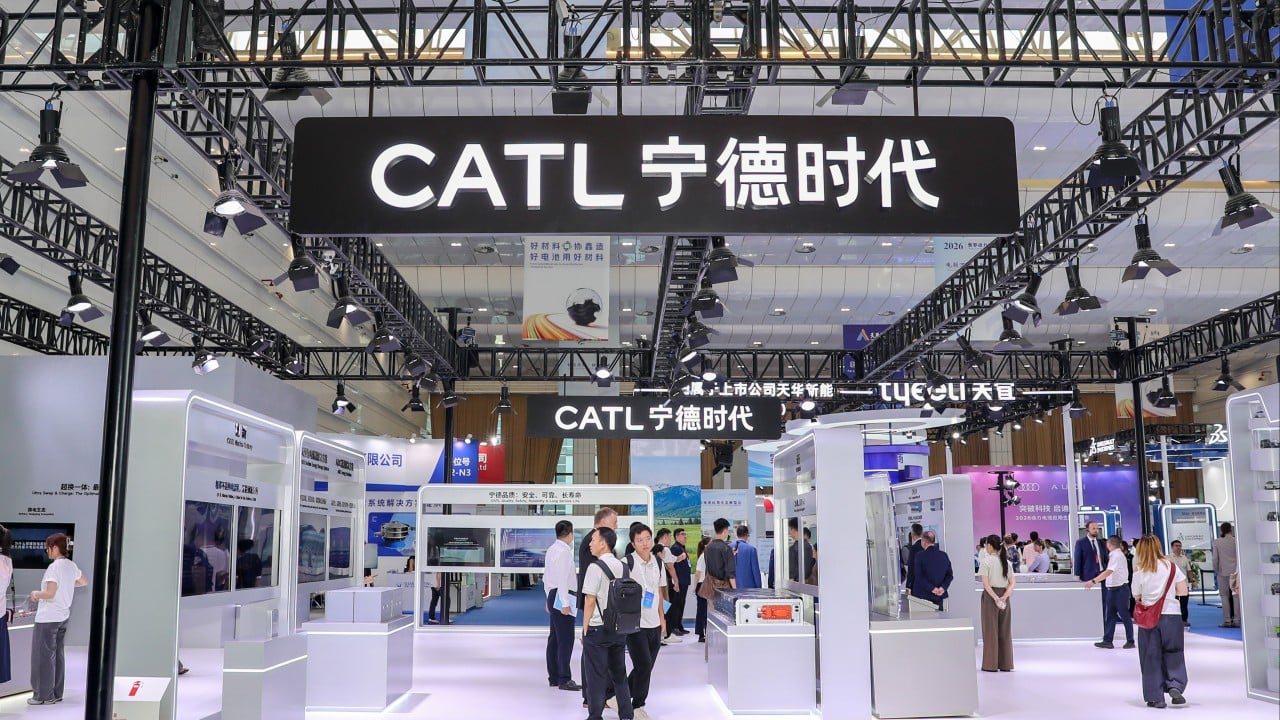
Every mainstream trade publication is popping champagne over CATL firing up trial production at its massive battery plant in Debrecen, Hungary. The lazy consensus runs on pure corporate PR: Chinese battery supremacy is marching straight into the heart of Europe, localizing supply chains, dodging tariffs, and crushing legacy automakers on their home turf.
It sounds terrifying for Detroit and Wolfsburg. It is also entirely backwards.
I have spent the last decade watching supply chains fracture from Shenzhen to Stuttgart, and I can tell you right now that dropping a multibillion-dollar cell manufacturing plant inside the European Union is not an aggressive expansion. It is a hostage situation. CATL did not choose Hungary because it represents a beachhead of dominance. They built there because Brussels, Washington, and geopolitical gravity backed them into a corner where they had no other choice.
Strip away the glossy press releases about green energy transitions and regional partnerships. Look at the balance sheets, the labor realities, and the regulatory chokeholds. You will find that moving heavy cell manufacturing to Europe strips away every single operational advantage that made Chinese battery giants unbeatable in the first place.
The Margin Compression Illusion
To understand why European localized production is a financial anchor, you have to look at how CATL actually prints money back home in Ningde and Sichuan.
The mainstream narrative credits their success to cheap labor. That is amateur-hour analysis. Labor accounts for a minor slice of total cell production costs. The real moat consists of massive, hyper-optimized industrial clusters, terrifyingly efficient domestic supply chains, ultra-cheap and reliable power, and a regulatory environment that allows factories to run twenty-four hours a day, three hundred sixty-five days a year without a committee of bureaucrats debating local noise ordinances.
When you pick up that entire manufacturing apparatus and drop it into Hungary, you destroy the proximity matrix. Suddenly, you are shipping raw materials thousands of miles further, or scrambling to source compliant precursors within a fragmented European chemical market that is currently choking on high energy prices and stringent environmental mandates.
European electricity rates are not just higher than China's; they are erratic. Refining lithium, coating cathode active materials, and drying electrode slurry are brutally energy-intensive processes. Running those operations under EU carbon border adjustments and European grid tariffs means your cost per kilowatt-hour ticks up immediately.
Add in local labor unions, mandatory social contributions, and the sheer cultural friction of managing a massive, highly technical workforce thousands of miles from corporate headquarters, and the margin profile evaporates. CATL is trading its unbeatable cost leadership for geopolitical insurance. That is a defensive crouch disguised as a victory lap.
The Regulatory Parasite Problem
European politicians love to posture about net-zero targets, but their real export is bureaucratic friction.
When a Chinese firm builds a factory in Hungary, they are not entering a free market. They are stepping directly into a regulatory minefield designed by people who view industrial manufacturing with deep suspicion. Every step of the production process—from wastewater management to the exact chemical composition of binders and electrolytes—is subject to overlapping layers of EU oversight, local municipal vetoes, and constant threat of retroactive compliance shifts.
The mainstream press treats local production as a foolproof way to bypass upcoming import tariffs. But tariffs are just the opening salvo. Once the factory is bolted to the concrete in Debrecen, CATL is locked in. They have transferred capital, engineering know-how, and proprietary process technology directly into a jurisdiction that can—and eventually will—squeeze them with targeted domestic subsidies for homegrown European battery startups, intellectual property leakage demands, and stringent supply chain traceability mandates designed to outlaw their domestic Chinese material inputs.
You cannot out-bureaucratize Brussels. By moving inside the fortress, CATL has invited the tax collector right into the boardroom.
The Auto Industry is Bleeding Out
The deeper flaw in the celebratory coverage of this Hungarian plant is the assumption that European automakers are ready and eager to buy millions of cells.
Look at Volkswagen, Mercedes, and Stellantis right now. Their electric vehicle transitions are stalling out under the weight of weak consumer demand, software disasters, and bloated corporate structures. They are slashing production targets, delaying new platform rollouts, and desperately lobbying to water down combustion engine phase-out dates.
Who do you think is going to buy the output of a multi-gigawatt-hour plant in Debrecen when European EV sales are flatlining?
CATL built this capacity because European automakers extracted supply agreements years ago during the pandemic panic. But contracts in the automotive sector are only as good as the underlying vehicle demand. If BMW and Mercedes cannot sell the cars packed with these cells, those massive production lines in Hungary will either run at a crippled capacity utilization rate—slashing return on capital—or sit idle, bleeding overhead while the fixed costs pile up.
It is a classic overcapacity trap. They built the factory to satisfy a political mandate and a backward-looking forecast, only to land in a market where carmakers are pulling back their horns.
The Real Winner of the European Gigafactory Race
If you want to know who actually benefits from CATL planting roots in Hungary, look at the local real estate developers, the construction conglomerates, and the Hungarian government, which secured a flashy headline investment to boost domestic GDP metrics.
None of those entities build better batteries.
The brutal truth is that globalization is fragmenting into regional fortresses. For a hyper-efficient, export-driven titan like CATL, submitting to regionalization means losing your edge. They are sacrificing speed, cost efficiency, and operational agility just to maintain access to a stalling market that would rather legislate their dominance away than compete on merit.
Do not mistake survival tactics for conquest. CATL didn't conquer Europe. Europe just put them on an industrial leash.
Stop cheering for the geographic expansion of bloated supply chains. The future of energy storage belongs to whoever can innovate past the current chemistry limits while keeping manufacturing lean, fast, and unburdened by committee rooms. Building a carbon copy of a Chinese mega-factory in the heart of a regulated, high-cost, low-demand European theater is not winning the future.
It is paying rent in a burning building.